


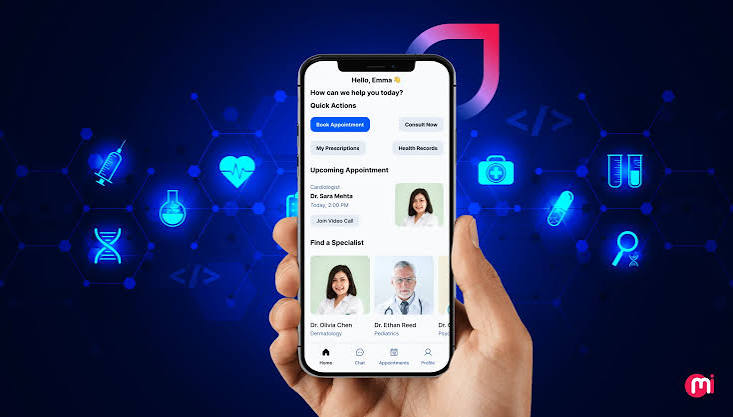
Telehealth platforms are transforming healthcare by allowing patients to consult practitioners, access medical information and manage appointments remotely. Building a reliable platform requires more than a user-friendly interface. Businesses need secure technology and intelligent features that support healthcare workflows. Choosing a company specialising in custom AI app development can help organisations create a telehealth solution that meets patient needs while supporting efficiency, scalability and long-term growth.
Healthcare Experience and AI Development Expertise
When choosing an AI app development company, consider its experience in healthcare technology. Telehealth applications handle sensitive patient information and must support clinical workflows, appointment management and communication between patients and healthcare professionals.
Look for a development partner with experience building medical applications, patient portals or digital health solutions. Familiarity with healthcare workflows helps the team identify potential challenges and recommend suitable technologies.
AI expertise is equally important. Depending on the platform’s purpose, artificial intelligence can support appointment recommendations, automated documentation, patient engagement and symptom assessment. The development team should understand how to implement these capabilities responsibly and explain their limitations.
Ask potential partners about previous projects, technical expertise and experience integrating AI into healthcare systems. Relevant examples can help you assess whether they can deliver a solution that meets your requirements.
Data Security, Privacy and Regulatory Compliance
Security is essential when developing a telehealth platform. These applications may collect personal details, medical histories, consultation notes and prescriptions. A security weakness could expose confidential information and damage patient trust.
An experienced development company should implement appropriate safeguards, including data encryption, secure authentication, role-based access controls, audit logs and regular security testing. Multi-factor authentication can provide additional protection for patient and practitioner accounts.
Regulatory compliance also requires attention. Australian healthcare providers may need to consider the Privacy Act 1988, the Australian Privacy Principles and applicable state or territory health privacy legislation. Businesses operating internationally must also account for relevant local requirements.
AI introduces further considerations because models may process sensitive information or generate recommendations that influence healthcare decisions. Ask how the company manages data access, model training, third-party AI services and inaccurate outputs.
A reliable partner should explain its security practices and help identify compliance requirements before development begins.
AI Capabilities and Telemedicine App Development Experience
Not every AI feature is suitable for a telehealth platform. The right capabilities should address genuine challenges for patients and healthcare professionals rather than add unnecessary complexity.
AI-powered chatbots can answer routine administrative questions, while intelligent scheduling can help patients find suitable appointments. Speech-to-text tools may assist with consultation documentation, and automated reminders can help reduce missed appointments. Clinical decision-support features require appropriate validation, professional oversight and clearly defined limitations.
A capable development partner should identify where AI adds value and where conventional software is more appropriate. The team should also explain how AI models will be evaluated, monitored and improved after launch.
This is where telemedicine app development expertise becomes valuable. The company should know how to integrate video consultations, secure messaging, appointment booking, electronic health records and payment systems into a connected platform.
Ask whether the proposed solution can integrate with existing practice management software and healthcare databases. Effective integration reduces duplicate data entry and helps practitioners access relevant information.
The development team should also explain how it will test AI-generated outputs, manage errors and ensure patients understand when they are interacting with an automated system rather than a healthcare professional.
Scalability, User Experience and Ongoing Support
A telehealth platform should be easy to use for patients and healthcare professionals with different levels of technical confidence. Complicated registration, confusing navigation and unreliable video calls can discourage adoption.
Choose a development company that prioritises user experience. Clear appointment booking, accessible interfaces, simple onboarding and reliable communication features can improve the overall experience. The platform should also accommodate users with disabilities and function effectively across supported devices.
Scalability is equally important. A platform designed for a small clinic may eventually need to support multiple practitioners, locations and larger patient volumes. Cloud infrastructure, modular architecture and efficient database design can accommodate growth without requiring a complete rebuild.
Discuss performance testing, backup procedures, disaster recovery and plans for managing increased demand. These measures help maintain platform reliability as usage grows.
Ongoing maintenance should also be part of the development agreement. AI models, security requirements and third-party integrations can change over time. Establish who will manage updates, monitor performance and resolve technical issues after launch.
A clear support agreement helps control unexpected costs and keeps the platform dependable as requirements evolve.
Development Process, Budget and Project Transparency
The development company’s project management approach can influence the quality, cost and delivery timeline of your telehealth platform. Look for a structured process covering discovery, planning, design, development, testing and deployment.
A thorough discovery phase helps define the target audience, essential features, integration requirements and business objectives. These findings can guide the development of a minimum viable product (MVP), allowing the organisation to launch core functionality before investing in advanced AI features.
Request a transparent proposal outlining the project scope, deliverables, milestones, estimated costs and ongoing expenses. AI-related costs may include model usage, cloud hosting, data storage, third-party services and future model evaluation. Understanding these expenses helps establish a realistic budget.
Communication is another important consideration. The company should provide regular progress updates, involve stakeholders in decisions and explain technical issues clearly. Clarify ownership of the source code, application data, documentation and custom AI components before signing an agreement.
Finally, establish how success will be measured. Relevant indicators may include appointment completion rates, platform reliability, patient satisfaction, administrative time saved and user adoption. These measures help determine whether the solution delivers the expected benefits.
Final Thoughts
Choosing the right AI app development company is essential for building a secure, accessible and effective telehealth platform. Healthcare experience, responsible AI implementation, privacy protection, integration capabilities and ongoing technical support should all influence your decision.
Rather than selecting a partner based on cost or technical promises alone, evaluate its understanding of healthcare workflows and ability to deliver a solution that can evolve with your organisation.
By defining clear requirements, prioritising essential features and assessing potential partners carefully, you can build a telehealth platform that improves patient access, simplifies administrative processes and supports future healthcare innovation.
Add a stronger closing call to action. Make the recommendations more scannable

