


In Tucson, comfort and efficiency depend on more than the number of tons listed on a condenser. The Sonoran Desert’s intense solar gain, frequent dust, and short but humid monsoon season create cooling loads that can change by the hour, not just by the month. A system selected using a simple rule of thumb can cycle too quickly in June, struggle with humidity in August, and still leave a west-facing family room uncomfortably warm at sunset. Understanding how load calculations, ductwork, filtration, and equipment staging interact under desert conditions can help you set realistic expectations and choose an HVAC system that fits your home and lifestyle.
-
Why Rules of Thumb Fail in the Sonoran Desert
Estimating cooling capacity based only on square footage ignores two major drivers of Tucson’s cooling load: solar gain and attic conditions. West-facing glass with a high solar heat gain coefficient (SHGC) can raise room temperatures significantly in the late afternoon, even when the thermostat reads 75 degrees elsewhere. Flat or low-slope roofs and vented attics can expose supply ducts to extreme heat, reducing the useful cooling that reaches occupied rooms unless those ducts are properly sealed and insulated. When discussing a new system with Tucson HVAC contractors, ask how they’ll account for window orientation, duct location, insulation, and shading in the load calculation, rather than relying only on total square footage.
Monsoon humidity changes the equation again. Oversized air conditioners may satisfy the thermostat quickly but run for too short a time to remove moisture effectively when outdoor dew points rise. The result can be clammy rooms and condensation on windows even though the air feels cool. Variable speed compressors and longer cycles at lower capacity can improve moisture removal, but only when the equipment is correctly sized. That is why a proper Manual J load calculation and matching Manual S equipment selection matter for Tucson homes.
-
What a Proper Load Calculation Should Include
A Tucson-appropriate Manual J calculation should consider much more than wall area. It should document window U-factor and SHGC, account for overhangs or solar screens, and calculate loads by orientation so west-facing rooms aren’t treated the same as north-facing bedrooms. It should also consider attic insulation R-value, radiant barriers, and whether supply trunks and branches are located in the attic or within the conditioned space. Also consider air leakage from older single-pane windows, fireplace flues, poorly sealed penetrations, and other openings, because desert winds can increase infiltration.
Two realistic examples show why these details matter. In a 1970s masonry ranch with a roof-mounted package unit and original metal ducts, duct leakage and a small return grille may restrict airflow before equipment capacity becomes the main problem. Sealing accessible joints with mastic, increasing return capacity, and adding another return path to the primary bedroom can help correct persistent hot spots.
In a newer Oro Valley home with low-E, west-facing glass and an open-plan living area, late-afternoon solar gain can create uncomfortable conditions even with correctly sized equipment. A detailed load calculation should account for overhangs, window treatments, and other shading measures when determining whether zoning, duct modifications, or additional airflow is needed during peak afternoon hours.
-
Equipment Choices That Fit Tucson Conditions
Desert heat can benefit from equipment that performs efficiently at partial capacity. Two-stage or inverter-driven air conditioners can run longer at lower output, reducing temperature swings and improving moisture removal during monsoon season. Heat pumps can also be practical in Tucson because winters are relatively mild. Match heating performance to local winter conditions, and variable-speed air handlers can provide quieter operation and more consistent airflow.
Homes with natural gas may also consider systems that combine a heat pump with a furnace. These systems can switch between heat sources depending on outdoor temperature, equipment efficiency, and operating cost. The right choice depends on utility rates, existing infrastructure, comfort expectations, and equipment design, not on one solution being appropriate for every home.
Evaporative coolers still have a role in Tucson, but they are not suitable for every season. They can work effectively during the dry heat of May and June and often use less electricity than compressor-based cooling. However, their performance declines when monsoon humidity rises, and pads can accumulate dust and mineral deposits. Some homeowners use evaporative cooling during dry periods and rely on an air conditioner or heat pump during peak summer and monsoon conditions. This arrangement adds maintenance requirements, including pad replacement, water management, and proper filtration on the refrigerated cooling system.
-
Ductwork, Airflow, and Filtration in a Dusty Climate
High static pressure can reduce comfort even when the HVAC equipment itself is correctly sized. Undersized return grilles, long flexible duct runs, sharp bends, compressed duct sections, and leaking joints can increase resistance and reduce the amount of air delivered to distant rooms. Tucson homes with roof-mounted package units often have supply ducts exposed to intense attic temperatures. Proper insulation, mastic sealing, correctly supported ductwork, and balancing dampers can help improve delivered airflow.
A technician can measure total external static pressure with a manometer to determine whether the blower is operating within the manufacturer’s recommended range. Return placement also matters. Adding another return in a distant section of the house may improve airflow and reduce temperature differences between rooms when the original return system is inadequate.
Filtration requires a similar balance. High MERV filters can capture smaller dust particles and allergens, but they can also increase airflow resistance when installed in a system with insufficient filter surface area. Installing a highly restrictive filter in a narrow one-inch slot may raise static pressure and contribute to airflow problems. A deeper media cabinet, additional return area, or a suitable, lower-resistance filter may better balance air quality and system performance. The goal is to improve filtration without restricting airflow through the evaporator coil.
-
Placement, Protection, and Monsoon Ready Details
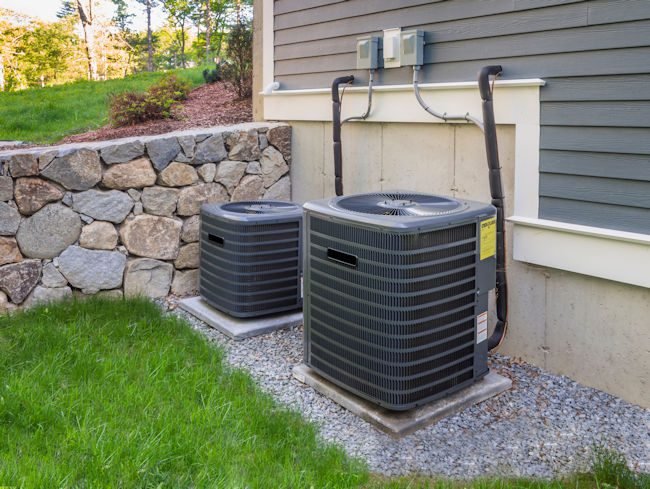
Outdoor equipment placement can affect efficiency and service life. A condenser installed on reflective gravel with inadequate clearance may face extremely high surrounding temperatures and restricted airflow. Maintain the clearances specified by the equipment manufacturer and avoid landscaping, fencing, or shade structures that block airflow around the coil. Shade may help reduce direct solar exposure, but it should never interfere with the unit’s ability to release heat.
For roof-mounted package units, verify that the curb is properly sealed and flashed to prevent water intrusion. The condensate drain should have the correct slope, trapping where required, and protection from debris. Appropriate overflow protection can reduce the risk of water damage during periods of heavy condensate production.
Electrical protection also deserves attention during monsoon season. Lightning and voltage disturbances can damage sensitive controls, particularly in systems with inverter electronics. Ask a qualified contractor whether surge protection is appropriate for the equipment and electrical system. Dust can also increase maintenance needs, so filters and outdoor coils may require more frequent inspection during periods of heavy airborne debris.
Thermostat settings and equipment commissioning also affect comfort. Allowing properly designed variable-capacity equipment to run longer at lower output can help stabilize temperature and improve moisture removal. Set refrigerant charge and airflow according to manufacturer procedures, using appropriate measurements such as static pressure, superheat, or subcooling where applicable.
Prepare Useful Information Before the Site Visit
Before an HVAC contractor evaluates your home, gather information that reflects your actual comfort concerns. Note which rooms become hottest near sunset, where supply and return registers are located, and whether certain areas feel uncomfortable when monsoon humidity increases. Keep records of improvements such as attic insulation, solar screens, upgraded windows, or major air sealing work because these changes can affect the heating and cooling load.
Ask for a room-by-room Manual J calculation, equipment selection based on Manual S principles, and an evaluation of ductwork and static pressure. These steps can help determine appropriate equipment capacity, staging, airflow, and filtration rather than relying on assumptions. With careful planning, the HVAC system can be designed to handle Tucson’s intense sunlight, dust, dry heat, and seasonal humidity while providing more consistent comfort throughout the home.

