


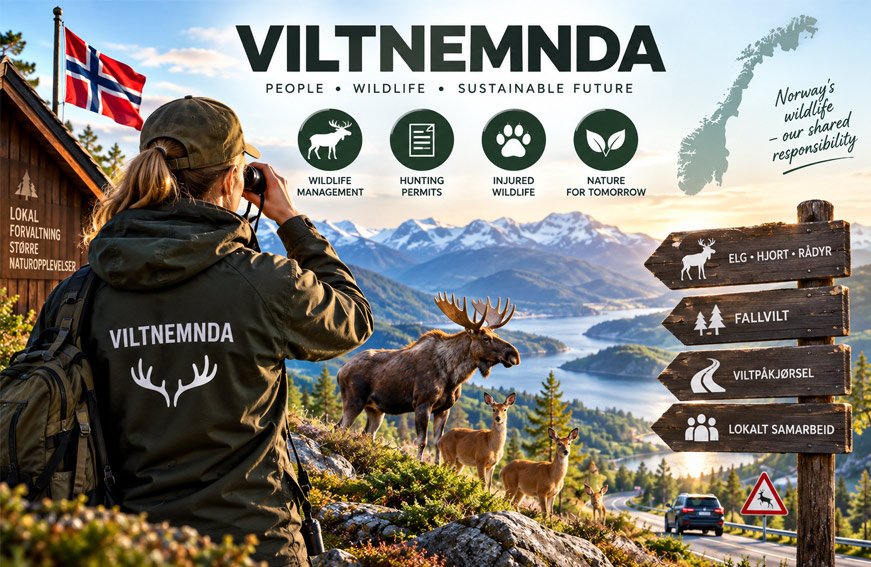
Viltnemnda is a Norwegian term related to local wildlife management. In simple English, it means “the wildlife committee” or “the wildlife board.”
People may search for Viltnemnda when they need help or information about hunting, deer and moose, injured wild animals, fallvilt, or wildlife road accidents.
The system is not exactly the same across Norway. Some municipalities have a Viltnemnda, while others use wildlife officers, municipal staff, or special wildlife teams.
This guide explains what Viltnemnda means, what it may do, and how local wildlife management works in Norway.
What Does Viltnemnda Mean?
Viltnemnda means “the wildlife committee” or “the wildlife board.” It is a Norwegian term used for local wildlife management.
The word has two main parts. Vilt means wildlife or game animals. Nemnd means a committee, board, or official group. Viltnemnda means “the wildlife committee.”
The exact English translation can depend on the situation. “Wildlife committee” is usually a good general meaning. Sometimes “municipal wildlife management” better explains the work being done.
Viltnemnda is not normally an animal shelter or wildlife rescue center. It is part of local public wildlife management.
Is Viltnemnda the Same Across Norway?
No. Viltnemnda is not one national organization with the same system across Norway.
Some municipalities have a formal Viltnemnda. Other places handle wildlife matters through environmental staff, agricultural staff, wildlife officers, or other municipal workers.
Special teams may handle practical work in the field. These may be called fallviltgruppe, ettersøkslag, viltforvaltning, or viltkontakt.
For example, a municipal worker may deal with hunting permits or wildlife plans. A separate tracking team may search for a deer that was injured in a road accident.
This means people should not search only for “Viltnemnda” when looking for local help. Terms such as fallvilt, viltforvaltning, skadet vilt, påkjørt vilt, and ettersøk may also be useful.
The municipality’s official website is usually the best place to find current information.
Viltnemnda and Norway’s Wildlife Laws
Wildlife management in Norway follows national laws and regulations. Municipalities are responsible for some wildlife matters at the local level.
According to the collected information, an important legal change happened on July 1, 2026. The older Viltloven was replaced by Viltressursloven. The newer law covers wildlife resources and matters such as hunting, trapping, and some types of culling.
A local Viltnemnda cannot simply create its own powers. Its authority must come from the law or from powers properly given to it by the municipality.
This is another reason why Viltnemnda can work differently from one municipality to another.
Other laws may also apply. For example, dog-control rules are important for båndtvang, which means rules about keeping dogs on a leash or under proper control. Animal-welfare rules can also matter when an animal is badly injured.
The correct authority depends on the animal, the situation, and the type of decision that needs to be made.
Main Duties of Viltnemnda
The exact duties of Viltnemnda can be different in each municipality.
Its work may include deer management, hunting matters, wildlife plans, some permits, wildlife information, and problems between wild animals and people.
Another important area is fallvilt. This can include wild animals that are injured, found dead, or involved in road or rail accidents.
Practical work is often done by trained field teams. Committee members themselves may not go out to search for injured animals.
Local wildlife authorities can also use hunting results, animal sightings, population studies, and road-accident records. This information helps them understand wildlife numbers and local problems.
Viltnemnda may also be connected with wildlife funds and advice for hunters or landowners.
However, not every Viltnemnda performs all these duties. People should check the local municipality for exact information.
Moose, Red Deer, and Roe Deer Management
Moose, red deer, and roe deer are important in Norwegian wildlife management.
In Norwegian, they are called elg, hjort, and rådyr. These animals can travel over large areas. They can affect forests, farms, roads, and local ecosystems.
Municipal wildlife authorities may use hunting results, animal sightings, habitat information, animal-health data, and road-collision records to understand their populations.
The goal is to keep wildlife populations healthy while also reducing serious problems for people.
For example, very high deer numbers can lead to more crop damage and damage to young trees. More animals can also mean a greater risk of road accidents.
At the same time, too much hunting can reduce wildlife numbers more than intended.
Hunters and landowners can provide useful information. Hunters report animals taken during hunting and may share observations. Landowners manage much of the land where these animals live.
Local wildlife management therefore tries to balance wildlife health, hunting, farming, forestry, and road safety.
Hunting Areas, Permits, and Management Plans
National laws set the main hunting rules in Norway. Municipalities handle some local hunting matters.
One useful term is vald. It means an approved hunting management area.
Another important term is fellingstillatelse. It is permission to harvest a certain number or type of animals under the rules.
A fellingstillatelse is not simply the same as a personal hunting license. A hunter must meet the legal requirements to hunt, while a fellingstillatelse relates to the animals that may be harvested within an approved hunting arrangement.
Municipalities may handle approved hunting areas and annual harvest permits for moose, red deer, and roe deer.
Larger hunting areas may also use plans that cover several years. These plans can help manage animal populations over a longer period.
Hunters must follow the permit, management plan, reporting rules, and other hunting requirements.
Another related term is skadefellingstillatelse. This means a damage-control culling permit. It may be used in some situations when wildlife causes or threatens serious damage.
The authority responsible for these cases depends on the species and situation.
Viltnemnda may take part in hunting decisions if the municipality has given it the required authority.
Fallvilt: Sick, Injured, and Dead Wildlife
Fallvilt is an important term in Norwegian wildlife management.
In formal use, it can refer to wildlife that dies outside normal legal hunting, trapping, or approved culling. In everyday local use, the word may also be used when talking about sick, injured, trapped, or dead wild animals.
For example, fallvilt may include a deer killed by a vehicle or an animal found dead in a forest.
Local wildlife workers may need to assess the situation. They may search for an animal, check its injuries, protect people from danger, or arrange for a dead animal to be handled.
If an animal is badly injured and cannot recover, authorized workers may humanely put it down when the law allows it.
Information about fallvilt may also be recorded. This can help authorities understand wildlife populations and see where road accidents happen often.
People should not try to catch or chase an injured moose or deer. A frightened or injured large animal can be dangerous.
Ettersøk and Wildlife Tracking Dogs
Ettersøk means searching or tracking for a wounded animal.
An ettersøksjeger is a trained hunter or wildlife tracker. The person often works with an approved tracking dog.
The dog can use scent, tracks, blood, hair, and other signs to help find an injured animal.
Tracking may be needed after a wildlife road accident, hunting injury, or another report of a badly hurt animal.
People should not follow an injured moose or deer themselves. The animal may be dangerous when frightened. Walking behind it can also disturb tracks and make the professional search more difficult.
What to Do After Hitting a Wild Animal in Norway
Safety should come first after hitting a wild animal.
Stop in a safe place. Turn on your hazard lights if needed and make sure you do not create another road danger.
Check whether anyone is injured. Call 113 if someone needs urgent medical help.
The wildlife collision should also be reported through the current official reporting system. The information collected for this article points to the Norwegian police number 02800 for reporting these incidents.
Give a clear location and explain which animal was involved. If the animal runs away, remember the direction it went.
If it is safe, mark the place where the animal was hit or where it left the road. This can help wildlife trackers begin their search.
Do not follow the injured animal into a forest. Stay available by phone and follow the instructions given by the police or wildlife team.
What Happens After a Wildlife Collision?
After a wildlife accident is reported, the responsible authority can contact the correct local wildlife team.
A trained tracker may be sent to the location if the animal is believed to be injured. A tracking dog may also be used.
The driver’s information can be very useful. Knowing the exact collision point and the direction the animal travelled can make the search easier.
If the animal is found badly injured, qualified workers can check its condition. If necessary and legally allowed, they may humanely put it down to stop further suffering.
Information about the accident may also be recorded. This can include the animal species, location, and result of the search.
These records can show where wildlife accidents happen often. The information may later help with wildlife management and road safety.
What to Do If You Find Injured Wildlife
Keep a safe distance from injured wildlife, especially large animals such as moose and deer.
You usually do not need to touch the animal to help it. Reporting the situation can be the safest option.
Try to note the location, animal type, visible injuries, time, and whether the animal can move. If it leaves, remember which direction it went.
A badly injured large animal or an animal that creates an immediate danger may need to be reported to the police. For less urgent cases, the municipality may provide a local wildlife contact.
Do not feed, capture, move, or take the animal home without official advice. Wild animals can become stressed and may hurt people.
Wildlife Damage and Conflicts With People
Wildlife sometimes causes problems when animals and people use the same areas.
Deer may eat crops, damage young trees, enter gardens, or regularly cross busy roads. Large animals near homes, schools, or busy public places may also create safety concerns.
Killing or removing an animal is not always the first solution. Fences, habitat changes, and other preventive steps may help in some situations.
Hunting or controlled population management may also be used when the law allows it.
Authorities may need to consider animal welfare, wildlife populations, biodiversity, farming, forestry, and public safety together.
Some cases may also involve Statsforvalteren, Miljødirektoratet, or another authority instead of only the municipality.
Viltnemnda and Dog Leash Rules
Båndtvang is a Norwegian term for rules that require dogs to be kept on a leash or under proper control during certain times or situations.
These rules help protect wildlife. Loose dogs can chase, scare, or injure wild animals.
Young animals can be especially at risk during breeding and raising periods. Wildlife may also be vulnerable during difficult winters.
National rules provide the main legal framework. Municipalities can have additional local rules where the law allows them.
In some areas, Viltnemnda may have a role in local or temporary measures if it has been given that authority.
Dog owners should check current national and municipal rules because local restrictions can change.
Municipal Wildlife Funds
A kommunalt viltfond is a municipal wildlife fund.
The money can be used for approved wildlife-management purposes. Depending on the rules, this may include wildlife surveys, habitat work, management projects, planning, or population studies.
The fund cannot simply be used for any activity related to wildlife. Rules control how the money can be used.
Application processes may also differ between municipalities. There may be local deadlines and requirements.
Viltnemnda may have a role in the fund if the municipality has given it that responsibility.
People who want funding should check the municipality’s current rules before applying.
Viltnemnda, Police, and Other Wildlife Authorities
Different authorities have different jobs in Norway’s wildlife system.
The municipality handles wildlife duties that belong to the local level. Viltnemnda may perform some of these duties where such a committee exists.
A fallvilt or tracking team usually performs practical work such as searching for injured animals.
The police deal with public safety, traffic matters, and other police responsibilities. They may also connect a wildlife accident report with the correct local team.
Statsforvalteren has certain responsibilities at the regional level.
Miljødirektoratet, or the Norwegian Environment Agency, works at the national level and has wider responsibilities for nature and wildlife management.
Other authorities may also become involved depending on the species, location, or type of problem.
Viltnemnda should therefore not be confused with Norway’s national wildlife authorities.
Hunters, Landowners, and Residents
Hunters, landowners, and residents can all have contact with local wildlife management.
Hunters may need information about hunting areas, permits, management plans, and reporting rules. Their hunting results and observations can also provide useful wildlife data.
Landowners may deal with wildlife damage, forestry, farming, habitat management, and hunting rights.
Wild animals can move across many properties. This means neighboring landowners may sometimes need to work together.
Residents may contact local wildlife services when they find an injured animal, see repeated wildlife problems, or need information about local rules.
When reporting an animal, give a clear location and explain what you saw. Keep a safe distance from large, sick, frightened, or injured animals.
Common Norwegian Wildlife Terms
These common words can make Norwegian wildlife information easier to understand.
| Norwegian Term | Simple English Meaning |
|---|---|
| Viltnemnd | Wildlife board or committee |
| Viltnemnda | The wildlife board or committee |
| Viltforvaltning | Wildlife management |
| Fallvilt | Dead or injured wildlife in the relevant context |
| Fallviltgruppe | Local fallvilt response team |
| Ettersøk | Search or tracking operation |
| Ettersøksjeger | Wounded-wildlife tracker |
| Ettersøkshund | Tracking dog |
| Viltpåkjørsel | Wildlife-vehicle collision |
| Fellingstillatelse | Harvest or culling permit |
| Skadefelling | Damage-control culling |
| Hjortevilt | Deer species group |
| Vald | Approved hunting management area |
| Båndtvang | Dog leash or control requirement |
These are simple English meanings. Some terms can have more exact meanings in Norwegian laws and official documents.
How to Find Your Local Wildlife Contact
Searching only for “Viltnemnda” may not always show the correct local contact.
Some municipalities use other names for their wildlife services. Try terms such as viltforvaltning, fallvilt, viltkontakt, skadet vilt, påkjørt vilt, or ettersøk.
For normal questions, start with the official website of the municipality. It may provide information about hunting areas, permits, management plans, wildlife funds, and local contacts.
Urgent cases are different. Wildlife road accidents, dangerous injured animals, or immediate risks to people may need to be reported through the police or another official emergency service.
Avoid depending on old contact details from unofficial websites. Local wildlife teams, staff, and responsibilities can change.
Bottom Line
Viltnemnda means “the wildlife committee” or “the wildlife board.” It is a term connected with local wildlife management in Norway.
The system is not the same in every municipality. Some places have a formal Viltnemnda. Others use municipal workers, wildlife officers, fallvilt teams, or tracking teams.
Their work can involve deer management, hunting matters, injured animals, fallvilt, tracking, wildlife road accidents, and wildlife damage.
For current local rules, permits, or contact details, always check the responsible municipality or Norwegian authority.
Frequently Asked Questions
What does Viltnemnda mean in English?
Viltnemnda means “wildlife committee” or “wildlife board.” It is connected with local wildlife management in Norway.
Does every Norwegian municipality have a Viltnemnda?
No. Some municipalities have a Viltnemnda, while others use wildlife officers, local staff, or special wildlife teams.
What does Viltnemnda do?
It may help manage deer, hunting, injured animals, fallvilt, and other local wildlife matters.
Should I call Viltnemnda after hitting a deer or moose?
Report the accident through the official system. Norwegian police can contact the correct local wildlife team.
What is fallvilt?
Fallvilt usually means wild animals found dead or injured outside normal hunting. It can include animals hurt in road accidents.
What does an ettersøksjeger do?
An ettersøksjeger tracks injured wild animals. They often use a trained tracking dog to find them.
Is Viltnemnda an animal rescue service?
No. It mainly deals with wildlife management, hunting matters, injured animals, tracking, and public safety.
Is Viltnemnda the same as Miljødirektoratet?
No. Viltnemnda is connected with local wildlife management, while Miljødirektoratet works at the national level.
Explore More:
Mimshacks Review 2026: Games, Roblox Guides, Tools, and Safety

