


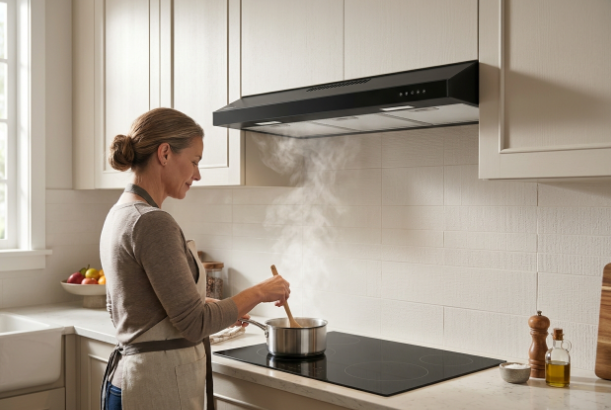
A kitchen ventilation system needs to do more than move air around. It should help manage grease, cooking odors, smoke, and other emissions produced during meal preparation. However, not every kitchen has access to exterior ductwork, making recirculating ventilation an appealing alternative. These systems filter cooking air and return it to the room rather than exhausting it outdoors.
But can they handle everyday activities such as boiling, sautéing, and frying? The answer depends on cooking intensity, filter performance, and household ventilation needs. Understanding these differences helps homeowners make more informed decisions.
How Does a Ductless Range Hood Work?
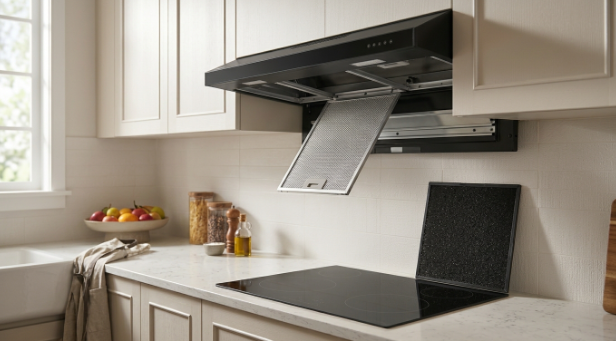
A ductless range hood draws cooking air through an intake area, passes it through filters, and returns the treated air to the kitchen. Unlike an externally vented system, it does not require a duct connecting the appliance to an outdoor exhaust point. This arrangement can be useful in apartments, rental properties, and kitchens where installing ductwork is difficult.
A typical ductless range hood uses two main filtration stages. The first is a grease filter, which captures grease droplets and some larger airborne particles before they reach the internal components. The second is usually an activated carbon filter designed to reduce certain cooking odors. A fan moves air through these components, but the overall result depends on the hood’s design, airflow, filter condition, and installation.
Grease Filters and Their Role
Grease filters are commonly made from aluminum, stainless steel, or other materials designed to collect grease from cooking air. Depending on their construction, they may use mesh layers or baffle arrangements to separate grease droplets from the moving airstream. These filters also help prevent excessive grease accumulation inside the hood.
However, grease filtration should not be confused with complete particle removal. Smaller airborne particles may pass through conventional grease filters, depending on their size and the filter’s efficiency. Regular cleaning matters because accumulated grease can restrict airflow and reduce the ventilation system’s effectiveness.
How Activated Carbon Filters Reduce Odors
Activated carbon filters work through adsorption, a process in which certain gaseous compounds attach to the carbon’s porous surface. This makes them useful for reducing some cooking odors that ordinary grease filters cannot capture effectively.
Their effectiveness depends on the amount and condition of the carbon, airflow, exposure time, and the substances being filtered. Carbon filters do not remove every odor or gaseous pollutant, and they do not eliminate cooking moisture. Once their adsorption capacity becomes limited, replacement or servicing is necessary according to the manufacturer’s instructions.
Can Recirculating Ventilation Handle Everyday Cooking?
For households that regularly prepare simple meals, recirculating ventilation can provide useful grease and odor management. Boiling vegetables, heating soup, simmering sauces, and performing light sautéing generally create different ventilation demands from prolonged frying or high-temperature searing. A properly maintained hood can help capture some cooking emissions and reduce noticeable odors during these activities.
However, this does not remove contaminated air from the building. Steam and warm air return to the kitchen, while some fine particles and gaseous compounds may remain indoors. This distinction becomes more important when cooking frequently or preparing foods that generate considerable smoke and grease.
Frying, grilling, and searing can produce more airborne particles and cooking byproducts. Under these conditions, a recirculating hood may struggle to manage the entire cooking plume. Its suitability therefore depends not simply on whether a household cooks every day, but on what it cooks and how intensively it uses the kitchen.
How Well Does a Ductless Range Hood Perform Across Different Cooking Activities?
Different cooking methods produce different combinations of heat, moisture, grease, odors, and airborne particles. The following comparison explains the general ventilation considerations associated with common kitchen activities.
| Cooking activity | Main ventilation consideration |
| Boiling water | Steam and moisture |
| Simmering | Heat, moisture, and odors |
| Light sautéing | Grease particles and cooking odors |
| Pan-frying | Greater grease and particle generation |
| High-heat searing | Increased cooking emissions and capture demands |
This table describes general cooking conditions, not guaranteed hood performance. The amount of pollution produced varies with the food, cooking temperature, oil, cookware, and duration. Hood placement, airflow, filter design, and maintenance also influence how much cooking air is captured and treated.
What Are the Main Limitations of Recirculating Ventilation?
Heat and Moisture Remain in the Kitchen
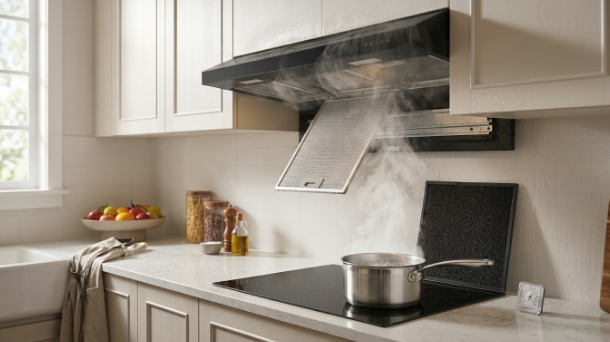
One of the most important limitations is that recirculating systems return treated air to the same room. Although filters may capture grease and reduce certain odors, they don’t remove warm, humid cooking air as effectively as an outdoor exhaust system. Boiling water, steaming food, and simmering dishes can therefore keep indoor humidity and temperature from rising.
This may be particularly noticeable in smaller kitchens or homes with limited ventilation. During longer cooking sessions, additional ventilation through suitable windows, mechanical exhaust, or the home’s ventilation system may help manage indoor conditions when outdoor air quality and weather permit.
Not All Airborne Pollutants Are Removed
Cooking can release fine particulate matter, volatile organic compounds, and other airborne pollutants. The amount depends on the cooking method, ingredients, temperature, and appliance. Conventional grease and carbon filters have different functions, and neither should be assumed to remove every type of cooking emission.
A reduction in noticeable odors does not necessarily mean that indoor air is free from harmful pollutants. This is why public-health guidance generally favors range hoods that exhaust outdoors when practical.
Filter Saturation and Maintenance
Filter condition also influences everyday performance. Grease filters gradually collect cooking residue, while activated carbon filters lose their odor-adsorption capacity over time. Dirty or saturated filters can reduce the system’s effectiveness and may contribute to persistent cooking odors.
Homeowners should follow the manufacturer’s instructions for cleaning reusable grease filters and replacing disposable carbon filters. Replacement schedules vary by model and cooking frequency, so don’t assume a universal replacement interval.
What Factors Affect Ductless Range Hood Performance?
Several factors determine how effectively a recirculating hood handles everyday cooking. First, the hood should be positioned correctly over the cooking surface, with enough capture area to collect rising cooking emissions. Poor placement or an undersized canopy can allow more fumes to escape into the surrounding kitchen.
Airflow and fan settings also matter. The hood needs enough airflow to draw cooking air through its filters, and the filter arrangement must match the appliance. Cross-drafts from open windows, doors, or nearby fans can interfere with the rising cooking plume.
Kitchen appliance choices can also shape cooking routines. For example, the ciarra nosh oven, a countertop steam oven with air-frying functionality, offers more cooking options than a traditional stovetop. However, using a countertop appliance does not eliminate the need to manage emissions from stovetop cooking. Consider each appliance based on its ventilation requirements.
How Can You Get Better Results From a Ductless Range Hood?
Good operating habits can help a recirculating hood perform more consistently. Turn it on before or at the beginning of cooking so that airflow is established as cooking emissions develop. Select an appropriate fan setting for the activity, and use rear burners when practical because their position may allow the hood to capture rising emissions more effectively.
Maintenance is equally important. Wash reusable grease filters at the intervals specified in the appliance manual, and replace activated carbon filters when recommended. Check that replacement filters match the exact hood model rather than choosing alternatives based only on appearance or dimensions.
For homeowners comparing kitchen ventilation and cooking equipment, CIARRA Appliances provides product information that can help illustrate the importance of checking model-specific requirements. If you need additional ventilation, consider a suitable exhaust fan or another outdoor-air ventilation strategy, provided it can be used safely and appropriately.
Is a Ductless Range Hood the Right Choice for Your Kitchen?
A recirculating hood may be a practical option when installing exterior ductwork isn’t possible or would require substantial building modifications. It can also suit households that primarily prepare lighter meals and understand filtration’s limitations. Apartments and rental properties are common situations where this arrangement may be considered.
However, households that frequently fry, grill, sear, or prepare meals that generate substantial smoke may benefit more from properly designed outdoor exhaust ventilation. Kitchens with gas cooking appliances also require careful consideration of combustion-related pollutants. Check local building requirements and the manufacturer’s installation instructions before selecting a system.
Ultimately, the decision should reflect cooking habits, kitchen layout, available ventilation, and indoor air quality priorities.
Final Thoughts: Understanding the Limits of Recirculating Ventilation
A ductless range hood can support everyday cooking by capturing some grease and reducing certain odors, especially when the filters are maintained and the system is installed correctly. However, it does not remove cooking heat and moisture outdoors, and conventional filtration cannot eliminate every airborne pollutant.
Homeowners should therefore evaluate their cooking habits and broader ventilation needs before choosing a system. For readers researching kitchen ventilation and complementary cooking appliances, CIARRA Appliances offers additional product information to support informed comparisons.
FAQs
1. Can a ductless range hood handle everyday cooking?
Yes. A ductless range hood can help manage grease and reduce certain cooking odors during everyday activities such as boiling, simmering, and light sautéing. However, its effectiveness depends on filter condition, airflow, cooking intensity, and kitchen ventilation. It is less effective than outdoor exhaust at removing the full range of cooking emissions.
2. Does a ductless range hood remove cooking smoke?
Ductless range hoods can capture some airborne grease and particles, depending on their filtration design. However, conventional grease and activated carbon filters do not remove all smoke particles or gaseous pollutants. Heavy frying and high-temperature cooking can exceed the practical capabilities of some recirculating systems.
3. How often should you replace a ductless range hood carbon filter?
Replacement frequency depends on the filter design, the manufacturer’s instructions, and how often you cook. Households that cook frequently may need replacements sooner than occasional users. Always check the appliance manual rather than relying on a universal replacement schedule.
4. What is the difference between ducted and ductless range hoods?
A ducted range hood transports cooking air outside through ductwork, helping remove heat, moisture, grease, and airborne cooking pollutants. A ductless range hood filters some contaminants and returns the air to the kitchen. Ducted systems generally remove cooking emissions more thoroughly when properly designed and installed.
5. Is a ductless range hood suitable for a kitchen where people cook every day?
It can suit households with moderate cooking needs, particularly where installing exterior ductwork is impractical. However, households that frequently fry, grill, or cook at high temperatures should consider the limitations of recirculating filtration and whether additional ventilation or an outdoor-vented hood would be more appropriate.

