


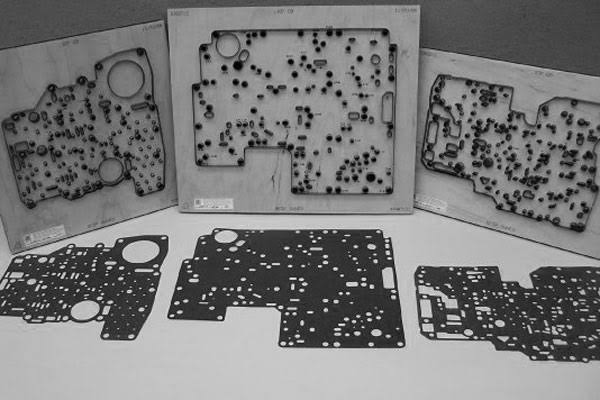
In manufacturing environments where cutting, creasing, and forming materials at volume is a daily operational reality, tooling decisions carry significant weight. A poorly chosen or improperly designed cutting tool doesn’t just slow production — it creates inconsistency, increases waste, and can compromise the quality of every unit that passes through it. For operations working with paper, cardboard, foam, rubber, leather, plastic film, and a range of other sheet materials, steel rule die tooling is often the standard approach for achieving precise, repeatable cuts at scale.
Understanding how this tooling works — from initial design considerations through to the mechanics of the final cut — helps production managers, tooling engineers, and procurement professionals make more informed decisions. This article explains the complete process in practical terms, covering design principles, material considerations, operational use, and common failure points that affect long-term performance.
What a Steel Rule Die Actually Is and How It Functions
A steel rule die is a cutting tool constructed from a flat base — typically wood or steel — into which thin strips of hardened steel blade are inserted and held in precise formation. The blades, known as rules, are bent to match the desired cut shape and seated into laser-cut or router-cut channels in the base. When the die is pressed against a substrate using a die press, the blades cut, crease, or perforate the material according to the pattern established in the base. The result is a clean, consistent shape that can be reproduced across thousands of cycles without significant deviation.
This type of tooling is widely used across packaging, gasket manufacturing, label production, automotive interiors, and printing industries. A thorough Steel Rule Die guide will typically address both the structural components of the tool and the operational conditions that affect its reliability and lifespan — because both are equally important to getting consistent results.
The design of a steel rule die determines not just the shape of the cut, but how cleanly the cut releases from the material, how long the tool holds its edge, and how efficiently the tool integrates with the press and material handling systems around it. Each of these factors has downstream consequences for production quality and throughput.
The Role of the Rule in Determining Cut Quality
The steel rule itself — the thin blade seated in the die board — is where the actual cutting or creasing occurs. Rules are manufactured to different heights and thicknesses depending on their function: cutting rules have a sharpened bevel, crease rules have a blunt edge designed to compress rather than cut, and perforation rules alternate between cutting and non-cutting segments. The choice of rule profile affects how cleanly a material separates, how much force the press must apply, and how much stress the board experiences during repeated cycles.
A cutting rule that is too fine for the substrate will dull quickly under pressure. A rule that is too aggressive for a softer material may tear rather than cut. Matching rule profile to material characteristics is a foundational decision that shapes everything from edge quality to tool longevity. Most tooling failures that appear to be press-related or material-related can be traced back to a mismatch in rule specification at the design stage.
How the Die Board Affects Structural Integrity
The board that holds the rules in place is not a passive component. It must absorb repeated compression forces without warping, delaminating, or allowing the rule slots to widen over time. Wooden die boards — typically made from high-density Finnish birch plywood — are the traditional choice because they are easy to machine, cost-effective, and capable of holding rule position reliably across a reasonable production run. Steel-backed or solid steel boards are used for higher-volume applications where dimensional stability under repeated load is a priority.
The width and depth of the channels routed into the board must correspond precisely to the rule dimensions. If the channel is even slightly wider than the rule, the blade can shift under pressure, producing inconsistent cuts. If the channel is too tight, inserting the rule can crack the board. Precision in board machining is not a secondary concern — it is a direct input into cut quality and tool longevity.
Tooling Design: Where Production Problems Begin or Are Prevented
Most quality issues encountered during production runs can be traced to decisions made before the tool was ever pressed against a substrate. Tooling design involves translating a desired cut pattern into a physical die that will perform reliably within a specific press and material context. This requires an understanding of how the die interacts with the press platen, how the substrate behaves under pressure, and how the ejection system will release the cut piece without distortion.
Ejection rubber — foam or rubber strips placed around the rules — is responsible for pushing the material away from the blade after the cut. Rubber that is too firm can cause the material to lift unevenly or damage delicate substrates. Rubber that is too soft may not fully clear the cut piece, causing it to stick to the die and jam the press. The placement, density, and height of ejection rubber is a design decision with direct operational consequences that is often underestimated.
Nesting and Layout Efficiency in the Die Pattern
The arrangement of cut shapes within the die pattern determines material yield. In industries where raw material costs are a significant portion of unit cost, poor nesting can add meaningful waste across a production run. An experienced tooling designer will consider how shapes can be arranged relative to one another to minimize the amount of substrate left as trim. This is not purely a geometric exercise — it also requires understanding how close rules can be positioned to one another without compromising the structural integrity of the board or the quality of the cuts at the edges of adjacent shapes.
When rules are placed too closely together, the material between them may not cut cleanly because there is insufficient support beneath the substrate during the cut. This produces tearing, burring, or incomplete separation that requires manual finishing — which defeats the purpose of automated die cutting. Layout efficiency and cut quality are not competing priorities; they must be balanced through informed design decisions.
Accounting for Press Characteristics During Design
Different press types — flatbed, rotary, clam shell — apply force in different ways, and a die designed for one press type will not necessarily perform correctly on another. The dwell time, pressure distribution, and speed of the press cycle all affect how the rule interacts with the substrate. According to the International Organization for Standardization, tooling standards across manufacturing processes exist precisely because inconsistency in tooling-to-machine compatibility is a leading cause of process variation and quality defects.
A die designed without knowledge of the press on which it will run may apply uneven pressure across the board, causing some rules to cut too deep while others barely penetrate the substrate. This is particularly common when dies are transferred between presses of different sizes or from one facility to another. Press specifications should be part of the design brief before tooling fabrication begins.
Material Considerations That Affect Tooling Performance
The substrate being cut has a direct effect on how long a die maintains its performance and how consistently it cuts over a production run. Materials with abrasive fillers — certain grades of cardboard, reinforced rubber, or composite materials — will wear blade edges faster than softer or more homogeneous substrates. This is not a reason to avoid those materials, but it is a reason to specify rules with appropriate hardness and to establish a realistic maintenance and replacement schedule before production begins.
Temperature and humidity also affect wooden die boards. In high-humidity environments, boards can expand slightly, which alters the fit of the rules and changes cutting pressure distribution. Operations running in climate-controlled environments will see more consistent die performance than those in open facilities subject to seasonal variation. Understanding these environmental factors helps set realistic expectations about tool lifespan and maintenance intervals.
Substrate Thickness and Its Relationship to Rule Height
The relationship between substrate thickness and rule height determines how the cut progresses through the material and whether the blade reaches the cutting plate cleanly. If the rule height is not properly calibrated to the substrate, the tool will either fail to cut through completely or will bottom out against the cutting plate with excess force, accelerating blade wear and potentially damaging the board. This calibration must account for substrate compressibility — foam and rubber compress under pressure, meaning the effective cutting depth differs from the measured material thickness.
For production runs involving multiple substrate thicknesses or material changeovers, this is a consideration that often requires either multiple dies or adjustable press settings. Attempting to use a single die across substrates with significantly different thicknesses will produce inconsistent results in at least some of the material types.
Maintenance, Lifespan, and Knowing When to Replace a Die
A steel rule die does not fail suddenly in most cases. It degrades incrementally, and recognizing the early signs of wear is what separates operations with consistent output from those managing unpredictable quality variation. Edge dullness is the most common form of wear, and it typically manifests as increased press pressure requirements, ragged cut edges, or material that does not separate cleanly without tearing.
Board wear is a secondary failure mode that is often overlooked. Over time, repeated compression forces can cause rule slots to widen or the board surface to develop low spots, which reduces the consistency of pressure distribution across the die. A board that has reached this stage cannot be corrected by resharpening the rules — it requires board replacement or complete die rebuilding.
- Establish a cycle-count inspection schedule rather than relying on visual checks alone, since blade dulling is not always visible to the naked eye.
- Document the cut quality at regular intervals across a production run so that degradation trends can be identified before they affect product quality.
- Store dies in controlled environments between runs to prevent board warping from humidity exposure.
- Avoid pressing dies against substrates outside their design specification, as this accelerates wear in ways that are difficult to predict or reverse.
- Work with tooling suppliers to establish whether resharpening is cost-effective relative to rebuilding, based on the current state of both the rules and the board.
Conclusion: Making Informed Tooling Decisions
Steel rule die tooling is, at its core, a precision manufacturing component that rewards careful decision-making at every stage — from design brief through to end-of-life replacement. The variables that determine whether a die performs reliably across a long production run are not mysterious, but they do require deliberate attention. Substrate characteristics, press specifications, rule selection, board quality, ejection system design, and environmental conditions all interact in ways that affect cut consistency, throughput, and total tooling cost.
Operations that treat tooling design as a secondary concern — something to finalize quickly before production begins — tend to encounter quality problems that are difficult to diagnose after the fact. Those that invest time in getting the design right from the start, and that maintain dies according to a structured schedule rather than reacting to failure, consistently achieve better output quality and lower long-term tooling costs.
Understanding the complete process from initial design to final cut is not just useful for tooling engineers. Procurement teams, production managers, and quality supervisors all benefit from knowing what variables are at play and what questions to ask before committing to a die specification. Better-informed decisions at the tooling stage translate directly into more predictable outcomes on the production floor.

