


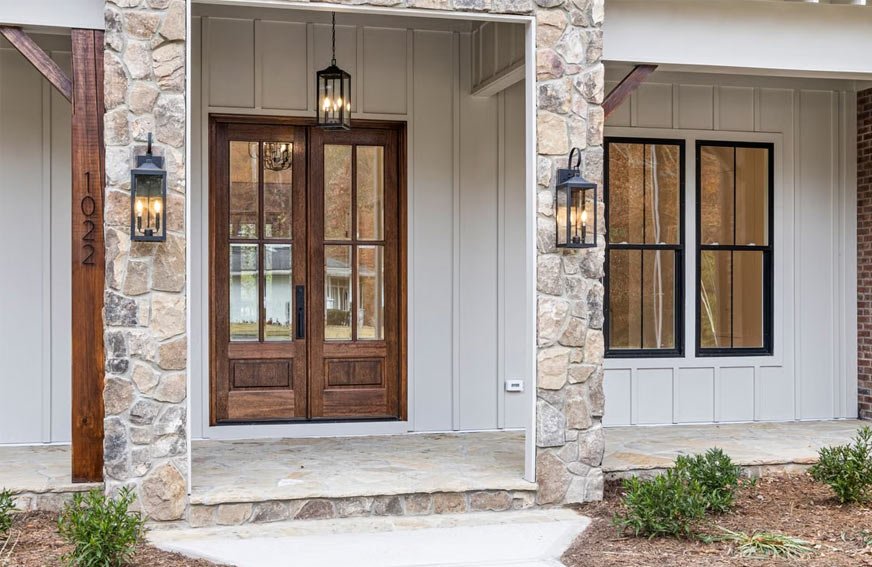
For homeowners in Rockville, exterior improvements have to do more than make a house look refreshed from the street. Doors, windows, drainage, siding, lighting, and outdoor surfaces all sit between everyday living and changing weather, so the best projects solve practical problems while improving appearance.
Instead of creating a wish list based on curb appeal alone, walk around the property and look for places where the exterior is making life harder. Drafts, difficult entrances, peeling finishes, poor drainage, dark walkways, and high-maintenance landscaping all point toward upgrades with a clear purpose.
Start With the Entrance You Use Every Day
The front entrance receives plenty of design attention, but begin by evaluating how the door actually performs. Look for drafts, sticking, visible deterioration, damaged weatherstripping, unreliable hardware, or daylight around the frame. A door that is difficult to operate or poorly sealed can become a daily frustration regardless of how attractive it looks.
Once those problems are clear, homeowners can decide whether adjustment, repair, or replacement makes sense. If replacement is the likely direction, consulting a Rockville door company can help homeowners compare entry, patio, French, storm, and specialty door options while considering installation, energy performance, security, durability, and maintenance.
Upgrade Windows Around the Rooms Behind Them
Windows should not be selected only from the sidewalk. Each opening affects a room on the other side, so evaluate window upgrades from indoors as well.
A west-facing room that becomes uncomfortable in the afternoon presents a different problem from a dark kitchen or a bedroom where outside noise is distracting. Difficult operation, condensation between panes, damaged frames, air leakage, and deterioration can also signal that particular windows deserve attention.
When replacement is appropriate, consider frame material, glass options, operation style, ventilation, maintenance, and installation quality. Avoid assuming that every window must perform the same job.
The strongest window plan connects exterior consistency with the comfort and function of individual rooms.
Control Water Before Improving Cosmetics
Fresh siding or landscaping will not compensate for water moving toward the foundation. Before spending heavily on visible upgrades, watch what happens during rainfall.
Gutters should collect roof runoff and direct it appropriately. Downspouts need to discharge water where it can move away from the house rather than collect beside the foundation. Soil grading, drains, paved surfaces, and landscaping can all influence that path.
Look for overflowing gutters, erosion, standing water, staining, or consistently damp areas. These symptoms deserve investigation before they are hidden by new finishes.
Water management is rarely the glamorous part of exterior renovation, but it protects many of the improvements that come after it.
Choose Siding for the Maintenance You Will Actually Do
Siding has a large visual impact because it covers so much of the house, but appearance is only one consideration. Different materials and finishes come with different maintenance expectations, durability characteristics, installation requirements, and costs.
Inspect existing siding for cracking, warping, loose sections, peeling coatings, impact damage, or signs of moisture problems. If replacement is justified, choose a product whose upkeep fits your expectations.
A finish that requires maintenance you already know you will postpone is probably not the best long-term choice. Color can modernize a home, but material performance should drive the decision before the paint palette does.
Make Exterior Lighting Solve Three Problems
Outdoor lighting should help people navigate, support security, and make the house welcoming after dark. One bright fixture beside the front door cannot necessarily accomplish all three.
Walk around the property at night. Check the driveway, steps, side entrances, pathways, deck, patio, and any transition where changes in elevation become difficult to see. These observations reveal lighting needs that are easy to miss during daytime planning.
Use fixtures intentionally rather than flooding every surface with excessive brightness. Entry lighting can make locks and visitors easier to see, while pathway and step lighting can improve navigation.
The result should feel comfortable and practical, not like the house has been placed under a spotlight.
Repair Walkways Before They Become Daily Obstacles
Paths, steps, porches, and driveways form the circulation system outside the house. When surfaces crack, settle, become slippery, or drain poorly, the problem affects every trip between the street and the door.
Look for uneven transitions, loose materials, damaged handrails, and places where water or ice tends to collect. Consider how easily someone carrying groceries, pushing a stroller, or visiting with limited mobility can reach the entrance.
A good entrance begins at the point where people arrive, not at the doormat. Fixing the route can improve everyday convenience while also giving the property a more cared-for appearance.
Reduce the Yard’s Maintenance Burden
Landscaping can either support the house or create a permanent weekend chore. If exterior renovation is intended to make homeownership easier, evaluate the yard with maintenance in mind.
Overgrown plants can crowd walkways or trap moisture against exterior surfaces. Trees may need professional assessment when limbs threaten the roof or structures. Beds that constantly erode, dry out, or require intensive upkeep may need a different planting strategy.
Choose plants suited to the site conditions and leave appropriate space around the home. Consider how mature sizes, roots, seasonal debris, watering needs, and pruning requirements will affect future maintenance.
Hardscape deserves similar scrutiny. An oversized paved area that is rarely used may add more cleaning and repair work without improving how the yard functions.
Give Outdoor Living Areas a Specific Purpose
Decks and patios often get redesigned around photographs rather than routines. Before adding features, decide what the space is supposed to make possible.
If the goal is outdoor dining, prioritize enough room for a table and comfortable circulation. If it is quiet morning coffee, a smaller shaded seating area may be more useful. Families may value visibility into the yard, while frequent hosts may need lighting, electrical access, and flexible seating.
Think about how exterior projects interact as well. Drainage changes can affect landscaping. Door replacement may involve trim, steps, or nearby finishes. Siding work can affect exterior fixtures. Planning these projects together helps prevent a newly finished area from being disturbed by the next improvement.
Put repairs that protect the structure first, followed by upgrades to openings and major exterior surfaces. Cosmetic work can complete the plan once the underlying problems have been handled.
The most successful exterior upgrades are not necessarily the ones neighbors notice first. They are the improvements that quietly make the house easier to enter, more comfortable to live in, simpler to maintain, and better protected from weather.
Start with the exterior problems you experience repeatedly, investigate their causes, and improve them in a sensible order. Curb appeal will often improve along the way, but the greater payoff is an exterior that works harder for the people living behind it.

