


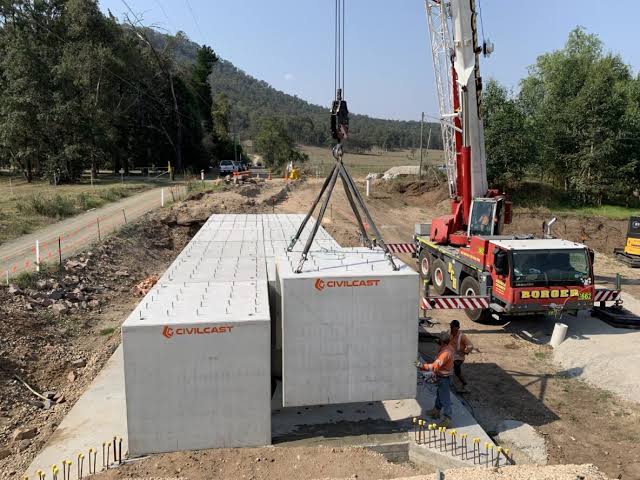
Installing heavy civil drainage infrastructure requires safety protocols, precise machinery control, and expert teamwork on site. Precast concrete culvert sections weighing several tonnes must be lifted, manoeuvred, and lowered into narrow trenches with millimetre precision. A single misstep during the positioning phase can compromise structural integrity or pose serious risks to ground crews.
Crane operators must work in perfect synchronisation with dogmen and riggers to execute these heavy lifts smoothly. In this blog, you will look at the essential safety procedures crane operators use to position large box culverts accurately.
Pre-Lift Site and Rigging Inspections
Safety begins long before a heavy precast unit leaves the delivery truck bed. The crane operator and site supervisor conduct comprehensive ground stability checks to ensure outriggers rest on firm, level soil. Using a certified large box culvert ensures the concrete structure incorporates certified cast-in lifting anchors for maximum installation safety.
Precast units feature embedded cast-in lifting anchors engineered to distribute the immense deadweight evenly during flight. Riggers attach certified clutch systems securely to these anchors, ensuring zero risk of slippage during complex lifting manoeuvres. They verify wind speeds, overhead powerline clearances, and trench stability to eliminate environmental hazards before commencing operations.
Executing Smooth Lifts
Lifting a multi-ton concrete box from a transport trailer demands smooth hydraulic application to prevent sudden load swings. The crane operator slowly takes up tension, verifying that the load remains level before hoisting it above ground height.
Operators use these lifting protocols to safely move heavy precast sections across the site:
- Blind-Lift Radio Channels: Dedicated radio frequencies ensure uninterrupted, clear voice communication between the operator and dogman
- Tag Line Management: Ground workers use long guide ropes to control load rotation without standing beneath suspended concrete structures
- Constant Load Monitoring: Onboard computer systems track boom angle, radius, and load weight against safe operating limits
- Controlled Hoisting Speeds: Operators use low-gear hydraulic controls to eliminate sudden jerks that could stress rigging equipment
Lowering Precast Units
Lowering a massive concrete box into a deep, narrow excavation trench requires exceptional spatial awareness and fine control. Trench walls are often shored up with steel boxes, leaving minimal clearance for the descending precast load. The operator relies on precise hand signals or radio commands from the dogman stationed at the trench edge.
Gradual lowering prevents the heavy concrete edges from striking trench shoring or destabilising the prepared bedding aggregate below. This control protects both the ground crew working in the excavation and the structural integrity of the precast unit.
Aligning Male and Female Joints
Joining adjacent precast sections requires creating a watertight seal along the entire subterranean drainage line. Operators lower the unit into place so the male spigot aligns smoothly with the female socket of the previously installed culvert.
Check out the positioning techniques used to seal heavy precast joints together cleanly:
- Joint Lubrication Application: Workers apply specialised rubber gaskets and joint sealants to ensure a leak-proof connection
- Internal Winch Alignment: Hydraulic pullers or internal come-along winches draw the massive sections together with uniform force
- Laser Alignment Verification: Surveying lasers confirms the unit rests at the exact gradient and line specified in engineering plans
- Soft Landing Procedures: The crane holds partial load weight until mechanical pullers lock the joint fully into its final position
Safe Rigging Release and Backfilling
Once the joint is sealed and verified for level, the crane operator slowly transfers the full weight onto the trench bedding. Ground workers disconnect the lifting clutches only after confirming the precast section is completely stable and self-supporting. When the crane boom rotates smoothly away, backfilling crews can place and compact aggregate along culvert walls.
Systematic backfilling locks the precast box firmly into place, preparing the site for surface reinstatement or road paving. Following these strict lifting and alignment protocols guarantees that massive underground drainage networks are built safely and efficiently.
Uphold Strict Lift Protocols for Site Safety
Heavy civil infrastructure lifts require precise crane operation and thorough rigging inspections. Clear communication, lifting point checks, and mechanical joint pullers help installation crews work safely. High-quality precast products with certified lifting anchors streamline on-site handling from transport truck to final trench placement.
Protect your installation personnel and project timelines by prioritising certified lifting equipment and strict site communication protocols. Choosing engineer-approved precast box units ensures seamless joint alignment and long-term subterranean structural stability.

