


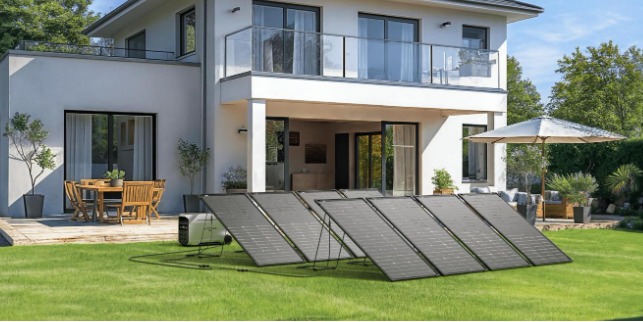
Bifacial solar panels can be a smart choice for homeowners who want to capture more sunlight from the same footprint. Unlike standard panels, they generate electricity from both the front and rear sides, using direct sunlight and reflected light from nearby surfaces. That added production can improve system performance when the installation environment supports it. Before choosing them for your home, look closely at where the panels will sit, how much reflected light your property provides, what mounting setup is possible, and whether the added energy justifies the total system cost over time.
What Can Bifacial Solar Panels Add to Home Solar?
How Both Sides Contribute to Electricity Generation
Bifacial solar panels for home produce power from the front side like conventional modules, but they also use the rear side to collect light that bounces off roofs, paving, light-colored walls, gravel, or the ground below. This second source of irradiance can raise total energy output without expanding the array footprint. In practical terms, the benefit is strongest where the rear side has access to bright, reflective surroundings and enough open space to receive that reflected light. For homeowners, that means a bifacial setup can help extract more electricity from patios, terrace mounts, pergolas, elevated racks, and some ground installations, especially when surfaces around the panels are clean and relatively reflective.
Why Additional Output Depends on Your Installation
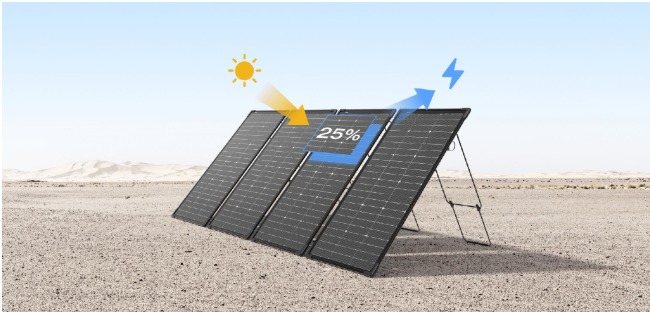
Bifacial panels generate more energy when their placement allows reflected light to reach the rear surface. Elevated mounting above a pale roof or bright terrace can help, while shaded corners, dark roofing, and mounting close to the roof can limit rear-side gains. Adjustable positioning makes it easier to suit the installation: the EcoFlow 125W Bifacial Modular Solar Panel offers a 30°–60° adjustment range and up to 25% conversion efficiency. Its rated output is 125W under standard test conditions (STC) and 138W under bifacial nameplate irradiance (BNPI) conditions, illustrating how rear-side illumination can contribute additional power. For larger setups, up to eight panels can be connected in parallel for a combined 1,000W rated capacity, provided the connected equipment supports the configuration.
Does Your Home Offer the Right Conditions?
Assess Roofs, Terraces, and Open Ground
Start by identifying where bifacial panels could receive light on both sides. Flat roofs often work better than steep, tightly packed pitched roofs because they can allow raised mounting and more rear-side exposure. Terraces, balconies, pergolas, and carports may also suit bifacial designs when the surrounding surfaces reflect light well. Open ground can be especially favorable if the array sits above gravel, concrete, sand, or another bright surface. Dark shingles, cluttered backyards, and narrow roof sections usually offer less benefit. Walk around your property at different times of day and note how much open sky, reflected brightness, and usable mounting area each location provides before choosing a panel layout.
Check Clearance, Obstructions, and Mounting Needs
Bifacial panels need physical clearance behind the module to make the rear side useful. If the panel lies directly against a roof, wall, or deck surface, rear-side production drops sharply. Look for vents, chimneys, railings, parapets, nearby trees, and upper-story shadows that could block either direct or reflected light. Wind exposure and structural support matter too, since raised mounts and tilt frames add load and may require stronger attachment points. Measure spacing carefully to avoid self-shading between rows, especially on flat roofs and ground racks. Also confirm that your preferred mounting system can hold the tilt you want while keeping the rear side open, stable, and safe over time.
What Should You Check Before Choosing a Bifacial Setup?
Match the Panel to Your Space and Equipment
Choose a bifacial setup that fits your available area, your energy target, and the rest of your system. Start with the number of panels your site can support without compromising rear exposure. Then check whether your inverter, wiring, connectors, and mounting hardware are compatible with the planned array size and layout. Modular systems can be useful when you want to start small and expand later, but expansion still needs proper electrical design and safe spacing. Think about how the panels will be cleaned and accessed as well. A well-matched system balances sunlight capture, structural practicality, and electrical compatibility instead of simply maximizing panel count in a constrained location.
Assess the Full Cost of Capturing More Sunlight
A bifacial system should be judged by total value, not panel output alone. Higher production can be attractive, but homeowners should also account for tilt frames, raised racking, added labor, structural work, and any site preparation needed to improve reflectivity under the array. On some homes, those extras are modest and the performance gain makes good financial sense. On others, the installation cost may outweigh the added generation. Compare the expected annual energy increase with the full installed price, maintenance access, and the lifespan of the system. If a simpler conventional design delivers nearly the same usable output on your property, it may be the more efficient investment overall.
Conclusion
You should choose bifacial solar panels for your home when your property can give the rear side real access to reflected light and adequate clearance. Homes with flat roofs, bright terraces, elevated racks, pergolas, or open ground installations often benefit most. The right decision comes from matching panel design, tilt, mounting method, and electrical equipment to your site rather than assuming every home will gain equally. Review your available space, surrounding surfaces, obstructions, and full installation cost before moving forward. If those factors align well, bifacial panels can deliver stronger energy production and better long-term value from the same footprint.

