


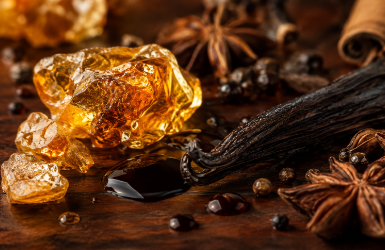
Table Of Contents
- What Amber Means In Perfumery
- Why Amber Often Feels Warm
- The Materials Behind An Amber Accord
- Amber, Ambergris, And Amberwood
- Common Amber Styles
- Amber And Scent Memory
- Choosing And Testing Amber
- Finding Your Amber Style
Amber is one of perfumery’s most inviting and misunderstood descriptions. A collection of amber perfumes can range from soft and creamy to smoky, dry, spicy, or almost mineral, yet many share a familiar sense of warmth. That feeling is not about temperature. It is about the rich, rounded texture created by resins, balsams, vanilla-like sweetness, woods, and spice.
For someone learning to choose fragrance, “amber” is best understood as a broad scent family rather than a promise of a single exact smell. Knowing the difference between a sweet amber, a resinous amber, and a woody amber makes it much easier to find a fragrance that suits your taste, routine, and setting.
What Amber Means In Perfumery
In fragrance, amber is generally an accord, meaning a composed effect created from several materials. It is not usually the scent of the golden fossil resin used in jewelry. Traditional amber accords commonly bring together labdanum, benzoin, vanilla, and sometimes tonka or balsamic materials. As the classic amber accord developed in perfumery, it became associated with a resinous, sweet, slightly powdery, and enveloping character.
That definition still leaves plenty of room for variation. One perfumer may build amber around vanilla and benzoin for a dessert-like softness. Another may emphasize labdanum, incense, leather, or patchouli for a darker and more dramatic effect. A modern formula may use woody aroma materials to make amber feel cleaner, drier, and more diffusive.
Why Amber Often Feels Warm
Warmth is a useful way to describe amber’s emotional and textural effect. Resins and balsams can suggest glowing wood, candlelight, incense, polished furniture, or a softly scented room. Vanilla and tonka can add a rounded sweetness, while spice can create contrast without making the fragrance feel sharp.
Compare that profile with a lemon, mint, or watery marine fragrance. Those notes often feel brisk, bright, or airy. Amber usually moves in the opposite direction: it feels fuller, smoother, and closer to the skin. Depending on the formula, that can read as cozy, elegant, sensual, calming, or theatrical.
The Materials Behind An Amber Accord
There is no universal amber recipe, but a few materials appear often because of the effects they create.
Common Building Blocks
- Labdanum:A resinous material that can add depth, leather-like facets, and a subtly smoky character.
- Benzoin:Often used for a sweet, balsamic, and vanilla-like impression.
- Vanilla:Brings creaminess and sweetness, helping an amber accord feel plush or gourmand.
- Tonka:Can suggest almond, hay, warm spice, and a softly powdery sweetness.
- Styrax or Peru balsam:May add darker balsamic tones, richness, or an incense-like impression.
- Woody aroma materials:Can make the finish feel dry, radiant, mineral, or clean.
Because these ingredients can be balanced in many ways, two scents labeled amber may have very little in common. The note list is a useful starting point, but the full composition and its development on skin matter more.
Amber, Ambergris, And Amberwood
Similar names can be confusing, but these terms describe different fragrance concepts.
- Amber:A warm accord that is often resinous, balsamic, sweet, powdery, or soft.
- Ambergris:A separate perfumery material historically associated with marine, musky, salty, airy, and animalic facets. Modern fragrances may recreate that effect with other materials.
- Amberwood:A modern woody effect that often feels dry, powerful, clean, radiant, or mineral rather than traditionally sweet.
- Fossil amber:Hardened ancient tree resin, most familiar as a decorative material and not the usual basis of an amber perfume accord.
Reading these distinctions prevents an easy mistake: assuming that any fragrance containing “amber” will smell like vanilla, or that ambergris and amberwood are interchangeable with classic resinous amber.
Common Amber Styles To Recognize
- Sweet amber:Vanilla, benzoin, and tonka create a creamy, comforting, often dessert-like warmth.
- Resinous amber:Labdanum, incense, myrrh, and balsams deepen the scent, making it darker and more ceremonial.
- Woody amber:Cedar, sandalwood, patchouli, or modern woods lend the fragrance a drier, more structured finish.
- Spiced amber:Cardamom, cinnamon, pepper, clove, or saffron add lift and contrast to the richness.
- Floral amber:Rose, jasmine, iris, or orange blossom can brighten the accord, making it feel more luminous.
- Clean amber:Musk, sheer woods, and restrained sweetness create a lighter style that can work well for daytime wear.
Amber And Scent Memory
A fragrance can feel familiar even when you cannot immediately identify why. Smell is closely connected to brain regions involved in emotion and memory, which helps explain why a perfume can call up a person, place, season, or moment. Research discussing how odors bring past experiences to mind also shows why these responses can feel especially vivid and personal.
For one person, a resinous amber may suggest winter evenings, old books, incense, or a family gathering. For another, the same scent may feel too heavy or too sweet. Neither reaction is negative. Personal associations are part of fragrance, not a flaw in how someone smells it.
Choosing And Testing Amber
Weather, setting, and application amount can shape how an amber fragrance performs. In warm weather, lighter versions with citrus, florals, musk, or airy woods may feel more comfortable. In cool weather, richer notes of vanilla, spice, incense, leather, and resin often feel more balanced. For an office or small room, a clean amber and a lighter application are usually sensible choices.
How To Test Before You Commit
- Read the full note list rather than relying on the word “amber.”
- Try the fragrance on a paper strip to get an initial impression.
- Apply a small amount to clean skin, then leave it on for at least 30 minutes.
- Notice the opening, middle stage, and dry-down separately.
- Test only a few fragrances at a time to reduce nose fatigue.
- Write down whether the scent feels sweet, dry, smoky, powdery, spicy, woody, or clean.
Finding Your Amber Style
Amber is not one fixed smell. If you enjoy sweetness, seek vanilla, benzoin, and tonka. If you prefer a darker fragrance, explore notes like labdanum, incense, leather, and spice. If you want something lighter, look for musk, fresh woods, citrus, or airy florals around the amber base. The right amber is simply the version whose warmth feels like your own.

