


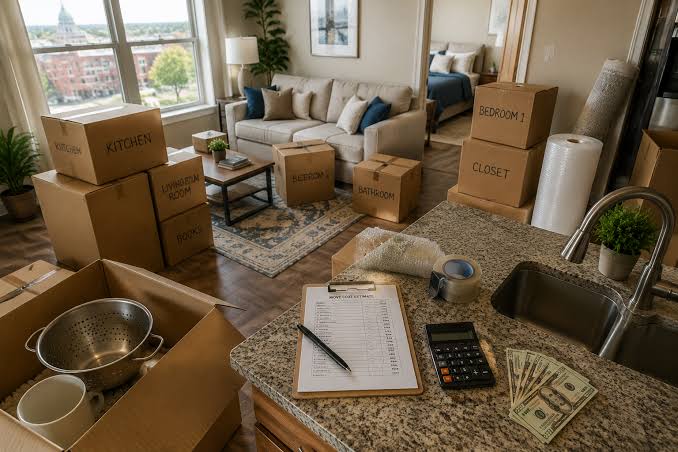
Moving to Bloomington, MN is mostly about the truck, the boxes and getting the couch through the door. That part gets all the planning attention. The paperwork that follows is what catches people out a month later, when a utility bill goes to the wrong name or a property tax bill arrives at the non-homestead rate.
This guide covers both halves. What to line up before the move, what to check on the day, and the few Bloomington and Minnesota steps that have real deadlines attached.
Pin Down the Date Before Anything Else
Everything else hangs off your move date, so settle it early. If you’re renting, check the exact end date on your current lease and the start date on the new one, and whether there’s any overlap. A day or two of overlap takes a lot of pressure off loading and cleaning.
Buyers have less control because the closing date drives things. Still, ask your agent or lender how firm that date is before you book anything.
If your dates have any flexibility, tell the movers when you ask for quotes. A few alternative dates gives them room to fit you in, and you’ll see quickly which days are already taken.
Get an Estimate From Someone Who Has Seen Your Stuff
A quote over the phone based on “it’s a three-bedroom” is a guess. A useful estimate comes from someone who has walked through the home, in person or on a live video walk-through, and seen the piano in the basement and the overstuffed garage. For interstate moves, federal rules go further: if the move starts within 50 miles of the mover’s place of business, the written estimate has to be based on a physical survey of your goods unless you waive that in writing.
When you’re comparing bloomington moving services, ask the same questions of each company so the quotes line up. Is packing included or extra? Are stairs, long carries or heavy items like safes priced separately? What happens to the price if the job runs long?
Check the paperwork side too. Minnesota requires household goods carriers to hold a state permit, and anyone moving you from another state needs a U.S. DOT number, which you can look up through FMCSA’s Protect Your Move site.
Ask too about what protection covers damage. On interstate moves, the no-cost option, called released value protection, only makes the mover liable for up to 60 cents per pound per article. FMCSA’s own example: a 25-pound TV would be covered for about $15. Full value protection costs extra, and the price varies by mover, so get it in writing.
Check What Your Building Needs
Apartment and condo moves can come with building rules that houses don’t have. Call the property manager at both ends, the place you’re leaving and the place you’re going, and ask whether you need to reserve the elevator or loading dock, and whether they want a certificate of insurance from your mover before the day.
For a house, think about where the truck will park. A narrow street, a shared driveway or an HOA with parking rules can all slow things down. Mention any of it to the movers ahead of time so they bring the right size truck.
Set Up City Utilities Right Away
Bloomington handles a few household services directly. Water, sewer, storm sewer, garbage, recycling and organics are all billed through the City of Bloomington Utility Billing office, so call them with your name, billing address and move-in date to open the account. Electricity, gas and internet come from separate providers you’ll need to set up on your own.
One detail people miss: the city asks new residents to take an initial inside water meter reading within 24 hours of moving in and phone it in. Do it on move day while you remember.
Leaving a Bloomington home works the same way in reverse. Call Utility Billing about a week before you go, and take a final meter reading within 24 hours of moving out.
Update Your Driver’s License Within 60 Days
Minnesota gives you a window, not forever. According to the Department of Public Safety, you need to update the address on your Minnesota license or ID within 60 days of moving, or within 30 days if you hold a commercial license.
You can’t do this one fully online. You can pre-apply online, but the change itself happens in person at a DVS office, as a duplicate or renewal.
A standard card doesn’t need proof of your new address, but a REAL ID needs two proofs of residence. A recent home utility bill and your lease both count, as paper originals. DVS won’t accept a document shown on your phone.
Changing your license address doesn’t update your vehicle records. That’s a separate step. And the Post Office won’t forward DVS mail, so get it done before anything official goes to the old address.
Homeowners: Don’t Skip the Homestead Application
If you’ve bought a home in Bloomington and live in it as your main residence, you’ll likely want homestead classification, which affects how a primary home is taxed. It’s easy to assume the city handles it. It doesn’t.
Bloomington’s assessing office points out that homestead applications go through Hennepin County, not the city. You can apply online through the county portal or by mail. Requirements vary, but new owners typically need the deed and eCertificate of Real Estate Value, a Minnesota driver’s license or ID, and Social Security numbers for every owner.
Timing matters here. The city notes that owning and occupying by December 1 affects the following year’s tax status, so a late-autumn closing deserves quick attention.
Then Go Find Your Spots
Once the boxes are mostly flat, get out of the house. Hyland Lake Park Reserve has miles of trails plus the Richardson Nature Center, and the Minnesota Valley National Wildlife Refuge runs a visitor center in Bloomington that overlooks the Minnesota River valley. The Mall of America is there too, obviously.
Unpack the kitchen, find the grocery store, and give yourself a week before you judge the place.

