


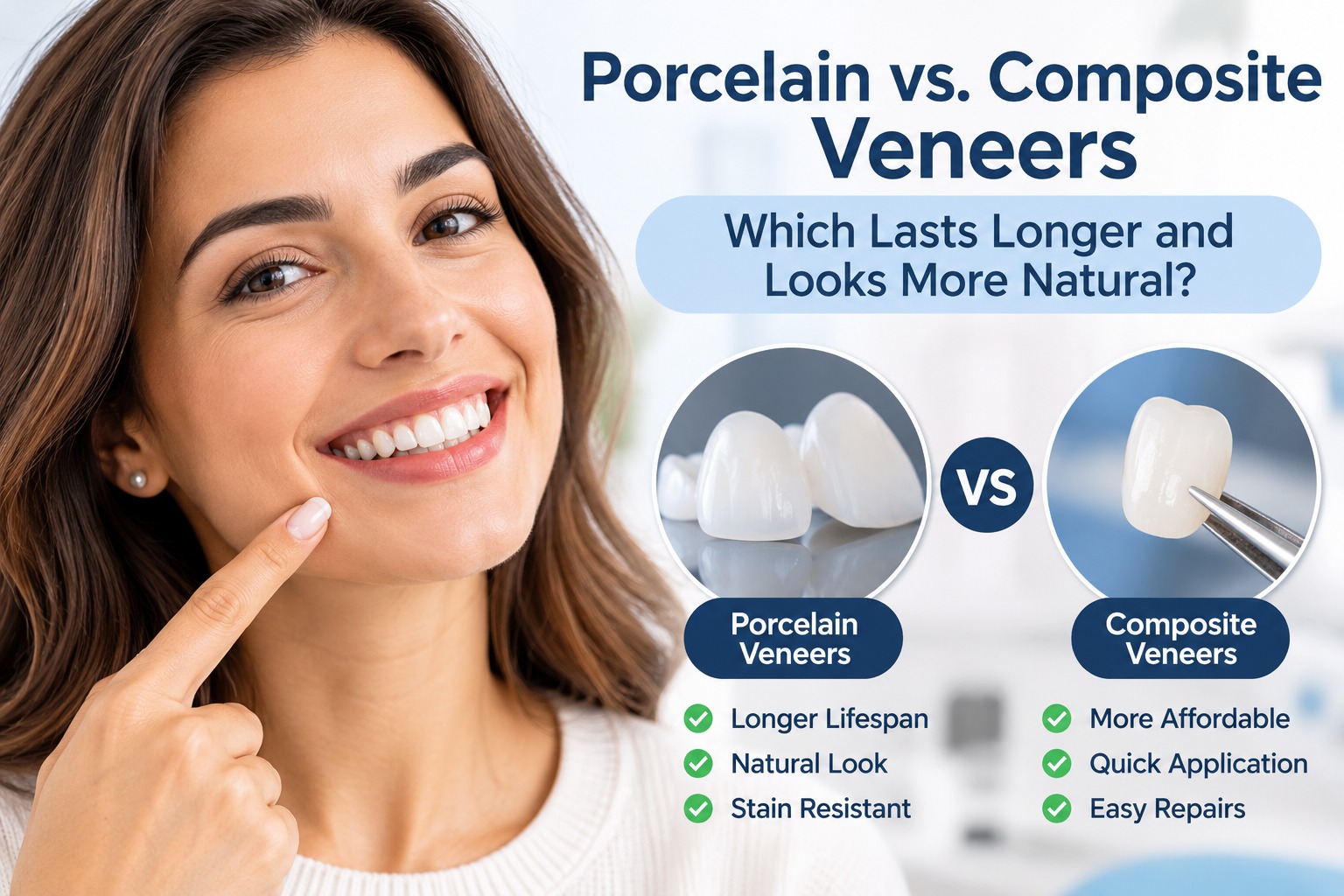
One chipped front tooth is enough to make you cover your mouth in photos. So is a stain that no amount of whitening seems to touch. Veneers can sort out both without reshaping the whole tooth. Most people comparing porcelain vs. composite veneers care about two things: how real they look and how long they last.
Both materials do a decent job on appearance. Where they split is price, how the dentist places them, and what upkeep looks like afterward. Anyone browsing cosmetic dentistry Mississauga clinics will have a better consultation by knowing this first, and the dentist can then point you to what actually fits your teeth.
What Makes These Two Veneer Materials Different?
Think of a veneer as a slim shield fixed to the front of a tooth. People usually get one to cover a chip, a stain that won’t lift, a rough edge, or a space between teeth.
Porcelain is the lab option. First, the dentist removes a bit of enamel. Next comes a scan or impression, which goes to a dental lab. The ceramic shells come back later and get bonded on at a second visit. They’re shaped to blend with your other teeth.
Composite happens in the chair. Resin goes on layer by layer, then the dentist shapes and polishes it. Most people finish in one appointment. Bigger jobs run longer.
Of all the Types of dental veneers, these are the two you’ll hear about most. They differ in material and in how they’re placed. Composite is easy to fix or adjust later. Porcelain needs lab work but resists stains better.
Which Veneers Look More Natural?
Nearly everyone walks in asking for whiter teeth. Somewhere along the way, most realise they want teeth that look real, and that’s a different thing. A natural veneer picks up light like a real tooth and looks at home next to the rest.
Porcelain manages this without much help. It’s translucent, so light travels through it much the way it travels through enamel. That’s the main reason dentists reach for it on front teeth, where a mismatch shows from across a room.
Composite can get there as well, though it depends more on the dentist’s skill. Layering, hand shaping, and a careful polish keep it from looking chalky or flat. Tooth size and gum line get a proper look too, since the whole point is a smile that still looks like yours.
How Long Does Each Type of Veneer Last?
Porcelain is the safer bet for anyone who cares most about how long veneers last. That single point sways a lot of patients.
The porcelain veneers’ lifespan is often quoted as 10 to 15 years, and sometimes longer when care is good. Plenty of them last well past that if placement was solid and the patient keeps their mouth clean. The colour holds up too, so daily coffee or tea doesn’t dull it as quickly.
Composite doesn’t go the distance. Composite veneers normally last 5 to 7 years as the resin slowly wears, dulls, and stains. But a small chip is an easy fix, so you can hold off on replacing the entire thing.
Don’t read those numbers as countdowns. The longevity of Porcelain veneers and Composite veneers depends on the individual, based on your bite, any grinding of the teeth, the quality of the bonding, and how well you care for your teeth. The tooth underneath is just as important.
What Affects Veneer Durability Over Time?
Most veneer damage comes from small, careless habits. Nail biting, ice crunching, and using your teeth as a bottle opener all take a toll. Night grinding is worse because you can’t feel it happening, and it cracks and chips veneers over time.
Stains are where porcelain pulls ahead. Composite gradually dulls, especially for heavy coffee and tea drinkers or anyone who eats a lot of dark-coloured food. That gap has a direct effect on long-term veneer durability, and it counts most for people who want their smile to look the same in five or ten years.
Some basic habits protect either material:
- Brush twice a day with fluoride toothpaste.
- Clean between your teeth daily.
- Stay away from hard objects and ice.
- Keep your check-ups and cleanings.
- Use a night guard if your dentist recommends one for grinding.
Good care helps veneer durability, but it won’t prevent every kind of damage.
When Is Veneer Replacement Necessary?
Age alone doesn’t mean a veneer has to go. How it looks and functions matters more than how many years it’s been there.
Cracks, chips, loose edges, or any change around the margins should get checked by a dentist. Discolouration that won’t go away deserves attention too, especially when it shows on the veneer or the tooth next to it.
Composite damage can often be repaired by adding or reshaping resin, so a full redo isn’t always needed. Porcelain is trickier. A fractured shell or one that has lost its bond usually has to be replaced.
How far veneer replacement needs to go comes down to two things: how badly the veneer is damaged and how healthy the tooth under it still is. A dentist who sees you regularly spots problems while they’re small. That makes it much easier to settle on a repair before a full veneer replacement becomes the only choice.
Which Veneer Option Suits Your Teeth and Lifestyle?
Composite is the cheaper, quicker route. It also suits small fixes, since most of your natural tooth stays untouched.
Porcelain is for people who want stain resistance, fine detail, and years of wear. It costs more and needs more preparation. That’s the deal.
Your mouth sets limits, whatever you’d prefer. Fillings, enamel, gum health, bite, and grinding all matter. Decay and gum disease come first, always, before any cosmetic work.
The Types of dental veneers aren’t interchangeable. A dental expert can look at your teeth and help you pick the right option.
What Should You Consider Before Choosing Veneers?
A lower quote can be misleading, so it helps to look further ahead. Some treatments take away more of your natural tooth, some last longer, and some cost more to maintain. Porcelain generally has the bigger price tag at the start, and composite can end up needing regular polishing or small repairs.
It’s worth sitting down with the dentist and going over enamel removal and reversibility before anything begins. With porcelain, the change to your enamel can’t be undone. A good dentist will gladly go over what the treatment can’t do, what results are realistic, and how to look after the veneers afterward.
Make an Informed Choice for a Confident Smile
Porcelain wins on lifespan and staining. Composite wins on speed and repairs. That’s about as far as a general comparison goes, because the right pick depends on your teeth, your habits, and what you want to see in the mirror. A good dental clinic in Mississauga can help you work out which side suits you.
Battleford Dental is worth a visit once you’re ready to move. You start with a thorough check of your teeth and gums. Then the dentist talks you through the veneer choices and the real cost of each, upfront and over the years. Questions are welcome, even the ones you think are silly. Afterward, you plan from facts, not guesses.

