


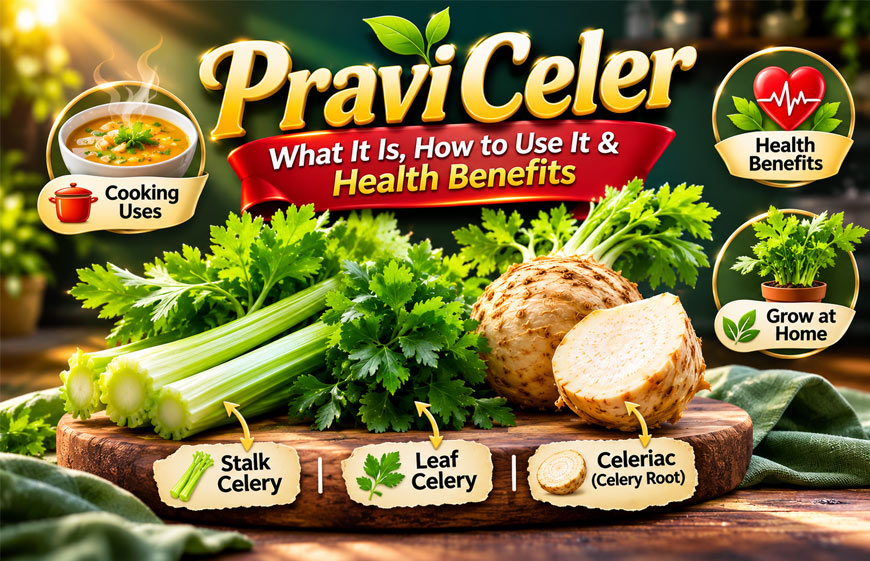
Pravi Celer is a regional name for celery. Its scientific name is Apium graveolens. The term is mainly found in Croatian and other Balkan food and plant references.
The name can be confusing because celery comes in several forms. Pravi Celer may mean regular stalk celery, leaf celery, or celeriac, depending on the recipe.
This guide explains what Pravi Celer is, its different types, taste, cooking uses, health benefits, storage, growing tips, and safety.
What Is Pravi Celer?
Pravi Celer is a common name for Apium graveolens. This is the plant species we normally call celery.
It is not a separate or unusual vegetable.
The word celer means celery. The word pravi can mean true, real, proper, or genuine. Because of this, Pravi Celer can roughly mean “true celery” or “real celery.”
In Croatian plant references, Pravi Celer is one of the common names used for Apium graveolens. Other reported names include vrtni celer and mirisavi celer.
Celery belongs to the Apiaceae plant family. Carrots, parsley, and parsnips are also part of this family.
There are several forms of celery. Some are grown for their long stalks. Others are grown for their leaves. Celeriac is grown for its large, round base.
This is why the meaning of Pravi Celer in a recipe can depend on which part of the plant is being used.
Is Pravi Celer the Same as Celeriac?
Not always.
Celeriac is also called celery root. It comes from the same celery species, but it is grown mainly for its large, round base.
Regular stalk celery is grown for its long and crisp stalks. Leaf celery has thinner stems and more strongly flavored leaves.
This means Pravi Celer does not always mean celeriac.
Look at the recipe to understand which type you need. If it asks for a large, rough root that needs to be peeled and cut into cubes, it probably means celeriac.
If the recipe asks for long green stalks or leaves, regular or leaf celery is more likely.
Checking which part of the plant the recipe uses is better than relying only on the name.
Main Types of Pravi Celer
Celery comes in different forms. They have a similar celery smell and taste, but they can look and feel very different.
Stalk Celery
Stalk celery is the type commonly found in supermarkets. It has long, green stalks with leaves at the top.
The stalks are crisp and contain a lot of water. They have a fresh, herbal, and slightly bitter taste.
The pale inner stalks are usually softer and milder. Darker outer stalks can be firmer and stronger in taste.
Stalk celery can be eaten raw or cooked. It is often used in salads, snacks, soups, stocks, and sauces.
Leaf Celery
Leaf celery is grown mainly for its leaves. Its stalks are usually thinner than regular stalk celery.
The leaves have a stronger celery taste and smell. They are useful for adding flavor to soups, broths, beans, sauces, and stews.
Because the flavor can be strong, you may only need a small amount.
Celeriac
Celeriac is commonly known as celery root. It has a large, round base with rough brown skin.
The inside is pale and firm. It has a celery-like taste but is more earthy than regular celery.
Celeriac can be boiled, roasted, mashed, or added to soup. It can also be peeled and grated into a raw salad.
Celeriac and stalk celery look very different, but they belong to the same plant species.
Celery Seeds
Celery seeds can also be used in cooking.
Dried celery seeds are used as a spice. They have a strong taste, so only a small amount is usually needed.
They are useful when you want celery flavor without adding fresh stalks or leaves.
What Does Pravi Celer Taste Like?
The taste depends on which type of Pravi Celer you use.
Fresh stalk celery is crisp, juicy, fresh, and slightly bitter. Younger inner stalks usually have a milder taste.
Dark green leaves and outer stalks often have a stronger smell and flavor. This makes them useful for soups and stocks.
Celeriac tastes a little different. It has a celery-like flavor mixed with an earthy taste. Cooking makes it softer and usually makes the flavor milder.
These differences are important when following a recipe.
For example, celeriac can add a thick and firm texture to a dish. Regular celery can provide a similar smell and flavor, but it cannot give the same texture.
How Is Pravi Celer Used in Cooking?
Pravi Celer has many cooking uses because different parts of the plant can be used in different ways.
Celery is often used in Balkan and European cooking. It can add flavor to soups, stocks, sauces, and slow-cooked dishes.
The instructions in a recipe can help you understand which type of celery you need.
Words such as leaves, stalks, root, peeled, grated, or diced are useful clues.
Soups and Broths
Celery is commonly used in soups and broths.
The stalks and leaves release their flavor while cooking. Celery is often cooked with carrots, onions, beans, parsley root, meat, and other vegetables.
Celery leaves can have a strong taste. Start with a small amount if you are not sure how much you need.
Celeriac can also be added to soup. Peeled pieces become soft during cooking and give the soup more body and an earthy celery taste.
Clean celery pieces can also be saved for homemade stock. Leaves and stalk ends can be frozen until you need them.
Do not use celery that is mouldy, slimy, or spoiled.
Eating Stalk Celery Raw
Stalk celery can be eaten raw.
You can cut it into small pieces for salads or serve longer sticks as a snack. Celery sticks can be eaten with hummus, yogurt dip, or soft cheese.
Apple also works well with celery. Its sweet taste can balance celery’s slight bitterness.
Celery can also be mixed with carrots, cabbage, walnuts, lemon juice, or yogurt.
Older stalks sometimes have tough strings. You can remove these with a small knife or vegetable peeler.
Cooking with Celeriac
Celeriac can look difficult to prepare because of its rough skin, but preparing it is simple.
First, cut off the top and bottom. Place it safely on a cutting board and cut away the rough outer skin until you reach the pale inside.
After cutting, celeriac can start to turn brown. Putting the pieces in water with a little lemon juice can slow this down.
You can roast celeriac in cubes or wedges. It can also be boiled and mashed.
Some people mix mashed celeriac with potato. You can also blend cooked celeriac into soup to give it a thicker texture.
For a raw salad, peel the celeriac and grate it into thin pieces. Lemon juice, mustard, or yogurt can be added for flavor.
Using Celery Leaves
Celery leaves are edible, so you do not need to throw them away.
They have a strong celery flavor and can be added to soups, stocks, sauces, stews, rice dishes, and salads.
Soft young leaves can also be chopped and added on top of a finished meal.
The taste can be stronger than parsley, so start with a small amount.
If you cannot use fresh celery leaves quickly, you can chop and freeze them. They can then be used in cooked meals later.
Celery leaves can also be dried, although dried leaves taste different from fresh ones.
How to Know Which Pravi Celer to Buy
Stores outside the Balkans may not sell vegetables under the name Pravi Celer.
Instead, you may see labels such as celery, leaf celery, celeriac, or celery root.
Look at the recipe to decide which one you need.
If the recipe shows long green stalks, buy regular stalk celery.
If it asks for strongly flavored leaves, choose leaf celery or regular celery with plenty of healthy leaves.
If it asks for a large, round vegetable that needs to be peeled, grated, or cut into cubes, you probably need celeriac.
For soups and stocks, regular celery or leaf celery may both work depending on the recipe.
Photos can also help if an old family or Balkan recipe does not clearly explain which type to use.
The main thing is to check which part of the celery plant the recipe needs.
Best Substitutes for Pravi Celer
The best substitute depends on the type of celery you need.
For celery stalks, regular supermarket celery is the easiest choice.
If a recipe needs strongly flavored celery leaves, regular celery leaves can work. You can also use celery leaves with a little parsley.
Celeriac is harder to replace because it has both celery flavor and a firm texture.
Parsnip or turnip can provide a similar firm texture, but they do not taste exactly like celeriac. Adding a small amount of regular celery can help give the dish more celery flavor.
Fennel stalks can sometimes replace celery when you mainly need crunch. However, fennel has a different taste.
Choose a substitute based on what the recipe needs most: celery flavor, crunch, or the firm texture of celeriac.
How to Choose Fresh Pravi Celer
When buying stalk celery, choose firm and crisp stalks. Avoid stalks that are very soft, rubbery, or slimy.
The leaves should look fresh. Avoid celery with badly wilted or yellow leaves.
Pale inner stalks are often softer and milder. Darker stalks can have a stronger taste.
Celeriac naturally has rough skin, so it does not need to look smooth.
Choose celeriac that feels firm and heavy for its size. Avoid roots with large soft or rotten areas.
A firm, medium-sized celeriac can be a good choice. Very large ones can sometimes be woody or hollow inside.
How to Clean and Store Pravi Celer
Dirt can collect between celery stalks, especially near the bottom.
Separate the stalks and wash them well under clean running water before eating or cooking them.
Wash celeriac before peeling it as well. This helps stop dirt from getting onto the inside while you cut it.
Keep stalk celery in the refrigerator. Protect it from drying out, but do not store it soaking wet. Too much moisture can make it spoil faster.
Whole celeriac usually keeps longer than fresh celery leaves or separated stalks.
After cutting celeriac, cover the exposed part and keep it in the refrigerator.
The outside of celeriac is rough and has deep grooves. You may need to cut away more skin than you would with a potato.
Throw away celery or celeriac if you notice mould, slime, serious rot, or a bad smell.
Can You Freeze Pravi Celer?
Yes. You can freeze Pravi Celer.
However, freezing changes the texture of celery.
Stalk celery loses much of its crunch after it is frozen and thawed. Frozen celery is therefore better for soups, stocks, sauces, and stews.
It is usually not the best choice for fresh salads.
Celery leaves can also be chopped and frozen. They may not look as fresh after freezing, but they can still add flavor to cooked food.
Freezing is also useful for saving clean celery pieces for homemade stock.
Can You Grow Pravi Celer at Home?
Yes. Pravi Celer can be grown at home, but celery needs regular care.
It grows best in fertile soil with regular moisture.
Celery seeds are very small and can take time to grow. Many gardeners start the seeds in trays before moving the young plants outside.
The seeds should stay close to the soil surface. They should not be planted too deeply.
Keep the soil damp but not full of water.
Regular watering is important after the plants start growing. Long dry periods can affect the stalks and may make them thinner or more bitter.
The right planting time depends on your climate and the type of celery you are growing.
Growing Celeriac
Celeriac needs a long growing season because its large base takes time to develop.
It grows best in fertile soil that holds moisture well. Regular watering is important.
In cooler areas, gardeners often start celeriac seeds before the main outdoor growing season.
Very cold conditions when the plants are young can cause them to flower too early.
Remove weeds around the plants so they do not take water and nutrients away from the celeriac.
Avoid digging deeply near the plants because celery roots can grow close to the soil surface.
Pravi Celer Nutrition and Health Benefits
Pravi Celer can be part of a healthy and balanced diet.
Regular stalk celery contains a lot of water. It also provides fiber and nutrients such as vitamin K, folate, and potassium.
The exact amount of nutrients depends on how much celery you eat and which part of the plant you use.
Celeriac is different from stalk celery. It contains less water and more carbohydrate by weight. Its firm texture can also make it feel more filling in cooked meals.
Celery and celeriac contain natural plant compounds as well.
However, Pravi Celer should be seen as a nutritious vegetable, not as medicine.
Its main benefit is simple. It can add water, fiber, vitamins, minerals, and vegetables to a balanced diet.
Health Claims About Celery
There are many strong health claims about celery online.
Some sources claim celery can detox the body, cure inflammation, treat kidney problems, or prevent diseases. These claims should be treated carefully.
Celery can be part of a healthy diet, but this does not mean it can cure medical problems.
The same is true for celery juice.
Celery juice can be enjoyed as a drink, but it is not a proven treatment for disease. It should not replace medicine or proper medical care.
People with health problems should get advice from a qualified healthcare professional instead of using celery as a treatment.
Pravi Celer Allergy and Safety
Celery can cause an allergic reaction in some people. In some cases, the reaction can be serious.
People with a celery allergy should not assume that celeriac is safe. Celeriac comes from the same celery species.
Celery can also be hidden in prepared foods. It may be used in soups, stocks, sauces, seasoning mixes, and other products.
Cooking celery does not mean it will always become safe for someone with a celery allergy.
Celery is also one of the food allergens covered by European Union food-labeling rules.
Anyone with a known celery allergy should check food labels carefully and follow advice from a healthcare professional.
Why the Name Pravi Celer Causes Confusion
Pravi Celer can be confusing because language, plant names, and cooking terms do not always match perfectly.
As a plant name, Pravi Celer is connected with Apium graveolens. In English, we normally call this species celery.
However, a recipe may be talking about a specific type of celery.
It may need long celery stalks, strongly flavored leaves, or celeriac.
Traditional and regional recipes may also use general names that are different from the labels used in modern supermarkets.
This is why the recipe itself is important.
If it asks you to chop long stalks, regular celery is probably needed. If it asks for leaves, choose leafy celery. If it asks you to peel and grate a large, round base, celeriac is probably the right choice.
Pravi Celer should therefore not always be treated as another name for celery root.
Bottom Line
Pravi Celer is a regional name connected with Apium graveolens, the plant species commonly known as celery. The name can roughly mean “true celery” or “real celery.”
Pravi Celer does not always mean celeriac. Stalk celery, leaf celery, and celeriac are different forms of the same species.
Stalk celery is useful for salads, snacks, soups, and stocks. Celery leaves have a stronger flavor and work well in soups and sauces. Celeriac has firm, earthy flesh that can be roasted, boiled, mashed, or grated.
Pravi Celer can also provide useful nutrients as part of a balanced diet. However, celery and celery juice should not be treated as cures for medical conditions.
If a Balkan or family recipe uses the name Pravi Celer, check which part of the plant the recipe needs. This is the easiest way to choose the right type.
Frequently Asked Questions
What is Pravi Celer in English?
Pravi Celer roughly means “true celery” or “real celery.” It is a regional name for celery.
Is Pravi Celer the same as celery?
Yes, Pravi Celer refers to celery. It may mean stalk celery, leaf celery, or celeriac depending on the recipe.
Is Pravi Celer the same as celery root?
Not always. Celery root, or celeriac, is only one type of celery.
Can Pravi Celer be eaten raw?
Yes. Stalk celery can be eaten raw, and celeriac can also be peeled and added to salads.
Can you eat Pravi Celer leaves?
Yes. Celery leaves are edible and can be used in soups, sauces, stews, and salads.
What can I substitute for Pravi Celer?
Regular celery is the best choice for stalks or leaves. For celeriac, you can use parsnip or turnip.
Can Pravi Celer be frozen?
Yes. You can freeze it, but it will lose some crunch. Frozen celery is best for soups and cooked dishes.
Is celeriac safe if you have a celery allergy?
Do not assume it is safe. Celeriac is a type of celery and may also cause an allergic reaction.
Explore More:
Babybelletje Guide: Meaning, Ingredients, Nutrition, and Storage

