


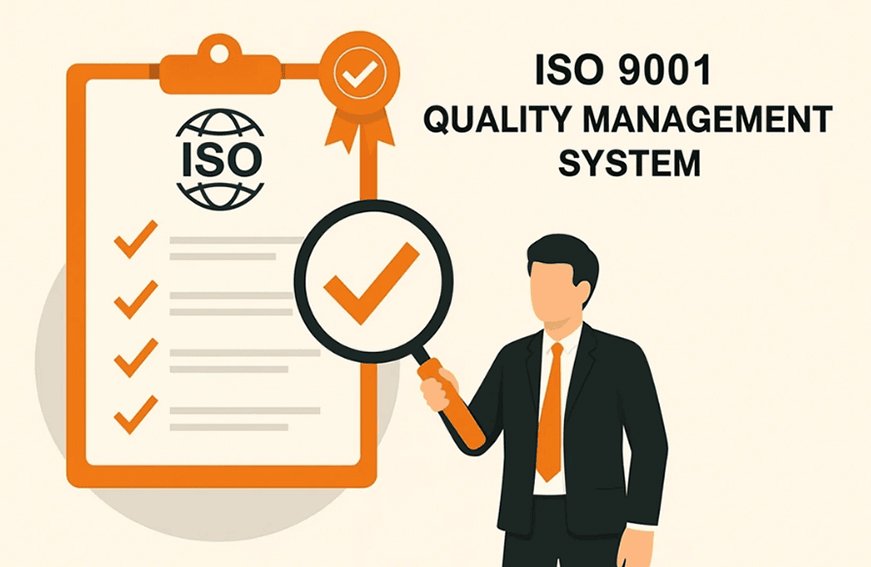
Any company claims that its products are of high quality. Only a few are able to demonstrate their commitment to providing high-quality products regularly. The only way to distinguish between companies that claim quality and companies that actually provide quality products is their possession of an organized quality management system. A quality management system is not a document kept on shelves till it is demanded by the auditor. When implemented effectively, a QMS becomes the basis of any company which is the set of procedures, documentation, and checks aimed at providing a product, a service, or even a decision according to a certain standard. Being aware of what a QMS really does will help us consider QMS as a tool of business development.
What is a Quality Management System?
A quality management system (QMS) is an organized set of rules, procedures and processes which the company employs in order to make sure that its products or services are consistently meeting customer and regulatory requirements. This involves everything from control of material inspection to customer complaints investigations and resolution.
A good QMS basically answers four questions about each and every process performed by the company: What should happen? Who will do it? How do we check if it is done right? And what to do if not? There are standards such as ISO 9001 that provide a proven framework of answers to those questions; however, a Quality Management System does not need to be certified at all in order to be effective. There are many companies creating their internal quality system based on those principles only for the reason that it brings better results.
Why Do Businesses Need a QMS?
In the absence of a quality management system, quality becomes personal as opposed to being institutionalized. This is determined by which specific employee is working at any particular time, how much emphasis was put on a particular batch, or whether one had not forgotten a process from another project. This is risky because of rework, returns, warranty claims, regulatory fines, and most significantly, it will hurt your reputation.
QMS ensures this dependence is no longer an issue, as procedures become repeatable and not dependent on the experience of a particular employee who could leave anytime. This is especially important in industries where there are serious ramifications for making mistakes, such as the manufacturing industry, healthcare, food processing, pharmaceuticals, and the aerospace industry, but even the service industry, where a customer’s perception of an organization is dependent on the consistency of the delivery.
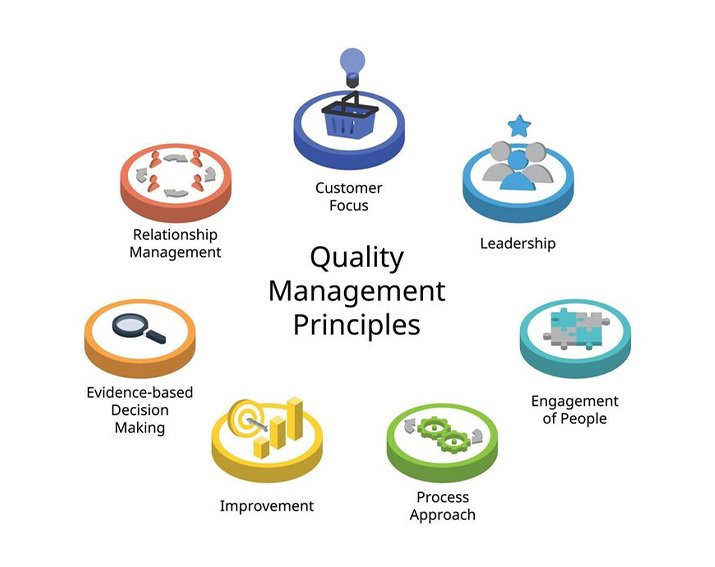
What Actually Drives Performance Through QMS?
The relationship between a quality management system and performance is often overlooked since the impact is an indirect one, realized through reduced complaints, reduced expenses, and increased growth, rather than through a one-time figure. Some of the most direct impacts are as follows:
- Fewer defects and rework- With standardized procedures and built-in control points, issues are identified earlier on, rather than becoming a costly problem involving waste materials and returns.
- Reduced operational costs- Low quality results in higher costs in terms of material and labour waste, as well as the expense incurred in dealing with defects after the fact.
- Improved customer trust- Customer trust is built through consistency; a QMS ensures that the product or service that was provided the previous time is the same one that is provided again, which creates the kind of trust that leads to loyalty and referral business.
- Improved regulatory compliance- In the world of regulation, having a QMS documented is usually the difference between a passing inspection and receiving fines and, even worse, closure.
- Data-based decision-making- A well-established QMS provides data for making decisions on patterns and root causes, not just recurring problems.
What Are the Basic Elements of QMS?
The basic elements of most quality management systems across all industries are the same. Document control guarantees that documents such as procedures, instructions, and specifications are up to date and approved, are available where needed and that old documents are not floating around. Process control specifies how critical processes are to be carried out, including inputs, process sequence, and acceptance criteria for each process step. Process control makes quality consistent, not random.
Internal audits and inspections ensure there is an organized procedure to determine if the processes documented have been properly carried out and if they are still valid. Corrective and preventive action (CAPA) procedures make sure that the results of audits and customer complaints lead to proper root cause analysis and permanent corrections.
Training and competency management ensure that employees are aware of what actions need to be performed and why those actions need to be performed, thus minimizing errors caused by lack of understanding instead of negligence. Lastly, management review involves managers directly in the process, making quality performance a business concern rather than a departmental one.
How Does a Quality Management System Help in Business Development?
A quality management system serves the needs of an organization differently based on its development level. In a growing business, a QMS ensures that there is a framework that will allow quality not to deteriorate because of increasing scale. Actions that were fine when everything was known by ten people will not work when those ten people become thirty.
To an established business, a QMS means continual improvement. Since the QMS provides consistent data on the source of the problem, management focuses on fixing the root cause of the issue and not just addressing the symptoms. This results in lower incidences of emergencies, more stable production, and employees who spend less time dealing with problems and more time making improvements.
There is also the competitive angle here. Getting certified under ISO 9001 is almost always a necessary step in getting contracts from bigger customers or governments or foreign entities. Even when certification is not a formal requirement, buyers are increasingly requiring suppliers to show them a written quality system before committing to a contract. In essence, they require the QMS.
How Does One Build a QMS from Scratch?
Companies that have yet to establish their QMS systems do not have to develop it right at once, flawlessly and perfectly. First of all, it will be reasonable to document the processes which are currently in place, regardless of their informality, and find out where the problems related to inconsistency are arising, and what negative consequences they cause (e.g., returns, complaints, rework, or even audit findings.
Then, the business will be able to implement document control, clarify responsibility for processes, and introduce a basic nonconformity resolution process. In the further development of the QMS, it will be possible to include internal audits and management review into the process, and consider whether certification is beneficial in this case. The main point here is not paperwork itself but the development of a system through which an organization is able to prove and ensure quality rather than wish for it.
Conclusion
The concept of a quality management system is often viewed from an incorrect perspective, as it is believed to be just another compliance issue, whereas in fact, it is simply the organized way of ensuring the firm fulfils the promises it makes in a reliable and verified manner. It is those firms that see the QMS as their strategy, rather than as another document file, who manage to make quality work for them a competitive advantage.

