


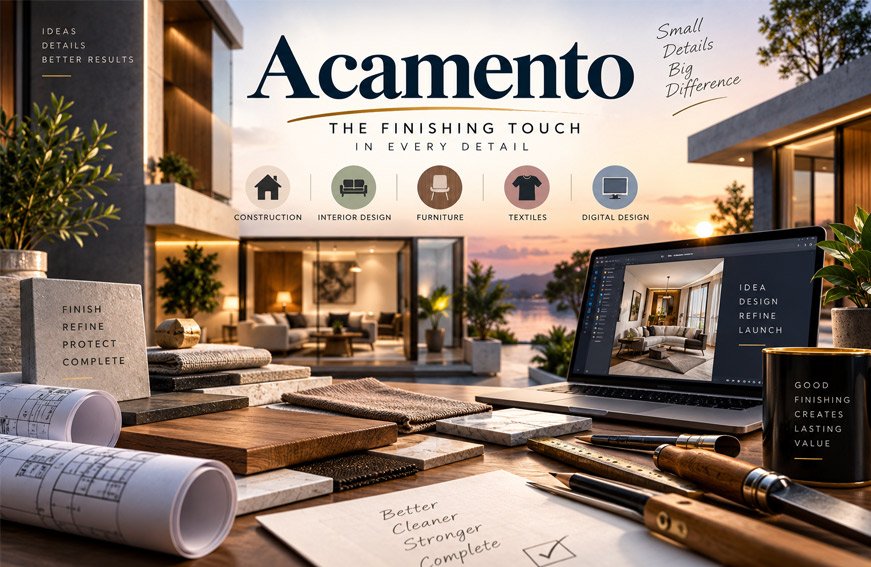
Acamento is an unusual term used online for finishing, refinement, and final improvements. People search for it because different websites explain the word in different ways.
The term is closely connected with the Portuguese word acabamento, which means finish, finishing, completion, or final treatment. Acamento is often used when talking about construction, furniture, design, manufacturing, textiles, and even digital work.
This guide explains what Acamento means, where the idea comes from, how it works, and where it is commonly used.
What Is Acamento?
Acamento is best understood as the final stage of improving something before it is fully ready.
The main work may already be complete, but smaller details still need attention. These final steps can improve the look, feel, quality, safety, or use of a product or project.
For example, Acamento can include sanding wood, painting a wall, polishing metal, trimming loose threads, applying a coating, fixing small defects, or checking the final result before delivery.
The word is also sometimes used for digital work. A website may be almost complete but still need better spacing, working buttons, clearer menus, or faster loading.
There is no single official definition of Acamento. Its meaning depends on the context.
What Does Acamento Mean in Simple Words?
In simple words, Acamento means giving something its final finishing touches.
Think about a wooden table. The table may already be built, but it can still have rough edges or an unfinished surface.
The final work may include sanding the wood, smoothing the edges, applying polish or varnish, and checking the surface. After these steps, the table is properly finished.
The same idea can apply to many other things.
A wall may need a final coat of paint. A shirt may need loose threads removed. A metal product may need polishing. A package may need a final quality check.
The goal is not only to make something look better. Good finishing can also improve comfort, protection, strength, or usability.
Acamento and Acabamento: What Is the Difference?
Acabamento is the standard Portuguese word.
It is commonly used for ideas such as:
-
finish
-
finishing
-
completion
-
final treatment
The word is widely used in construction, furniture, manufacturing, design, textiles, and other industries.
Acamento, however, is not normally the standard Portuguese spelling.
It appears online as an altered form, shortened version, or possible misspelling of acabamento. Some websites have also started using Acamento as a broader term for refinement and final improvement.
This is why the two words should not be treated as exactly the same.
Acabamento is the established Portuguese word. Acamento is a newer and less clearly defined online variation.
In normal English, the word finishing is usually clearer.
Where Did the Acamento Idea Come From?
The exact history of the spelling Acamento is not clearly documented.
However, the idea behind it is very old.
Builders, carpenters, tailors, metalworkers, artists, and other craftspeople have used finishing methods for centuries.
A carpenter may sand and polish wood. A builder may complete painting, flooring, tiles, and fixtures. A tailor may finish hems, trim threads, and check seams.
These jobs all follow the same basic idea: the main structure may be complete, but the final details still matter.
The word Acamento has become more visible in recent online content, but there is no confirmed date showing when this exact spelling first became widely used.
How Acamento Works
There is no official Acamento process that applies to every industry.
The exact steps depend on the material, product, and type of work.
A simple finishing process usually looks like this:
-
Complete the main work.
-
Inspect the result.
-
Find defects or unfinished areas.
-
Fix the problems.
-
Apply the correct finish or final treatment.
-
Inspect the work again.
-
Prepare it for use, sale, delivery, or launch.
For example, wood may need sanding and varnish. A wall may need paint. Metal may need polishing or coating. Clothing may need pressing and trimming.
Good finishing should have a clear purpose. It should improve something useful rather than simply add more work.
Acamento in Construction
Construction is one of the clearest examples of Acamento.
A building may have its walls, roof, plumbing, and main structure completed, but it is still not ready for use.
Final construction work can include:
-
plastering
-
painting
-
flooring
-
tiling
-
fitting doors
-
adding trims
-
installing handles
-
completing fixtures
-
sealing surfaces
-
polishing
-
applying protective coatings
These tasks help turn the main structure into a finished building.
Construction finishing is not only about appearance.
Properly sealed surfaces can help protect materials. Smooth floors and correctly fitted parts can improve comfort and safety. Good coatings may help surfaces last longer and make maintenance easier.
A final inspection is also important. Workers can check for unfinished areas, loose fittings, uneven surfaces, cracks, paint problems, or other defects before the property is handed over.
Acamento in Interior Design
Interior design also depends heavily on final details.
A room can already have walls, flooring, and furniture but still feel unfinished. Small changes can make the space more complete and practical.
Acamento in interior design can include:
-
wall colors
-
lighting
-
rugs
-
curtains
-
cushions
-
cabinet handles
-
furniture finishes
-
trims
-
artwork
-
plants
-
decorative textures
These details can also have practical uses.
Curtains can control light and give privacy. Rugs can make floors more comfortable and may reduce echo. Better lighting can make reading, working, or relaxing easier.
Good finishing should remain balanced. Too many colors, patterns, or decorations can make a room feel crowded.
Expensive materials are not always required. Clean paint lines, suitable lighting, smooth furniture, neat edges, and simple hardware can make a large difference.
The main goal is to make the space feel complete, comfortable, and useful.
Acamento in Furniture and Woodworking
Furniture often needs several finishing steps after it has been built.
A wooden table, chair, cabinet, or shelf may still have rough areas, scratches, marks, or untreated surfaces.
Common finishing methods include:
-
sanding
-
smoothing
-
staining
-
painting
-
polishing
-
waxing
-
oiling
-
varnishing
Workers may also inspect the joints, corners, edges, and alignment.
A suitable finish can improve the appearance of furniture and make the surface smoother to touch.
Some finishes also help protect wood from stains, moisture, or daily wear.
The correct finish depends on the material and where the furniture will be used. A finish suitable for indoor furniture may not be suitable for an outdoor table exposed to sunlight and rain.
Acamento in Manufacturing
Manufacturing also uses finishing processes before products are sold or delivered.
The exact work depends on the product and material.
Common finishing steps can include:
-
trimming
-
polishing
-
painting
-
cleaning
-
coating
-
deburring
-
final assembly
-
labeling
-
testing
-
inspection
Different materials such as metal, wood, plastic, glass, and fabric need different finishing methods.
The finishing stage is also an important time for quality control.
Workers may find scratches, rough edges, loose parts, poor alignment, surface defects, or other problems before the product reaches the customer.
Fixing these problems before delivery can improve quality and reduce complaints.
Acamento in Fashion and Textiles
Clothing also needs finishing before it is ready to wear.
Common finishing work can include hems, seams, buttons, zippers, labels, pressing, and trimming loose threads. These small steps can affect how the clothing looks, fits, and feels.
Some clothes may also use decorative details such as embroidery, lace, beads, or visible stitching.
Good finishing should support the garment. It should not be used to hide poor stitching or weak construction.
Acamento in Art and Creative Work
Artists and designers often make final changes before calling their work complete.
This may include fixing edges, adjusting colors, improving texture, correcting proportions, or removing details that do not help the final design.
Some work may also need a protective layer, such as varnish or another surface treatment.
Good Acamento does not mean adding more and more details. The goal is to improve what is already there and stop when the work feels complete.
Acamento in Product Design
A product can work correctly but still need final improvements.
A designer may need to improve its shape, buttons, controls, labels, materials, surface, packaging, or instructions.
Testing is also important. Designers can watch how people hold, open, clean, read, or use the product.
If users have problems, small changes can be made before full production.
This final stage helps make the product easier and more comfortable to use.
Acamento in Digital Design
The same finishing idea can also be used for websites, apps, and other digital products.
A website may be almost complete but still need small improvements such as:
-
clearer menus
-
better spacing
-
readable text
-
working buttons
-
responsive pages
-
faster loading
-
better accessibility
-
fixed broken links
-
clearer error messages
-
tested forms
These tasks are similar to physical finishing because they improve the final experience before launch.
However, Acamento is not a recognized formal UX or web design method. It is simply a useful way to describe final digital refinement.
Main Principles of Good Acamento
Good finishing usually follows three simple ideas: purpose, precision, and consistency.
Purpose means every final step should improve something useful. It may improve appearance, comfort, safety, strength, or ease of use.
Precision means paying attention to small details. Uneven edges, wrong measurements, loose parts, rough surfaces, or spelling mistakes can make finished work look incomplete.
Consistency means keeping similar parts at the same quality level. Colors, measurements, finishes, and design details should match where needed.
A simple checklist can help keep the finishing process consistent.
Why Acamento Matters
Finishing can strongly affect the final quality of a product or project.
Good Acamento can improve appearance, comfort, usability, protection, and overall quality.
It also gives workers a final chance to find problems before the product reaches the customer.
For example, a table may need a smoother edge. A garment may have a loose button. A website may have a broken link.
Finding these problems early can save time and avoid complaints later.
Quality Control and Final Inspection
Final inspection is an important part of finishing.
For physical products, workers may check:
-
size and measurements
-
alignment
-
surface condition
-
loose parts
-
sharp edges
-
scratches
-
strength
-
correct operation
For digital products, the final check may include broken links, page speed, mobile layout, readability, forms, and navigation.
A checklist is useful when the same type of work is done regularly.
It helps people remember important checks and keep quality more consistent.
Benefits of Good Acamento
Good finishing can provide several practical benefits.
It may improve:
-
appearance
-
surface quality
-
comfort
-
usability
-
consistency
-
protection
-
durability
-
maintenance
-
final presentation
It can also help find defects before sale, delivery, or launch.
Not every finish gives every benefit. The result depends on the material, method, and quality of the work.
Common Acamento Mistakes
One common mistake is rushing the final stage because the main work already feels complete.
This can leave scratches, rough edges, loose parts, poor alignment, or unfinished areas.
Another mistake is using the wrong finish for the material. A product made for indoor use may not be suitable outdoors.
Poor preparation can also cause problems. Paint or coating may not stick properly if the surface is dirty, wet, or uneven.
Another mistake is focusing only on appearance. A product should still be safe, useful, and comfortable.
Over-finishing can also be a problem. Too much decoration, polishing, or repeated changes can waste time and money without improving the result.
Useful Finishing Tools
There is no single Acamento toolkit.
Different jobs need different tools.
Common tools may include:
-
rulers
-
measuring tapes
-
sandpaper
-
files
-
brushes
-
clamps
-
scissors
-
cutting tools
-
polishing materials
-
inspection tools
Good lighting is also important because it makes small defects easier to see.
Using the correct tool for the material is more important than having many tools.
Acamento Tips for Beginners
Start by understanding what the finished result should look like and how it should work.
Know the material before applying paint, polish, heat, adhesive, or another treatment.
When possible, test a finish on a small or spare area first.
Prepare the surface properly. Work slowly when making permanent changes.
Measure carefully and inspect the work from different angles.
Always check function as well as appearance.
Do not keep adding details if they no longer improve the result.
Safety During Finishing Work
Safety depends on the type of finishing being done.
Some work may involve dust, fumes, paint, solvents, adhesives, sharp tools, or machinery.
Suitable protection may include gloves, eye protection, masks, or other safety equipment.
Good ventilation is important when using products that release fumes.
Always follow the instructions provided with paints, coatings, chemicals, and tools.
Acamento does not have one universal safety standard because it is not one specific product or process.
Is Acamento an App or Software Platform?
Some websites describe Acamento as a digital productivity or task management platform.
Reported features include task management, reminders, dashboards, collaboration tools, file sharing, integrations, and AI features.
However, these claims are not clearly verified.
There is no well-confirmed official product website, company name, founder, pricing page, app store listing, or independent product record linked to one established Acamento platform.
This does not prove that no product can ever use the name.
It simply means readers should not treat software claims as confirmed unless they can identify a real company, official website, or verified app.
What Is Not Confirmed About Acamento?
Several details connected with the supposed software platform remain unverified.
There is no clearly confirmed:
-
software owner
-
developer
-
launch date
-
official price
-
free plan
-
paid plan
-
Android app
-
iPhone app
-
Windows software
-
macOS software
-
official integrations
-
security certification
-
privacy policy linked to a verified product
There is also no known international standard or formal business framework called Acamento.
These details should not be guessed or added without reliable evidence.
Acamento vs Finishing
Finishing is the normal English term used in most professional settings.
For example:
-
construction finishing
-
furniture finishing
-
textile finishing
-
surface finishing
-
product finishing
Acabamento is the established Portuguese word for finish or finishing.
Acamento is a less established online variation that is often connected with the same idea.
For clear professional writing, “finishing” is usually the better English word.
Bottom Line
Acamento is best understood as an online term connected with finishing, refinement, and final improvements.
Its strongest language connection is with the Portuguese word acabamento, which means finish, finishing, completion, or final treatment.
The idea can apply to construction, interiors, furniture, manufacturing, clothing, product design, art, and digital work.
The main purpose is simple: improve useful details before something is fully ready for use, sale, delivery, or launch.
Claims that Acamento is a specific software or AI platform are still not clearly verified, so they should be treated carefully.
Frequently Asked Questions
What Does Acamento Mean?
Acamento usually refers to finishing, refinement, or final improvements made before something is considered complete.
Is Acamento a Portuguese Word?
The standard Portuguese word is acabamento.
Acamento appears online as an altered, shorter, or less established variation.
What Is the Difference Between Acamento and Acabamento?
Acabamento is an established Portuguese word meaning finish or finishing.
Acamento is a newer online form that can have different meanings depending on the context.
Is Acamento Used in Construction?
The concept fits construction finishing very well.
It can include painting, flooring, tiling, polishing, fittings, coatings, sealing, and final inspection.
Can Acamento Be Used in Interior Design?
Yes, the finishing idea can apply to lighting, wall colors, curtains, rugs, furniture surfaces, trims, hardware, and other final details.
Is Acamento a Software or AI Platform?
Some websites describe it that way, but there is not enough clear evidence to confirm one established Acamento software platform.
What Are the Main Benefits of Good Finishing?
Good finishing can improve appearance, usability, comfort, protection, consistency, and final quality.
What Is a Common Acamento Mistake?
A common mistake is rushing the final stage.
Using the wrong finish, skipping inspection, and adding unnecessary details can also reduce quality.
Explore More:


[…] What Is Acamento? Meaning, Uses, and Complete Guide […]