


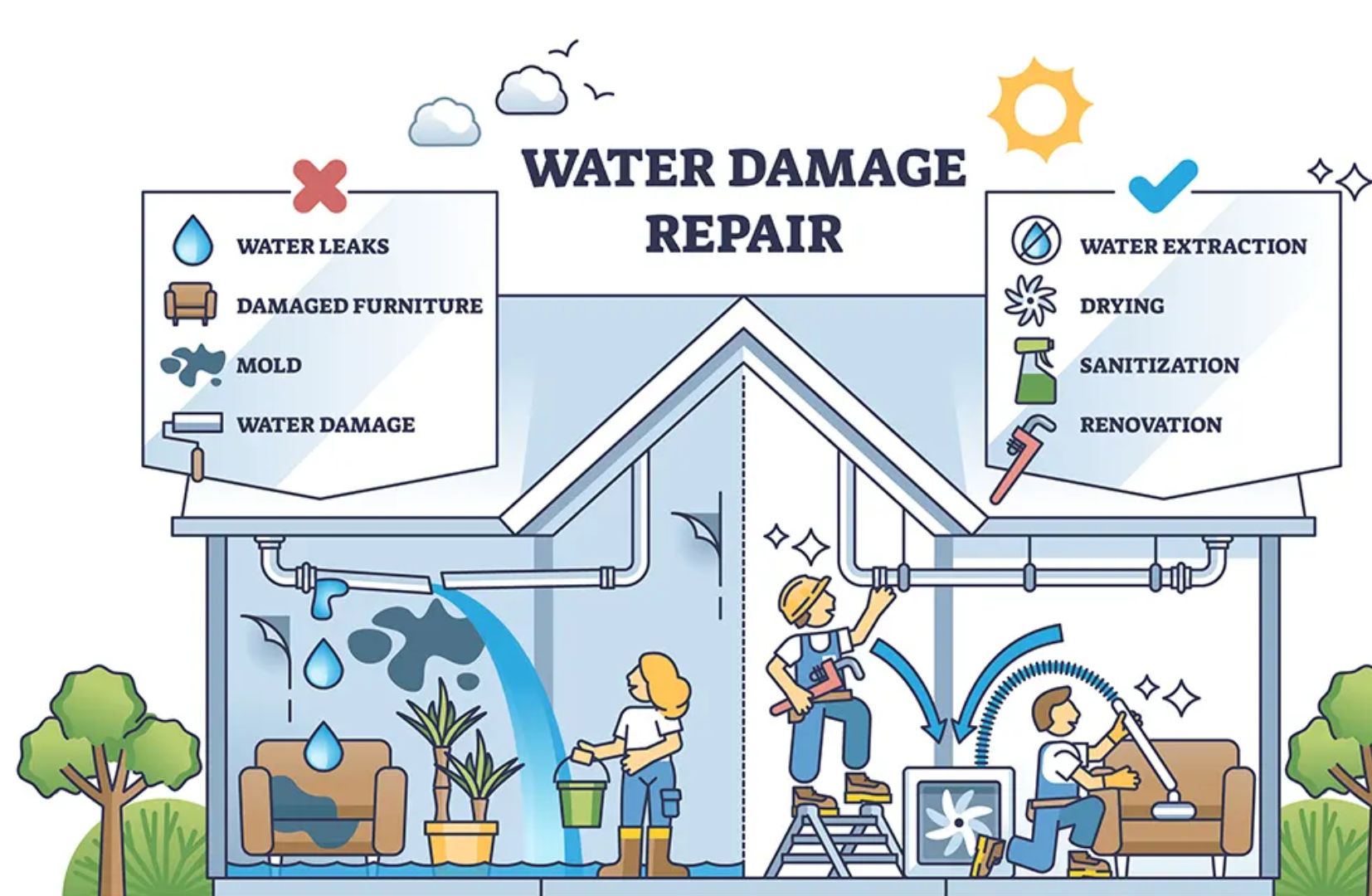
Water is essential for everyday life, but when it enters a building where it does not belong, it can quickly become a serious property concern. A burst pipe, leaking appliance, damaged roof, overflowing fixture, or severe weather event can introduce large amounts of moisture into floors, walls, ceilings, and personal belongings. Even a relatively small amount of water can create problems if it remains undiscovered or is not removed properly. Prompt attention is therefore important because moisture can continue spreading through porous materials long after the original source has been stopped.
Water-related property problems can affect much more than the visible surface. Moisture can move behind walls, beneath flooring, into insulation, and around structural materials. As these areas remain damp, odors and microbial growth may develop, materials can deteriorate, and repairs can become more complicated. Understanding the restoration process helps property owners respond more effectively, protect valuable belongings, and make informed decisions when professional assistance is required.
Understanding the Different Types of Water Damage
Water damage can occur in many forms, and the severity of a situation depends on factors such as the amount of water, its source, how long it has been present, and which materials have been affected. Clean water from a broken supply line may present different concerns from water that has come into contact with contaminated materials. Floodwater and sewage-related incidents can introduce additional hazards that require specialized handling and protective procedures.
The source of the water should be addressed as quickly as possible. If a damaged pipe is continuing to leak, the supply may need to be shut off. If an appliance is responsible, it should be disconnected safely when possible. Roof leaks may require temporary protection until permanent repairs can be completed. Stopping the source prevents additional moisture from entering the property while the affected areas are assessed.
It is also important to recognize that visible water does not necessarily represent the full extent of the problem. A small wet area on a ceiling, for example, may indicate moisture traveling from another part of the building. Similarly, a limited amount of standing water on a floor may have already entered the subfloor or lower sections of walls. A thorough assessment can help identify both visible and hidden moisture.
Why a Fast Response Matters
The longer water remains inside a property, the greater the opportunity for materials to absorb moisture. Wood, drywall, insulation, flooring, upholstery, and other porous materials can retain water for extended periods. This can increase the difficulty of drying and may result in additional material deterioration.
A fast response also helps reduce disruption. Addressing moisture before it spreads into multiple rooms can potentially limit the scope of necessary repairs. Quick extraction and drying may allow certain materials to remain usable instead of requiring removal and replacement. The appropriate response depends on the material, the source of the water, and the extent of exposure, but time is generally an important factor.
Professional water damage restoration services can provide specialized equipment and structured procedures for assessing moisture, removing standing water, drying affected areas, and addressing secondary problems. Professionals may use moisture meters, air movers, dehumidifiers, extraction equipment, and other tools to determine whether areas that appear dry still contain trapped moisture.
Assessing the Extent of the Problem
A proper assessment should identify the source of the water, affected areas, materials involved, and potential safety concerns. The inspection may include visible surfaces as well as areas where moisture could have traveled behind walls, beneath floors, or into concealed spaces.
Moisture detection equipment can be useful because materials may appear dry on the surface while retaining moisture internally. Identifying these areas early can help prevent future problems. A restoration professional may also evaluate the condition of flooring, drywall, insulation, cabinetry, baseboards, and other components to determine which materials can potentially be dried and restored and which may need removal.
Documentation can also be valuable. Photographs, notes, measurements, and records of affected belongings may help property owners understand the extent of the incident and communicate with contractors or insurance representatives. Keeping detailed records throughout the process can make it easier to track repairs and replacement decisions.
Removing Standing Water
Water extraction is often one of the first major steps after the source has been controlled. Standing water can continue to penetrate porous materials, so removing it promptly is important. The method used depends on the amount of water and the affected environment.
Small amounts of water may sometimes be removed with suitable household equipment, provided there are no electrical or contamination hazards. Larger incidents often require professional extraction equipment capable of removing substantial amounts of water efficiently.
Extraction should not be viewed as the end of the process. Removing visible water does not necessarily mean that a property is dry. Moisture can remain inside materials and concealed spaces, which is why the drying stage is equally important. A property may look significantly better after extraction while still requiring extensive drying.
The Importance of Thorough Drying
Drying is one of the most important parts of the recovery process because residual moisture can cause problems even after standing water has disappeared. Professional drying typically involves creating controlled airflow and reducing humidity so that moisture can evaporate from affected materials.
Air movers help circulate air across wet surfaces, while dehumidifiers remove moisture from the surrounding air. In some circumstances, additional equipment may be used to target moisture in specific materials or enclosed spaces. The objective is not simply to make a room feel dry but to reduce moisture levels in affected materials to appropriate conditions.
Drying times vary depending on temperature, humidity, material type, airflow, and the amount of moisture present. Thick materials and enclosed areas can take considerably longer to dry than exposed surfaces. Regular monitoring helps determine whether the drying process is progressing properly.
Protecting Structural Materials
Water can affect many parts of a building, including floors, walls, ceilings, framing, insulation, cabinets, and trim. Some materials can often be dried successfully if they are addressed promptly, while others may be more difficult to restore after prolonged exposure.
Drywall, for example, can absorb water and become weakened. Flooring materials can swell, warp, separate, or lose their original appearance. Wooden components may change shape or deteriorate when exposed to prolonged moisture. Insulation can also retain water and may require specialized evaluation.
Structural concerns should never be ignored. If water has affected load-bearing components or there are visible signs of significant structural deterioration, qualified professionals should assess the situation before occupants return to affected areas. Safety should always take priority over cosmetic repairs.
Addressing Odors and Microbial Growth
Persistent moisture can contribute to unpleasant odors and microbial growth. These problems can develop when damp materials are not dried thoroughly or when moisture remains hidden behind surfaces. The risk can vary depending on the environment and the duration of moisture exposure.
The best approach is to identify and address the source of moisture rather than simply masking odors. Air fresheners may temporarily change how a space smells, but they do not resolve moisture trapped inside materials. Proper drying and removal of materials that cannot be adequately restored are more effective parts of a long-term solution.
If microbial growth is already visible or suspected, the appropriate response depends on the extent and location of the problem. Large or extensive growth, contamination involving sewage or floodwater, and situations involving vulnerable occupants may require specialized professional assessment and remediation procedures.
Restoring Personal Belongings
Water can affect furniture, clothing, electronics, documents, photographs, books, carpets, and other personal possessions. The ability to restore an item depends on factors such as the material, the type of water involved, the duration of exposure, and how quickly the item receives appropriate attention.
Some belongings can be cleaned and dried successfully, while others may be too severely affected to restore. Porous materials can be especially challenging because moisture can penetrate deeply. Electronics require particular caution because internal components can remain energized or become damaged by moisture. They should not be operated simply to determine whether they still work.
Important documents and photographs may also require specialized handling. If valuable or irreplaceable items are affected, professional restoration specialists may be able to recommend appropriate preservation techniques. Property owners should avoid discarding potentially recoverable items before documenting them and determining whether restoration is possible.
Cleaning and Sanitizing Affected Areas
Once water has been removed and affected materials have been evaluated, cleaning becomes an important part of the recovery process. Surfaces may contain dirt, residue, or contaminants that entered with the water. The cleaning method should be appropriate for the material and the type of water involved.
Different surfaces require different approaches. Hard surfaces may be cleaned and disinfected when appropriate, while porous materials may require deeper treatment or replacement. Cleaning products should always be used according to their instructions, particularly when multiple chemicals are involved.
Professional restoration teams can determine which cleaning methods are appropriate for different materials. This can help reduce the risk of damaging surfaces while addressing contamination or residue left behind by the water event.
Repairing and Replacing Damaged Materials
Once affected areas are clean and adequately dry, repair work can begin. Depending on the severity of the incident, repairs may involve replacing drywall, flooring, trim, insulation, cabinets, or other components. Some projects may also require painting, refinishing, or reconstruction.
The repair stage should not begin prematurely. Installing new materials over areas that are still damp can trap moisture and create additional problems. Confirming that affected areas have reached appropriate moisture conditions before reconstruction is therefore an important part of the process.
A complete restoration project may involve several different trades. Plumbing repairs may be necessary to prevent another leak, electricians may need to evaluate affected systems, and construction professionals may be required for structural or finish repairs. Coordinating these services can help ensure that the underlying problem is addressed rather than simply covering up its visible effects.
Common Mistakes Property Owners Should Avoid
One common mistake is waiting to see whether the water will dry on its own. Small spills may evaporate without causing significant problems, but larger leaks and flooding events can leave substantial moisture behind. Waiting too long can increase the likelihood of material deterioration and secondary issues.
Another mistake is focusing exclusively on visible water. Moisture can travel into hidden spaces, meaning that a dry-looking surface does not necessarily indicate a completely dry structure. Checking concealed areas can be important when water has entered walls, floors, or ceilings.
Using excessive heat without proper moisture management can also be problematic. Drying requires controlled airflow and humidity reduction rather than simply increasing the temperature. Similarly, household fans may not provide the same drying capability as professional equipment designed for water recovery.
Property owners should also avoid attempting to handle contaminated water without understanding the associated risks. Water from sewage, flooding, or other contaminated sources may require specialized protective equipment and procedures. In such situations, professional assistance is often the safer approach.
Choosing Professional Restoration Services
When professional help is necessary, property owners should look for a company with relevant experience, appropriate equipment, trained personnel, and clear communication practices. It is useful to ask what the assessment process includes, how moisture will be monitored, what equipment will be used, and how the company determines when drying is complete.
A reputable provider should be able to explain the planned work rather than simply providing a vague estimate. Written documentation can help property owners understand what services are included and which repairs may require additional contractors.
Water damage restoration is not limited to removing standing water. A complete process may include inspection, extraction, drying, cleaning, deodorization, material assessment, and reconstruction. Understanding this broader process can help property owners evaluate service proposals more effectively.
Preventing Future Water Problems
Although not every water-related incident can be prevented, several maintenance practices can reduce the likelihood of serious problems. Property owners should regularly inspect plumbing connections, appliances, roofs, gutters, drainage systems, and other areas where leaks may develop.
Washing machine hoses, dishwasher connections, water heaters, refrigerators with water lines, and other appliances should be checked periodically. Small leaks should not be ignored simply because they appear manageable. A slow leak can gradually damage surrounding materials and may eventually become a larger problem.
Gutters and drainage systems should also be kept clear so that rainwater can move away from the building as intended. Roof inspections can help identify damaged shingles, flashing, seals, or other vulnerabilities before they allow water to enter interior spaces.
Installing water detection devices can provide another layer of protection. Some systems can alert occupants when moisture is detected near appliances, plumbing fixtures, or other vulnerable locations. Early notification may allow a small leak to be addressed before it becomes a major incident.
Creating a Practical Emergency Response Plan
Every property can benefit from having a basic response plan for unexpected water problems. Household members should know where the main water shutoff is located and understand how to turn it off when necessary. Important contact information for plumbers, restoration professionals, insurance representatives, and other relevant services should be readily available.
If water enters a property, safety should come first. Electrical hazards can exist when water reaches outlets, appliances, wiring, or electrical equipment. Occupants should avoid entering areas where electrical risks are suspected and seek appropriate professional assistance.
Documenting the incident can also be useful. Photographs and videos should be taken when it is safe to do so, particularly before damaged materials are removed. Records of repairs, receipts, damaged belongings, and professional assessments may also be helpful for insurance or property documentation.
Final Thoughts on Water Damage Recovery
Water-related property problems can be stressful, but a structured response can make the recovery process more manageable. The first priorities are identifying and stopping the source, protecting occupants from hazards, removing standing water, and determining how far the moisture has traveled. From there, thorough drying, cleaning, material assessment, and repairs can help return the property to a suitable condition.
Professional water damage restoration can be especially valuable when large amounts of water are involved, moisture has entered concealed areas, contaminated water is present, or specialized drying equipment is required. Professionals can approach the situation systematically, monitoring moisture levels important. Regular inspections, timely plumbing repairs, appliance maintenance, drainage upkeep, and water detection devices can reduce the potential impact of future leaks. While no property is completely protected from unexpected water incidents, visible damage and the underlying moisture. Removing water without completing the drying process may leave hidden problems behind, while repairing surfaces without fixing the original source can allow the same issue to return. A complete, and determine which materials may be restored and which may require replacement.
Long-term prevention is equally important. Regular inspections, timely plumbing repairs, appliance maintenance, drainage upkeep, and water detection devices can reduce the potential impact of future leaks. While no property is completely protected from unexpected water incidents, preparation and prompt action can make a significant difference.
Ultimately, successful recovery depends on addressing both the visible damage and the underlying moisture. Removing water without completing the drying process may leave hidden problems behind, while repairing surfaces without fixing the original source can allow the same issue to return. A complete approach considers the entire property, from the source of the water to the final repair.
By understanding how water affects different materials, recognizing warning signs, responding quickly, and using appropriate professional services when necessary, property owners can protect their investment and reduce the disruption caused by unexpected water events. With proper attention and preventative maintenance, many water-related problems can be contained before they develop into more extensive and costly property concerns.

