


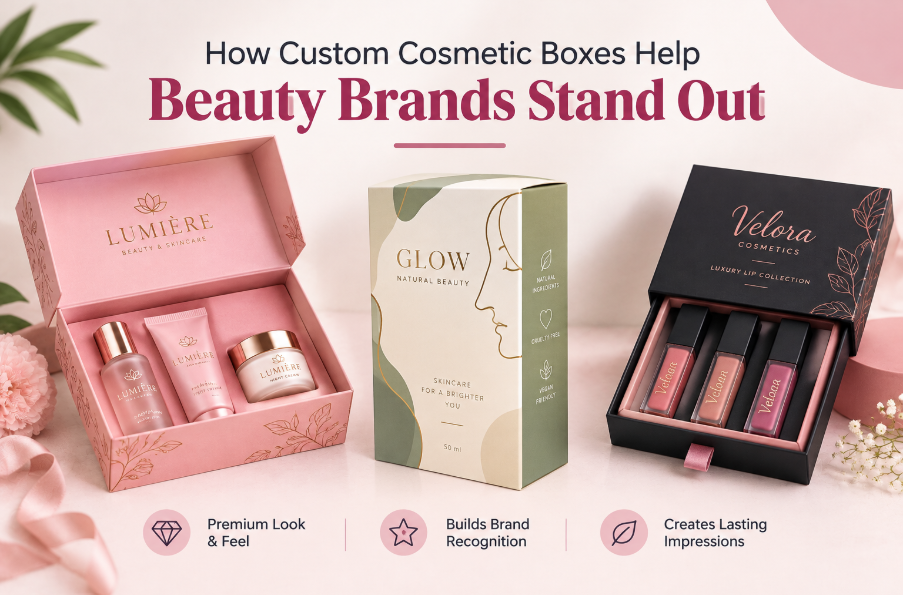
In the beauty industry, packaging plays an important role in attracting customers and building brand recognition. From skincare creams and serums to lipsticks and makeup palettes, products need packaging that protects them while presenting them professionally. An attractive box can create a positive first impression and help customers understand the quality and identity of a beauty brand.
Well-designed cosmetic packaging combines practical protection, appealing visuals, and clear product information. By selecting suitable materials, printing options, and box styles, businesses can create packaging that supports their products and marketing goals.
Why Cosmetic Packaging Matters
Cosmetic packaging does more than hold a product. It helps protect containers during handling, storage, and transportation while providing space for branding and essential product details. For products sold in retail stores or online, packaging can also influence how customers perceive the brand.
Professional packaging creates a consistent appearance across different products. When a business uses coordinated colors, logos, and typography, customers can more easily recognize its product range.
Businesses can explore custom cosmetic boxes wholesale to find packaging options that match their products, brand identity, and presentation requirements. Choosing the right design helps balance visual appeal with everyday functionality.
Choose the Right Box for Each Cosmetic Product
Different beauty products have different packaging requirements. A lightweight lipstick needs a different box structure from a glass serum bottle or a complete skincare gift set. Selecting packaging according to product size, weight, and shape can improve both protection and presentation.
Lipstick and Makeup Boxes
Lipsticks, lip glosses, eyeliners, and other small makeup products often require compact boxes that keep the items secure. A well-fitted carton reduces unnecessary movement and provides enough space for product names, shades, logos, and other relevant information.
Colorful graphics and clean typography can help makeup packaging stand out on retail shelves. Brands can choose designs that reflect their style, whether they prefer a bold appearance or a simple, elegant presentation.
Skincare Packaging
Skincare products such as moisturizers, face creams, serums, and lotions frequently come in bottles, tubes, or jars. Their packaging should accommodate the container securely while providing space for product information.
Glass containers may need additional inserts or protective packaging, especially when products are shipped to customers. Testing the box with the actual filled container helps businesses check the fit and identify potential problems before production.
Cosmetic Gift Sets
Gift sets often contain several products, making organization particularly important. Boxes with compartments or custom inserts can keep individual items arranged neatly and create a more polished presentation.
These packaging styles are suitable for holiday collections, promotional campaigns, beauty subscription gifts, and special product launches. Coordinated printing and attractive finishes can make the entire set feel consistent with the brand.
Select Materials That Suit Your Products
The material used for a cosmetic box affects its durability, printing quality, appearance, and cost. Businesses should consider the product’s weight, packaging purpose, and distribution method before selecting a material.
Paperboard is commonly used for retail cosmetic cartons because it supports detailed printing and can be produced in different shapes and sizes. Kraft paperboard offers a natural appearance that may suit brands focused on simple designs or nature-inspired branding.
Rigid board is another option for premium cosmetic collections and gift sets. Its sturdy construction creates a substantial feel and can support a more luxurious presentation.
The best material depends on the specific application. Lightweight products may work well in folding cartons, while heavier or fragile items may require stronger structures and additional inserts.
Use Custom Printing to Strengthen Brand Identity
Printing helps transform ordinary packaging into a recognizable part of a brand’s visual identity. Consistent use of logos, colors, fonts, and graphic elements can help customers identify products across different collections.
For example, a skincare brand may choose soft colors and minimal typography to communicate simplicity, while a makeup company may prefer vibrant graphics to reflect a creative personality.
Businesses can also consider finishing options such as matte or gloss coatings, foil details, embossing, and spot UV. These techniques can highlight selected design elements and create a distinctive appearance.
However, packaging should remain easy to understand. Product names, directions, ingredients, and other required information should be readable and arranged clearly rather than hidden behind decorative elements.
Balance Appearance With Product Protection
An attractive cosmetic box must also perform its practical role. Packaging should fit the product properly, close securely, and provide suitable support during storage and transportation.
For fragile bottles and jars, inserts can help limit movement inside the box. For lightweight products, a simpler carton may provide sufficient support without adding unnecessary material.
Online orders may need additional outer packaging to withstand handling during delivery. Testing packaging under realistic conditions can help businesses identify weak points and reduce the likelihood of damaged products.
It is also important to remember that an outer cosmetic box does not automatically protect a product from leakage or contamination. The primary container and closure must be suitable for the formula and intended use.
Consider Cost and Order Quantity
Packaging decisions affect production budgets, inventory requirements, and shipping expenses. Businesses should compare material choices, box dimensions, printing methods, finishing options, and order quantities before making a final decision.
Ordering larger quantities may help reduce the unit cost in some situations, but businesses should also consider storage space and future design changes. Smaller production runs can provide greater flexibility for new products, limited editions, or seasonal collections.
Requesting samples before approving a full order allows companies to evaluate the material, print quality, dimensions, and overall appearance. This step can help prevent costly mistakes and ensure the finished packaging meets expectations.
Make Packaging More Environmentally Considered
Many beauty businesses are looking for ways to reduce unnecessary packaging materials. Choosing appropriately sized boxes, avoiding excessive inserts, and exploring recyclable paper-based materials may help support these efforts.
Businesses should check the specifications of the complete package before making environmental claims. Coatings, adhesives, laminations, and mixed materials can affect how packaging is handled after use.
A thoughtful design can balance attractive presentation with efficient material use, helping brands make more considered packaging choices.
Conclusion
Custom cosmetic packaging helps beauty businesses protect their products, communicate their brand identity, and create a professional customer experience. The right combination of material, structure, printing, and finishing can make packaging more practical while improving product presentation. Wholesale printed boxes offer businesses a cost-effective way to maintain consistent branding and professional packaging across larger product orders.
By evaluating product requirements, testing samples, and planning costs carefully, businesses can choose cosmetic boxes that support their marketing strategy and operational needs. Well-planned packaging can become a valuable part of a beauty brand’s identity, helping create a consistent impression across its product range while supporting efficient packaging management.

