


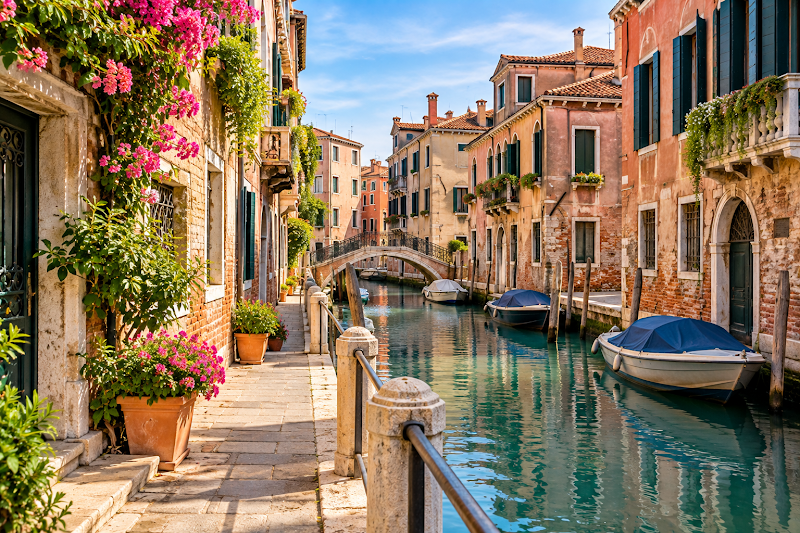
Buying a home in Venice can be an exciting opportunity, whether you’re looking for a full-time residence, a second home, or a property in one of Italy’s most distinctive cities. But purchasing property in Venice isn’t quite the same as buying a home in a typical American city.
From the neighborhood you choose to the type of property you purchase, several factors can affect your experience as a homeowner. Transportation, accessibility, renovation needs, flooding, and ongoing costs are all worth considering before making a decision.
If you’re thinking about purchasing a home in Venice, here are some things to understand before getting started.
1. Location Matters More Than You Might Expect
Venice is made up of distinct neighborhoods, each with its own atmosphere and characteristics. Where you choose to live can have a significant impact on your day-to-day experience.
Some buyers may be drawn to the energy and historic character of areas closer to major attractions, while others may prefer quieter residential neighborhoods.
You’ll also want to consider how close the property is to:
- Grocery stores and everyday services
- Restaurants and cafes
- Public transportation
- Major tourist areas
- Schools, if applicable
- Waterbus stops
- Medical services
- Train and transportation connections
A property that looks appealing online may feel very different when you consider how you’ll actually get around the neighborhood.
For that reason, it’s worth exploring different areas in person before deciding where you want to buy.
2. Think About the Type of Property You Want
Venice has a distinctive collection of historic buildings and homes, so buyers may encounter properties that differ considerably from what they are accustomed to seeing elsewhere.
You might find renovated apartments, historic properties, homes requiring significant updates, or residences with unique architectural features.
Older properties can have plenty of character, but they may also require more consideration before purchase.
Look beyond the appearance of a property and ask questions about:
- The condition of the building
- Plumbing and electrical systems
- Windows and doors
- Heating and cooling
- Roofing and structural elements
- Previous renovations
- Maintenance requirements
- Building regulations or restrictions
A beautiful historic interior doesn’t necessarily tell you everything you need to know about the condition of the property.
3. Don’t Focus Only on the Purchase Price
The listing price is only one part of the financial picture when purchasing property in Italy.
Buyers may also need to account for taxes, professional services, notary costs, renovation expenses, maintenance, and other transaction-related costs.
The total cost of purchasing a property can therefore be considerably different from the advertised purchase price.
Before making an offer, it’s helpful to establish a realistic budget that includes both the acquisition and the potential costs of preparing and maintaining the property.
If you’re unfamiliar with the Italian purchasing process, working with professionals who understand the local market can make it easier to identify expenses you might otherwise overlook.
4. Consider the Possibility of Renovations
A property that needs work isn’t necessarily a bad investment, but renovation requirements should be considered carefully before purchasing.
This is particularly important when looking at older properties.
Cosmetic improvements may be relatively straightforward, while structural or historic renovations can involve considerably more planning. Depending on the property and the work being considered, buyers may need to understand local rules and obtain appropriate approvals.
Before purchasing a property that requires significant work, consider having the property evaluated and obtaining realistic estimates for the renovations you’re considering.
It’s better to understand the scope of a project before purchasing than to discover unexpected expenses afterward.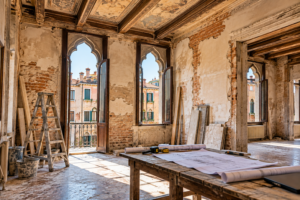
5. Understand Venice’s Relationship With Water
One of the things that makes Venice unique is also an important consideration for property owners: water.
The phenomenon commonly known as acqua alta, or high water, can affect parts of Venice when water levels rise.
The potential impact varies depending on the location and elevation of a property. Buyers should therefore consider the property’s specific circumstances rather than assuming that every home will experience the same conditions.
When evaluating a property, ask questions about its history with high water and how the building has been maintained or adapted.
Water-related considerations can be especially important when evaluating ground-level spaces and properties in areas that may be more susceptible to flooding.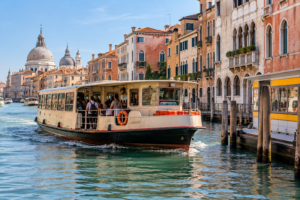
6. Think About Accessibility and Transportation
Venice’s transportation system is unlike that of most cities.
There are no traditional roads running throughout the historic center, and many areas are connected by pedestrian walkways and waterways. Water buses, known as vaporetti, are an important part of getting around.
That can be charming, but it can also affect everyday tasks.
Think about what it would be like to carry groceries home, move furniture, receive deliveries, or travel with luggage.
A property that is only a short distance from a landmark may not necessarily be convenient to reach with heavy bags or large items.
If possible, walk the route between a prospective property and the transportation stops or services you’ll use most frequently.
7. Look Beyond the Property Itself
When evaluating a home, it’s easy to concentrate on the apartment or house and overlook the surrounding building and neighborhood.
If you’re buying an apartment, for example, the condition of the building’s shared spaces and common systems can matter just as much as the condition of the individual unit.
Consider asking about:
- Building maintenance
- Common areas
- Shared expenses
- Recent or planned repairs
- The condition of the building
- Property management
- Any upcoming major work
Understanding the broader property can help you make a more informed decision.
8. Work With Professionals Who Understand the Local Process
Buying property in another country can involve unfamiliar procedures, terminology, and legal requirements.
That’s one reason it’s helpful to have qualified local professionals involved in the process.
Depending on your circumstances, you may work with professionals such as a real estate agent, notary, surveyor or geometra, architect, attorney, or other specialists.
Each professional can have a different role, and understanding who is responsible for what can help make the process easier to navigate.
This is especially valuable when you’re purchasing from outside Italy and cannot be present for every step.
9. Decide How You Plan to Use the Property
Before purchasing, think about what you actually want from the home.
Are you planning to:
- Live in Venice full time?
- Use the property as a second home?
- Spend several months there each year?
- Eventually retire there?
- Hold the property as an investment?
Your intended use can influence which neighborhood and property type make the most sense.
For example, a property that works well for occasional visits may not necessarily be the best choice for someone planning to live there year-round.
Thinking about your long-term plans before shopping can help narrow down your options.
10. Take Your Time Before Making a Decision
Venice has no shortage of beautiful properties, and it’s easy to become attached to a home based on its appearance or location.
But purchasing property is a major decision, particularly when you’re buying in another country.
Take the time to compare properties, explore neighborhoods, understand the costs, and investigate the condition of any home you’re seriously considering.
If you’re considering buying a home in Venice, it helps to understand the local market, neighborhoods, property types, and purchasing process before getting started. This guide to buying property in Venice provides a closer look at what prospective buyers should know
Making Your Venice Property Search More Informed
Buying a home in Venice can be an exciting way to establish a connection with one of Italy’s most remarkable cities. But the right property isn’t necessarily the one with the most impressive photos or the most convenient location for tourists.
Consider how the property fits your lifestyle, understand the potential costs, investigate its condition, and learn as much as possible about the surrounding neighborhood.
With careful planning and the right professional guidance, you can approach the process with a much clearer understanding of what you’re buying and what to expect from property ownership in Venice.

