


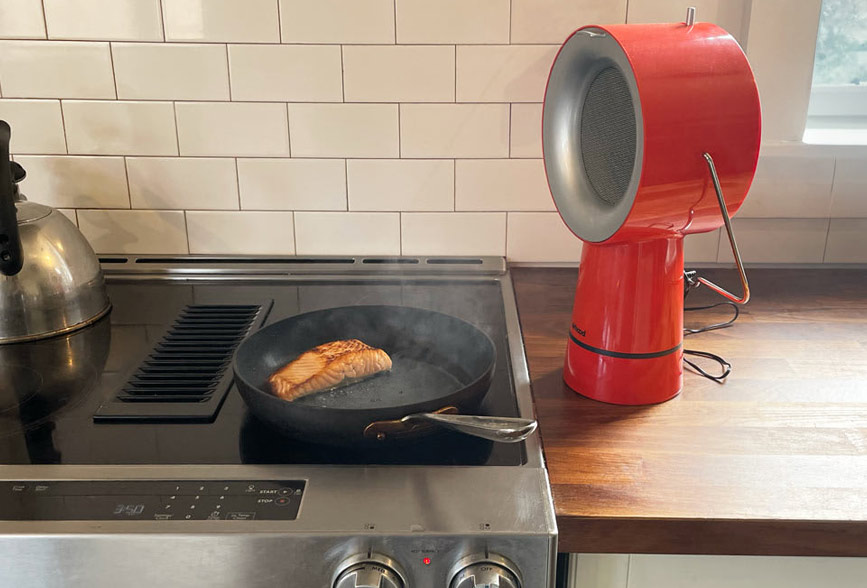
Do Portable Range Hoods Need Ventilation? The short answer is that most portable range hoods do not require permanent ductwork, but they still play a specific role in your kitchen’s ventilation system. Many models use built-in filters to capture airborne grease and help reduce cooking odors and some smoke. This makes them a practical option for small kitchens, apartments, RVs, and homes where installing a traditional range hood is difficult.
However, there is an important distinction between filtering indoor air and venting cooking fumes outdoors. Most portable range hood recirculate filtered air back into the room rather than removing it through an exhaust duct. As a result, they cannot eliminate every cooking pollutant, excess heat, or moisture.
Do Portable Range Hoods Need an Exhaust Duct?
Unlike traditional ducted range hoods, most portable range hoods do not need an exhaust duct. They are designed to sit on a countertop near the cooking area and filter some of the airborne particles and odors produced during cooking.
There are generally two ways a range hood handles cooking emissions. Ducted ventilation draws in cooking fumes and sends them outdoors through a duct. In comparison, ductless ventilation uses filters to capture grease and help reduce odors before returning the air to the room.
Many portable range hoods use the second method. Because they do not require permanent installation, they can be convenient for renters, small apartments, and temporary cooking spaces.
Nevertheless, not needing ductwork does not mean you can ignore kitchen ventilation. A recirculating portable hood does not remove all combustion gases, heat, moisture, or airborne pollutants. Depending on your cooking habits and appliances, additional ventilation may still be necessary.
How Does a Portable Range Hood Work?
A portable kitchen range hood uses a fan and a filtration system to capture some airborne grease, smoke, and odors near the cooking surface. Its effectiveness depends on the fan’s airflow, filter design, placement, and the amount of smoke your cooking produces.
Grease Filters Capture Airborne Oil
Cooking foods such as bacon, eggs, and vegetables in oil releases tiny grease particles into the air. These particles can settle on kitchen cabinets, countertops, walls, and other nearby surfaces.
A portable range hood uses a grease filter to capture some of these particles before they spread throughout the room. Depending on the model, the filter may be made from aluminum or another suitable material.
To maintain performance, clean reusable filters according to the manufacturer’s instructions. Grease buildup can restrict airflow and reduce the appliance’s ability to capture airborne particles.
Charcoal Filters Help Reduce Cooking Odors
Many ductless and portable range hoods use activated charcoal filters to help reduce cooking odors. The charcoal adsorbs certain odor-causing compounds as air passes through the filter.
For example, when you cook fish, fry onions, or prepare bacon, a charcoal filter may help make the resulting smells less noticeable.
However, charcoal filters have a limited capacity. They become less effective over time and need to be replaced according to the manufacturer’s recommendations. They also do not remove every harmful gas or airborne pollutant.
Built-In Fans Draw Air Through the Filters
A portable range hood’s fan draws air toward the appliance and moves it through the filtration system. In most recirculating models, the filtered air then returns to the kitchen.
Some appliances offer multiple fan speeds, allowing you to adjust airflow for different cooking activities.
For the best results, position the hood near the cooking source, keep its filters clean, and use the appropriate fan setting. Even with these steps, a compact appliance may struggle to capture all the smoke produced by high-heat cooking.
Do Portable Range Hoods Remove Smoke and Cooking Odors?
Yes, many portable range hoods can reduce some cooking smoke, airborne grease, and odors. However, performance varies by model and cooking conditions.
Imagine preparing breakfast in a small apartment. You fry an egg, cook bacon, and make toast. A portable hood positioned near the pan may capture some airborne grease and reduce lingering smells.
Now imagine searing a steak in a very hot cast-iron skillet. The cooking process creates considerably more smoke. A compact portable hood may not capture all of it, particularly if the appliance is too far from the pan or its filters are dirty.
This example highlights an important point: portable range hoods generally work better for light or moderate cooking than for activities that produce heavy, continuous smoke.
To improve performance, place the hood close to the cooking area while following the manufacturer’s clearance and safety instructions. Use an appropriate fan speed for the cooking activity, clean reusable grease filters regularly, and replace charcoal filters according to the recommended schedule. You should also use suitable additional ventilation when cooking produces substantial smoke.
Remember, reducing cooking odors does not necessarily mean that all harmful airborne pollutants have been removed.
Who Should Buy a Portable Range Hood?
A portable range hood may be a suitable choice for people who live in small apartments where permanent installation is difficult, need a compact appliance for a countertop cooking area, or want supplemental filtration for light or moderate cooking. It may also appeal to those who prefer an appliance that can be moved or stored when not in use and need a flexible option for a compatible cooking setup.
However, a portable hood may not be sufficient if you regularly produce heavy smoke, use a gas cooktop without adequate ventilation, or need reliable removal of heat, moisture, and cooking pollutants.
In these situations, consider a properly installed ventilation system that meets your household’s needs.
Conclusion
So, do portable range hoods need ventilation? Most do not require permanent exhaust ductwork, but they should still be used as part of an appropriate kitchen ventilation setup.
A portable range hood can help capture grease and reduce some cooking smoke and odors, making it a useful option for certain small kitchens and cooking spaces. However, most portable filtration models return air to the room rather than exhausting it outdoors. They cannot remove every cooking pollutant, all excess heat, or moisture.
Ultimately, the right choice depends on your cooking habits, available space, and ventilation needs. By choosing suitable equipment, maintaining its filters, and using additional ventilation when necessary, you can create a more comfortable cooking environment while supporting better indoor air quality.

