


Construction teams need more than extra square footage. A practical storage strategy can help protect valuable assets, make limited site space easier to manage, and reduce unnecessary operational costs.
Construction sites change constantly. Deliveries arrive, trades move through different phases of work, equipment shifts between locations, and usable space becomes more valuable as a project progresses.
For general contractors and project managers, that creates a practical challenge: tools and materials need to remain close to the work without being left exposed, disorganized, or positioned where they interfere with normal site operations.
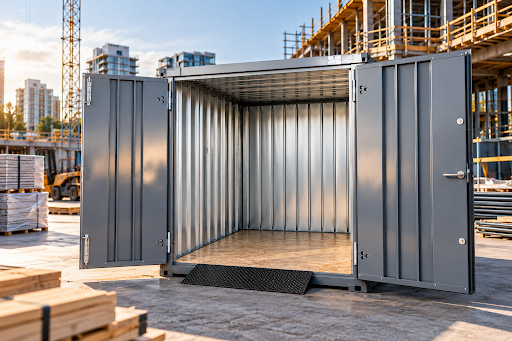
A thoughtful approach to Storage Containers can help address those concerns. The objective is not simply to add storage capacity. It is to create a secure, accessible location that fits the site, supports crews, and makes financial sense for the way the contractor operates.
Start With Asset Protection
Tools, fixtures, materials, and equipment represent a significant investment on an active construction site. When those assets are left in open staging areas, unsecured rooms, vehicles, or temporary shelters, project teams may face unnecessary exposure to theft, weather, damage, or misplacement.
Dedicated storage creates a defined location where crews can place equipment at the end of a shift and retrieve it when work resumes.
Security should be evaluated beyond the container itself. Contractors should consider locking hardware, access procedures, placement, visibility, weather resistance, and who needs regular entry.
Creating a consistent storage routine can also reduce time spent locating equipment. When materials have an established place, supervisors and crews have fewer reasons to search multiple areas of the site before work begins.
Balance Capacity Against Available Site Space
More storage capacity is not always better.
Many construction sites have limited laydown areas, especially on urban projects, infill developments, renovations, occupied properties, and phased builds. Parking, material staging, deliveries, equipment routes, waste handling, and emergency access may all compete for the same space.
Before selecting a storage unit, project teams should estimate what actually needs to be stored and how frequently those items will be accessed.
A smaller footprint may work well for tools, consumables, and frequently used materials. Larger equipment or bulk inventory may require additional capacity, but that decision should account for the space the unit will occupy throughout the project.
The goal is to match storage capacity to operational demand rather than selecting a container based on size alone.
Evaluate the Cost Over More Than One Project
Storage costs can look very different depending on how frequently a contractor needs additional space.
Renting may suit short-term or occasional requirements because the container can be used for a defined period and removed when the project ends. Contractors with steady project pipelines, however, may want to compare recurring rental expenses with the economics of owning and redeploying storage.
That calculation should include more than the purchase or monthly rental price.
Delivery, pickup, relocation, storage between projects, expected service life, maintenance, project duration, and frequency of use can all affect the overall cost.
For organizations managing several active projects, standardizing owned storage across jobsites may also simplify procurement and planning. Crews know what type of storage to expect, operations teams can develop consistent specifications, and project managers are not required to start the sourcing process from zero each time.
Treat Placement as Part of Site Logistics
A storage container solves little if it cannot be delivered efficiently or ends up blocking the way work needs to happen.
Placement should be considered during site logistics planning rather than after materials begin arriving.
Teams should look at truck access, ground conditions, available clearance, door orientation, forklift movement, pedestrian routes, material handling, and future construction phases. A position that works during excavation may become inconvenient once exterior work, paving, landscaping, or additional trades enter the site.
Access frequency also matters. Materials used several times each day should not be stored where crews must cross active equipment routes or move other materials to reach them.
Planning these details early allows the container to support workflow instead of competing with it.
Build a Repeatable Storage Strategy
Contractors managing multiple projects can benefit from looking beyond the requirements of one jobsite.
If similar tools, materials, and equipment are needed from project to project, a standardized storage approach can reduce variation between sites. That might include consistent container sizes, shelving layouts, locking methods, inventory procedures, or placement guidelines.
Standardization can also support accountability. Crews become familiar with where items belong, supervisors have a clearer process for controlling access, and procurement teams can work from established requirements.
The result is not simply a cleaner site. It is a more predictable operating system for managing physical assets across projects.
Make Storage Decisions Around the Work
Construction storage should ultimately support the way the project operates.
Before choosing a solution, contractors should consider what needs protection, how often crews need access, how much site space is available, how long storage will be required, and whether the unit can provide value on future projects.
Addressing those questions early can help teams avoid paying for unused capacity, struggling with poor placement, or relying on temporary arrangements that expose equipment and materials unnecessarily.
For construction businesses managing repeat work, storage becomes more useful when it is treated as part of asset management, site planning, and cost control rather than simply a place to put things.
Additional Resources
Contractors evaluating secure, reusable options can learn more about selecting a construction site storage container for active projects and repeat deployment.

