


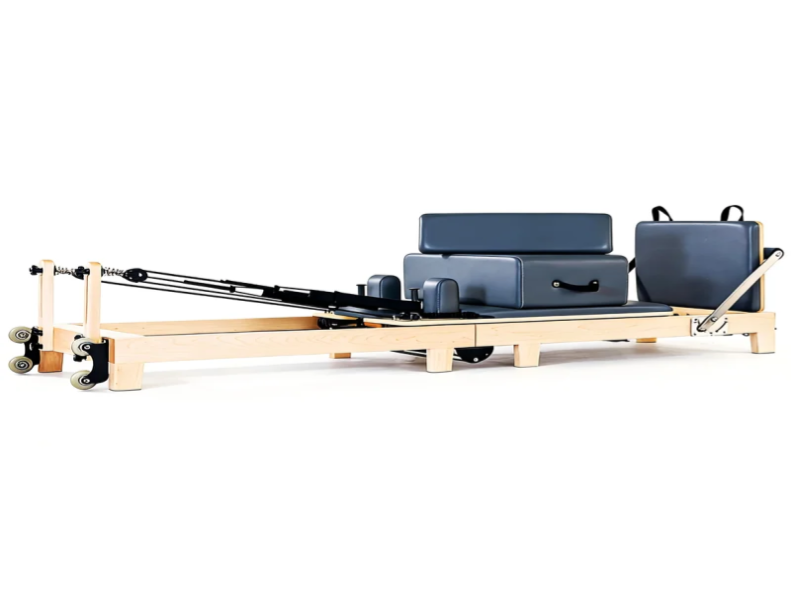
A Pilates reformer is more than a piece of fitness equipment. It is a versatile training system that helps users develop strength, improve flexibility, build core stability, and practice controlled movement. Among the different types available, the wooden Pilates reformer remains a popular choice for home fitness enthusiasts, professional instructors, and boutique Pilates studios.
But what makes a wooden reformer different from an aluminum model? Does its frame material affect stability, durability, or the overall workout experience? And what should you consider before investing in one?
A wooden Pilates reformer combines a traditional appearance with a functional design. Its solid frame, adjustable spring resistance, moving carriage, and customizable accessories support a wide range of exercises. Depending on the model and configuration, it can be suitable for beginners, experienced practitioners, and commercial studio environments.
However, not every wood Pilates reformer offers the same performance. Frame construction, wood selection, carriage quality, spring systems, and maintenance requirements all influence its long-term value.
In this guide, we will explore the benefits, different types, essential features, and practical buying considerations of wooden Pilates reformers to help you find the right equipment for your training goals or business.
What Is a Wooden Pilates Reformer?
A wooden Pilates reformer is a specialized exercise machine featuring a frame primarily constructed from solid wood or engineered wood components. It uses a sliding carriage, resistance springs, adjustable footbar, ropes, straps, and shoulder rests to support controlled, full-body exercises.
Unlike a traditional Pilates mat, which relies mainly on body weight and gravity, a reformer introduces adjustable resistance through its spring system. Users can perform exercises while lying down, sitting, kneeling, or standing, depending on their experience and the equipment configuration.
Common materials include maple, oak, beech, and walnut. Each has different characteristics in terms of appearance, density, grain, and finishing requirements.
The wooden Pilates reformer is particularly popular among studios that prefer a classic, natural aesthetic. It also provides a solid equipment platform for exercises involving controlled resistance, balance, and coordinated movement.
The Pilates Method Alliance describes Pilates as a movement method designed to stretch, strengthen, and balance the body through systematic exercise and focused breathing. A reformer provides one way to apply these principles through equipment-based training.
What Are the Benefits of Using a Wooden Pilates Reformer?
Choosing a wooden Pilates reformer offers several advantages beyond its traditional appearance. Its construction and overall design can influence the training environment, equipment stability, and long-term ownership experience.
1. A Stable and Solid Training Experience
Wooden reformers are generally heavier than many aluminum models, depending on their dimensions and construction. This additional weight can help the machine remain firmly positioned during exercises.
For example, during standing footwork or movements that involve shifting body weight, a well-constructed wooden frame can provide a grounded training platform.
This characteristic is particularly useful for Pilates studios where instructors work with clients of different fitness levels and exercise experience.
However, overall stability depends on more than frame material. Frame thickness, joint construction, leg design, and equipment assembly also matter.
2. A Natural and Premium Appearance
One of the most recognizable advantages of a wood Pilates reformer is its appearance.
Natural wood grain creates a warm, welcoming atmosphere that complements boutique fitness studios, wellness centers, private training rooms, and modern home gyms.
Maple offers a relatively light and clean appearance, while walnut provides a darker, more distinctive finish. Oak is another popular option for those who prefer visible wood grain.
For studio owners, equipment appearance can contribute to the overall interior design and brand identity.
3. A Quieter Workout Environment
A well-designed wooden reformer can offer a relatively quiet training experience.
Wood naturally absorbs some vibration, while the carriage movement system, bearings, wheels, and track design also influence operating noise.
For example, in a private Pilates studio offering one-on-one sessions, excessive mechanical noise may interrupt communication between instructors and clients.
Choosing a reformer with quality carriage components and properly adjusted moving parts can help create a smoother and quieter experience.
4. Versatile Training Applications
A wooden Pilates reformer supports a wide range of exercises through adjustable spring resistance and different body positions.
Users can work on:
Core strength and abdominal control.
Lower-body strength and coordination.
Shoulder stability and upper-body conditioning.
Hip mobility and flexibility.
Balance and controlled movement.
Research also supports some of the broader benefits of Pilates exercise. A 2021 systematic review and meta-analysis published in Physiotherapy examined 39 studies involving older adults and reported positive effects on balance, strength, flexibility, and physical function compared with control groups. These findings relate to Pilates practice generally, not specifically to wooden reformers.
What Are the Different Types of Wooden Pilates Reformers?
Wooden Pilates reformers come in several configurations. Understanding their differences helps buyers select equipment that matches their available space, training requirements, and business model.
1. Classic Wooden Pilates Reformer
The classic Pilates wood reformer features a traditional wooden frame, a sliding carriage, resistance springs, shoulder rests, ropes, and an adjustable footbar.
It is suitable for general Pilates training, including foundational movements, strength development, and flexibility exercises.
For example, a private Pilates instructor may choose a classic wooden reformer for individual sessions because it provides the essential equipment needed for a broad range of exercises without requiring additional tower components.
2. Wooden Pilates Reformer with Tower
A wooden reformer with a tower combines the standard reformer platform with an additional vertical frame and attachment system.
The tower usually includes springs, bars, and straps that allow users to perform more exercise variations.
This configuration can be useful for studios offering comprehensive Pilates programs, especially when instructors want to incorporate additional upper-body, lower-body, and mobility exercises.
It also makes the equipment more versatile for clients with different training goals.
3. Folding Wooden Pilates Reformer
A folding wooden reformer is designed for users who need more flexibility in equipment storage.
Its folding structure allows the machine to be stored more compactly when it is not in use. However, folding mechanisms, weight, folded dimensions, and setup requirements vary considerably between manufacturers.
This type may suit home users with limited exercise space or smaller private training facilities.
Before purchasing, check whether the folding mechanism can be operated safely and conveniently by one person.
4. Commercial Wooden Pilates Reformer
Commercial wooden reformers are designed for regular use in professional Pilates studios, fitness centers, and wellness facilities.
They generally emphasize structural stability, durable moving components, adjustable resistance, and replaceable accessories.
For studio owners, selecting commercial equipment should involve more than comparing the appearance of different models. Consider expected daily usage, maintenance access, available accessories, and manufacturer support.
What Features Should You Look for in a High-Quality Wooden Pilates Reformer?
Not all wooden reformers are manufactured to the same standards. Before making a purchase, pay attention to the following features.
1. Wood Material and Frame Construction
The frame is the foundation of the entire machine.
Maple, oak, and walnut are common hardwood choices, each offering different visual and physical characteristics.
When evaluating a wooden reformer, consider:
Wood type and material consistency.
Frame thickness and overall construction.
Joint quality and connection points.
Surface finishing and resistance to everyday wear.
Stability under normal exercise conditions.
A quality frame should feel solid, with no noticeable looseness or unexpected movement during use.
2. Carriage and Track System
The carriage is the moving platform where users position their bodies during exercises.
Its smooth movement is essential for controlled training. Poorly designed wheels, bearings, or tracks may cause unnecessary noise, uneven movement, or frequent maintenance.
Look for a carriage that moves smoothly along the rails without noticeable shaking or resistance caused by mechanical issues.
Also consider carriage padding, upholstery quality, and shoulder-rest positioning, as these influence comfort during longer sessions.
3. Spring Resistance System
Springs control the resistance experienced during reformer exercises.
A well-designed system should offer different resistance options so instructors can adjust exercises according to user strength, movement control, and training experience.
Before purchasing, check the following:
Number and type of springs.
Available resistance levels.
Spring attachment positions.
Ease of adjustment.
Replacement spring availability.
Remember that more springs do not automatically mean better performance. The quality and resistance characteristics of the spring system are more important than the number alone.
4. Adjustable Footbar and Accessories
A professional wooden Pilates reformer should offer practical adjustment options.
The footbar should accommodate different body sizes and exercise positions. Other important components include shoulder rests, ropes, handles, straps, and headrests.
Depending on your training needs, additional accessories may include:
Pilates reformer box.
Jumpboard.
Standing platform.
Foot straps.
Extension accessories.
For studios, compatibility and replacement availability are particularly important because accessories experience regular wear during daily use.
5. Safety, Weight Capacity, and Maintenance
Always check the manufacturer’s specifications for maximum user weight, equipment dimensions, recommended installation, and maintenance instructions.
A high-quality reformer should have secure connections, reliable adjustment mechanisms, and clearly documented operating guidelines.
For wooden equipment, avoid prolonged exposure to moisture, excessive humidity changes, and direct sunlight. Regularly inspect joints, springs, ropes, upholstery, and moving components.
A well-maintained machine is more likely to provide consistent performance over time.
How Do You Choose the Right Wooden Pilates Reformer for Your Needs?
The best wooden Pilates reformer depends on where you plan to use it, how frequently it will be operated, and what exercises you want to perform.
Here are four important considerations.
1. Choose According to Your Usage Scenario
Different users have different equipment requirements.
For home fitness: A classic or folding wooden reformer may be a practical choice. Consider available floor space, storage requirements, noise levels, and ease of operation.
For private Pilates instructors: A stable wooden reformer with adjustable resistance and essential accessories can support a variety of individual training sessions.
For boutique Pilates studios: A premium wooden reformer can complement a warm, natural interior design. Consider carriage comfort, adjustment flexibility, and the availability of additional accessories.
For commercial fitness facilities: Prioritize structural quality, serviceability, replacement parts, and the manufacturer’s ability to support regular equipment use.
2. Compare Wooden and Aluminum Reformers
Both wooden and aluminum reformers are widely used in Pilates training. Neither material is automatically better for every application.
| Comparison Factor | Wooden Pilates Reformer | Aluminum Pilates Reformer |
| Appearance | Natural, warm, classic | Modern, sleek, minimalist |
| Frame weight | Generally heavier | Generally lighter |
| Stability | Solid feel when properly constructed | Depends on frame design and construction |
| Portability | Usually less convenient to move | Often easier to move |
| Maintenance | Requires appropriate wood care | Generally straightforward to clean |
| Climate considerations | Sensitive to moisture and humidity changes | Generally more resistant to humidity |
| Common applications | Home gyms, boutique studios, professional studios | Home fitness, commercial studios, multi-use spaces |
If you want a natural appearance, a grounded feel, and a permanent studio setup, a wooden reformer may be a suitable option.
If portability, frequent relocation, or simpler surface maintenance is more important, an aluminum model may better match your requirements.
3. Consider Your Budget and Long-Term Ownership Costs
The purchase price is only one part of the total investment.
Consider the equipment’s expected service life, maintenance requirements, replacement components, shipping costs, and after-sales support.
For commercial buyers, it is also worth comparing the cost of purchasing multiple machines directly from a manufacturer rather than buying individual units through retail channels.
Ask suppliers for detailed specifications, available configurations, warranty coverage, and shipping arrangements before making a decision.
4. Choose a Reliable Manufacturer
A reputable manufacturer should be able to explain how its equipment is constructed and provide clear product specifications.
For example, if you are purchasing reformers for a new studio, ask about:
Available wood materials and finishes.
Custom upholstery and branding options.
Spring and accessory configurations.
Product inspection procedures.
Warranty terms and after-sales support.
International shipping and packaging.
Working directly with a manufacturer can also make it easier to discuss customized equipment requirements, particularly when purchasing several reformers for a commercial project.
If you are comparing different models, explore our range of wooden pilates reformer equipment to review available designs and configurations for home and professional use.
Conclusion
A wooden Pilates reformer combines traditional craftsmanship with the functionality required for modern Pilates training. Its natural appearance, solid construction, and versatile exercise capabilities make it an attractive option for home users, professional instructors, and boutique Pilates studios.
However, choosing the right machine requires more than selecting a wood finish. Frame construction, carriage performance, spring resistance, adjustment options, safety specifications, and after-sales support all deserve careful consideration.
Whether you are building a home gym or equipping a professional Pilates studio, take time to compare different configurations and match the equipment to your actual training requirements.
A well-selected wooden Pilates reformer can become a valuable part of your Pilates practice or studio investment for years to come.
FAQs
Is a Wooden Pilates Reformer Better Than an Aluminum Reformer?
Neither is universally better. A wooden Pilates reformer is often preferred for its natural appearance, solid feel, and traditional studio aesthetic. An aluminum reformer is generally lighter and easier to move, making it practical for spaces where portability matters. The best choice depends on your training environment, available space, maintenance preferences, and budget.
How Long Does a Wooden Pilates Reformer Last?
The lifespan of a wooden Pilates reformer depends on its construction quality, frequency of use, maintenance, and operating environment. A well-built machine that receives regular inspections and appropriate care can provide many years of service. Springs, ropes, upholstery, and other accessories may require replacement before the main frame does. Always follow the manufacturer’s maintenance recommendations.
Is a Wooden Pilates Reformer Suitable for Commercial Pilates Studios?
Yes. Commercial wooden Pilates reformers can be suitable for professional studios, boutique fitness facilities, and wellness centers. However, buyers should evaluate frame construction, carriage performance, spring quality, user weight specifications, accessory availability, and warranty support. For studios with multiple daily sessions, regular maintenance and access to replacement components are particularly important.

