


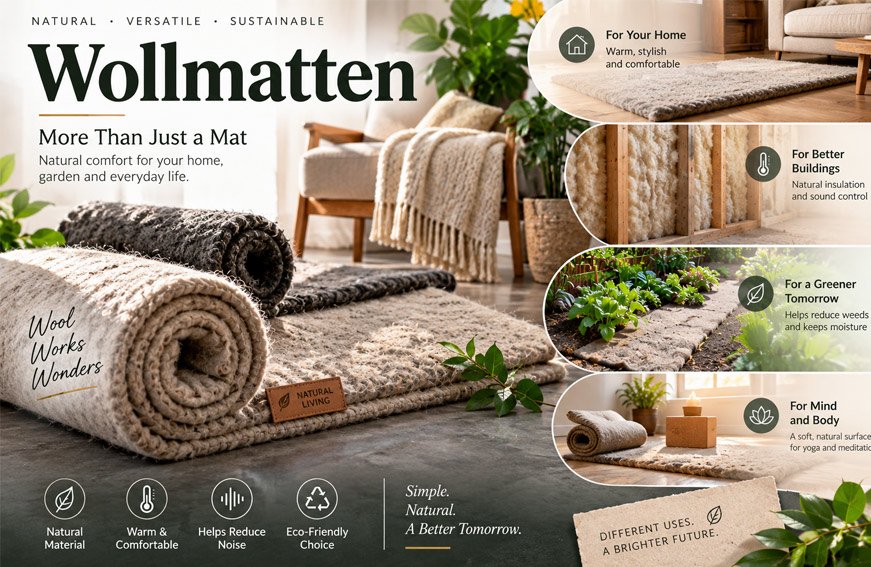
Wollmatten are wool-based mats used for many different purposes. The word comes from German and simply means wool mats.
People search for Wollmatten because the same word can describe floor mats, felt pads, insulation, acoustic mats, garden covers, and even some yoga or meditation mats.
This guide explains what Wollmatten are, how they are made, how they work, their main types, and where they are commonly used.
What Are Wollmatten?
Wollmatten are mats made fully or partly from wool.
The German word Wolle means wool, while Matten means mats. The singular form is Wollmatte.
Wollmatten is not the name of one brand or one exact product. It is a general term for many kinds of wool-based mats.
Some are soft floor coverings. Others are thick felt sheets used for insulation, sound control, furniture protection, or gardening.
Sheep’s wool is the most common material. However, not every mat is made from pure wool.
Some Wollmatten may also contain:
- Synthetic fibres
- Cotton or other natural fibres
- Adhesives
- Latex
- Plastic backing
- Resins
- Dyes
- Protective treatments
This is why buyers should check the full material list instead of assuming that every Wollmatte is 100% wool.
How Wollmatten Are Made
The production method depends on the type of mat.
Wool is usually cleaned first to remove dirt and unwanted material. It may then be carded, which helps separate and arrange the fibres.
The wool can then be made into a mat in different ways.
Felting
Wool fibres can be pressed and joined together using moisture, pressure, heat, or movement.
This creates a dense material called felt.
Felted Wollmatten can be soft or firm depending on their thickness and density.
Needle Punching
Needle-punched mats are made by repeatedly pushing special needles through loose wool fibres.
The needles mix and lock the fibres together.
This method is often used for insulation, garden mats, technical felt, and protective padding.
Weaving
Wool yarn can also be woven together to make floor mats and rugs.
Woven products may be thin and firm or soft and thick.
Knotting and Tufting
Some decorative mats are made by knotting or inserting wool yarn into a base material.
These methods are common in rugs and soft floor coverings.
The finished product may also have backing, edge stitching, glue, or a non-slip layer.
These extra materials can affect grip, strength, cleaning, and biodegradability.
Main Types of Wollmatten
Wollmatten come in several forms. Each type is made for a different use.
Floor Mats and Rugs
Wool floor mats are commonly used in bedrooms, living rooms, offices, and other indoor spaces.
They can make hard floors feel warmer and softer.
They may be woven, felted, knotted, or tufted.
Some may need a non-slip pad underneath, especially on smooth floors.
Felted Wool Mats
Felted mats are usually dense and flat.
They can be used on desks, shelves, tables, benches, and under furniture.
They help protect surfaces from scratches and can also provide light cushioning.
Wool Insulation Mats
Wool can be made into thick insulation mats for buildings.
These may be fitted inside:
- Walls
- Roofs
- Floors
- Ceilings
- Timber frames
- Cavities
The wool fibres hold small pockets of air, which helps slow heat movement.
A normal decorative wool rug should never be used as building insulation.
Technical insulation products need proper performance information and should meet local building rules.
Acoustic Wool Mats
Some Wollmatten are designed to absorb sound.
They can be used in offices, studios, meeting rooms, music rooms, and home cinemas.
They may help reduce echo and make a room sound less harsh.
They do not make a room completely soundproof.
Garden Wool Mats
Garden wool mats are placed over soil around plants, trees, shrubs, or garden beds.
They may help:
- Block some light from weeds
- Reduce water loss from soil
- Protect the soil surface
- Slowly break down over time
Pure wool can biodegrade under suitable conditions.
However, garden mats should be checked for synthetic fibres, coatings, or other added materials.
Yoga and Meditation Mats
Some Wollmatten are used for meditation and slower forms of yoga.
Wool can provide a warm and soft surface for:
- Meditation
- Yin yoga
- Restorative yoga
- Yoga Nidra
- Relaxation
For fast or sweaty exercise, grip is more important. A soft wool surface may not provide enough traction unless the product is made for that use.
Protective and Technical Mats
Dense wool felt may also be used under furniture, machines, boxes, or delicate objects.
It can create a soft layer between hard surfaces.
Technical wool mats may also be used in certain industrial, construction, or craft applications.
How Wollmatten Work
Wool fibres have a naturally wavy shape.
This creates small spaces between the fibres. These spaces can trap still air.
Still air slows the movement of heat, which is why wool can provide useful insulation.
The amount of insulation depends on:
- Thickness
- Density
- Construction
- Installation
- Product design
A thin floor mat will not provide the same insulation as a thick building product.
Wool can also absorb moisture vapour from the air and release it again when conditions change.
This can help with moisture control in indoor spaces.
However, wool is not waterproof.
If a wool mat remains wet for a long time, it may develop smell, stains, damage, or other problems.
Wool’s fibre structure can also absorb some sound energy. This is why thick wool mats may help reduce echo.
The fibres are also flexible and elastic. Good-quality wool can recover from normal pressure instead of staying flat immediately.
Common Uses of Wollmatten
Wollmatten are used in homes, buildings, gardens, work areas, and wellness spaces.
One of the most common uses is as a floor covering. Wool mats can make wood, tile, stone, or concrete floors feel softer and warmer.
Dense felt mats can be placed under furniture, equipment, or objects to help prevent scratches.
Building-grade wool mats may be used for thermal insulation in walls, roofs, floors, and ceilings.
Special acoustic mats may help reduce echo in rooms with many hard surfaces.
Garden wool mats can cover soil and help reduce weed growth and moisture loss.
Wool mats may also be used for meditation and slower yoga practices because they provide a warm and cushioned surface.
Dense wool felt is also used in crafts, sewing, pressing, padding, and other practical work.
The important point is that not every Wollmatte can be used for every purpose.
A floor rug should not be used as building insulation. A technical insulation mat should not be placed in a garden unless the manufacturer says it is safe for that use.
The correct product depends on where the mat will be used and what job it needs to do.
Benefits of Wollmatten
Wollmatten can offer several useful benefits. The exact benefits depend on the type of mat, its thickness, and how it is made.
Wool is a renewable natural fibre because sheep grow new fleece after shearing.
Its wavy fibres trap small pockets of air. This can help with warmth and thermal insulation.
Wool also has natural elasticity. A well-made wool mat can recover from normal pressure and keep its shape for a long time.
Another useful feature is moisture control. Wool can take in moisture vapour from the air and release it again when conditions become drier.
Dense wool mats can also absorb some sound. This may help reduce echo in rooms with hard floors and walls.
Pure, untreated wool can break down naturally under suitable conditions. However, the complete mat may not be biodegradable if it contains synthetic backing, glue, or coatings.
Drawbacks and Limitations
Wollmatten are not suitable for every situation.
Wool mats can cost more than simple synthetic mats, especially when they contain high-quality wool or are handmade.
Some new wool mats may shed loose fibres. Light shedding can reduce over time, but heavy or continued shedding may be a sign of weak construction.
Wool can manage moisture vapour, but it should not remain wet for long periods. Damp conditions can cause smell, stains, or damage.
Untreated wool may also attract clothes moths and other textile pests, especially during long-term storage.
Some technical wool products use treatments to protect them from insects. This means a wool mat should not automatically be called chemical-free.
Coarse wool can also feel rough to people with sensitive skin.
Wool has useful resistance to ignition compared with many fibres, but it is not fireproof. Building products should always be checked for their official fire rating.
Wollmatten and Sustainability
Wool has some environmental advantages because it is renewable and can biodegrade under the right conditions.
However, the full product matters.
A Wollmatte may also contain:
- Synthetic fibres
- Plastic backing
- Glue or binders
- Dyes
- Protective coatings
- Moth treatments
These materials can change how easily the finished mat breaks down after use.
The environmental impact also depends on sheep farming, processing, transport, cleaning, product life, and disposal.
A strong mat that lasts for many years may offer better value than a poorly made product that needs regular replacement.
Some wool products may use standards such as the Responsible Wool Standard (RWS), which focuses on areas such as animal welfare, land management, and wool tracking.
Products made with recycled fibres may use other standards, such as the Global Recycled Standard (GRS).
These certifications are not required for every Wollmatte, but they can provide extra information about sourcing or recycled content.
How to Choose the Right Wollmatte
Start by deciding what you need the mat to do.
A floor mat, garden cover, yoga mat, and insulation product need very different features.
Check the wool percentage and full material list. A product described as having a “100% wool surface” may still contain synthetic backing or glue.
Also check:
- Size
- Thickness
- Density
- Weight
- Backing
- Edge quality
- Cleaning instructions
- Protective treatments
For floor mats, make sure the product is suitable for the amount of foot traffic in the room.
For yoga, check the grip. A soft wool surface may work well for meditation and slow yoga but may not be safe for fast or sweaty exercise.
For garden use, check whether the mat is designed to break down in soil and whether it contains any synthetic material.
For insulation or acoustic use, check tested technical information. This may include thermal performance, fire rating, density, and installation instructions.
Technical Wollmatten should also meet local building requirements where necessary.
How to Clean and Care for Wollmatten
Always check the product’s care label first.
Wool floor mats can usually be cleaned with gentle vacuuming. Very strong suction may pull loose fibres from some products.
If something spills on the mat, blot it with a clean cloth. Do not rub hard because this can spread the stain and damage the fibres.
Do not use bleach or strong cleaning chemicals unless the manufacturer says they are safe.
Avoid soaking a wool mat unless it is designed for wet washing. Too much water can cause shrinking, shape changes, or backing damage.
If a Wollmatte becomes wet, dry it fully before storing or using it again.
Floor mats can also be rotated from time to time. This helps spread wear and sunlight exposure more evenly.
Large, handmade, valuable, or heavily stained mats may be safer to clean professionally.
Before storing a wool mat, make sure it is clean and completely dry. Store it in a dry place and check it occasionally for insects or moisture.
Garden and insulation mats have different care needs and should follow the manufacturer’s instructions.
Wollmatten vs Other Materials
The best material depends on how and where you plan to use it.
Wollmatten vs Synthetic Mats
Synthetic mats are often cheaper and easier to clean.
Some are also better for bathrooms, outdoor areas, or other places where regular moisture is expected.
Wool mats usually offer more natural warmth and softness. Pure wool also does not behave like plastic at the end of its life.
However, synthetic mats may provide better water resistance and more predictable grip.
Wollmatten vs Cotton Mats
Cotton mats are often light, soft, and easy to wash.
They can work well in kitchens, bathrooms, or other places where regular cleaning is important, depending on their backing.
Wool usually provides more warmth and may hold its shape better than thin cotton.
Cotton can be easier to wash at home, while wool often needs gentler care.
Wool Insulation vs Common Insulation Materials
Other common insulation materials include mineral wool, fibreglass, cellulose, wood fibre, hemp, cork, and foam.
Some alternatives may cost less or provide better insulation in a smaller space.
Wool insulation may appeal to people who want a flexible, wool-based material with good moisture management.
The right option depends on cost, building rules, moisture conditions, fire requirements, and tested insulation performance.
Garden Wool Mats vs Other Ground Covers
Gardeners can also use bark, straw, cardboard, compost, or landscape fabric.
Wool mats can be useful when a biodegradable ground cover is preferred.
Cardboard and natural mulch can also be simple options for weed control.
Landscape fabric may last longer but usually does not break down like natural wool.
The best choice depends on the plants, soil, climate, and how long the covering needs to last.
Bottom Line
Wollmatten are a broad group of mats made fully or partly from wool.
They can be used for flooring, insulation, sound control, gardening, yoga, furniture protection, and other practical uses.
Wool can provide warmth, cushioning, moisture control, and sound absorption. It is also a renewable natural fibre.
However, not every Wollmatte is 100% wool, biodegradable, washable, waterproof, or suitable for technical use.
Before buying one, check its purpose, full material list, thickness, density, backing, care instructions, and technical ratings when needed.
The best Wollmatte is simply the one made for the job you need it to do.
Frequently Asked Questions
What does Wollmatten mean?
Wollmatten is German for wool mats. The singular form is Wollmatte.
The word can describe many different wool-based products, including floor mats, felt pads, insulation, garden covers, and technical mats.
Are Wollmatten made from 100% wool?
Not always.
Some are made from pure wool, while others contain synthetic fibres, cotton, backing, glue, dyes, or protective treatments.
Always check the full material list.
Are Wollmatten waterproof?
No.
Wool can manage moisture vapour and may resist small amounts of liquid for a short time, but it is not waterproof.
Long periods of dampness can damage many wool products.
Can Wollmatten be washed?
Some can, but others cannot.
Washing instructions depend on the wool, backing, dyes, and construction.
Always follow the care label because incorrect washing can cause shrinking or shape changes.
Do wool mats shed?
Some wool mats shed loose fibres when they are new.
Light shedding may become smaller with use and gentle cleaning.
Heavy shedding that continues for a long time may indicate weak construction or unsuitable cleaning.
Do Wollmatten attract moths?
Natural wool can be damaged by clothes moth larvae and some other textile pests.
Keeping the mat clean, dry, and properly stored can lower the risk.
Some wool products are also treated for insect protection.
Are all Wollmatten biodegradable?
No.
Pure untreated wool can biodegrade under suitable conditions.
A mat containing plastic backing, synthetic fibres, glue, coatings, or other materials may not fully biodegrade.
How long do Wollmatten last?
There is no fixed lifespan.
A quality wool mat can remain useful for many years, but durability depends on construction, wool quality, traffic, moisture, cleaning, and storage.
Explore More:
MataRecycler Review: Features, Benefits, Limitations, and AI Claims

