


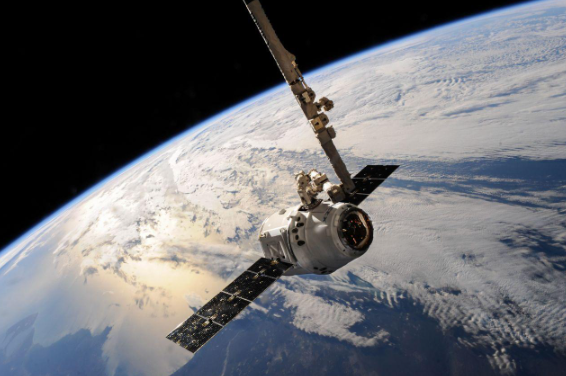
Traveling to space was once an experience reserved for professional astronauts. Today, private companies are working to make it available to paying customers, raising an interesting question: could space tourism become a significant industry by the end of this decade?
The Growing Business of Commercial Space Travel
For decades, space exploration depended almost entirely on government funding. Organizations such as NASA focused on scientific research, national security, and technological development rather than tourism.
That began changing as private companies developed spacecraft capable of carrying passengers beyond Earth’s atmosphere.
SpaceX, Blue Origin, and Virgin Galactic have all contributed to the development of commercial spaceflight, although their approaches differ considerably.
SpaceX has focused on orbital transportation and reusable rockets, while Blue Origin and Virgin Galactic have pursued shorter suborbital experiences.
The industry’s potential has also attracted attention from investors. Searches for terms such as spacex stock price prediction 2030 reflect growing curiosity about the financial opportunities surrounding commercial space exploration, even though SpaceX remains privately held and its shares are not publicly traded.
However, turning space tourism into a profitable mainstream business will require more than technological achievements.
The Biggest Obstacle Is Still the Price
Imagine spending several minutes looking down at Earth from space. For some wealthy travelers, that experience may justify an extraordinary expense.
For most people, however, the price remains completely unrealistic.
Commercial spaceflights can cost hundreds of thousands of dollars per passenger, while longer orbital missions may require tens of millions.
These prices reflect the enormous expenses involved in building spacecraft, maintaining safety systems, training passengers, and operating launch facilities.
Reusable rocket technology could gradually reduce some of these costs.
Instead of manufacturing an entirely new rocket for every mission, companies can recover and reuse certain components. Higher flight frequency could also help spread fixed expenses across more customers.
Still, cheaper launches do not automatically mean affordable tickets. Insurance, specialized personnel, spacecraft maintenance, and regulatory requirements will remain expensive.
By 2030, space tourism could become more accessible to wealthy travelers without becoming affordable to the average household.
What Would a Space Vacation Actually Look Like?
Not every space tourism experience involves spending days orbiting Earth.
Suborbital flights offer a relatively brief journey above much of the atmosphere. Passengers experience weightlessness for several minutes before returning to the ground.
Orbital tourism is considerably more demanding.
Travelers must reach sufficient speed to circle Earth, remain aboard a spacecraft or space station, and eventually complete a controlled return.
Future commercial space stations could create additional possibilities, including longer stays and private research experiences.
Some companies have even proposed space hotels, although the practical challenges remain substantial.
By 2030, the most realistic commercial experiences may still be short flights and occasional private orbital missions rather than traditional vacations in space.
Safety Will Determine How Quickly the Industry Grows
Space tourism faces a challenge that ordinary travel companies rarely encounter: even a minor technical failure can have serious consequences.
Rocket launches involve extreme speeds, powerful engines, and complicated engineering systems. Passengers also experience physical stresses that differ significantly from those encountered during commercial airline flights.
Before booking a journey, customers will want confidence that operators have tested their vehicles thoroughly.
Government oversight will play an important role, particularly as commercial flights become more frequent.
A serious accident could damage public confidence and delay industry expansion for years.
For space tourism to develop beyond a handful of expensive adventures, companies must demonstrate that they can operate safely and consistently.
Space Tourism Could Create Jobs Beyond Rocket Companies
The economic opportunities extend beyond selling tickets.
Space tourism could support businesses involved in passenger training, specialized accommodation, transportation, medical screening, and aerospace manufacturing.
Communities near launch facilities might benefit from visitors who travel to watch departures or accompany passengers.
Hotels, restaurants, and local transportation providers could see additional demand.
Universities and training organizations may also develop programs focused on commercial space operations.
However, these benefits depend on the number of flights increasing substantially. A few launches each year would generate limited economic activity compared with an established tourism industry.
Could Space Tourism Become Mainstream by 2030?
The answer depends largely on how we define a major industry.
If success means millions of ordinary travelers taking vacations in space, 2030 is probably too ambitious.
But if it means a growing market serving wealthy individuals, researchers, and private organizations, the possibility is more realistic.
The next four years will reveal whether companies can increase flight frequency, reduce operating costs, and attract enough customers to support regular commercial services.
Space tourism may remain a luxury experience for some time. Nevertheless, by 2030, it could evolve from an occasional technological spectacle into a recognizable part of the global travel and aerospace economy.

