


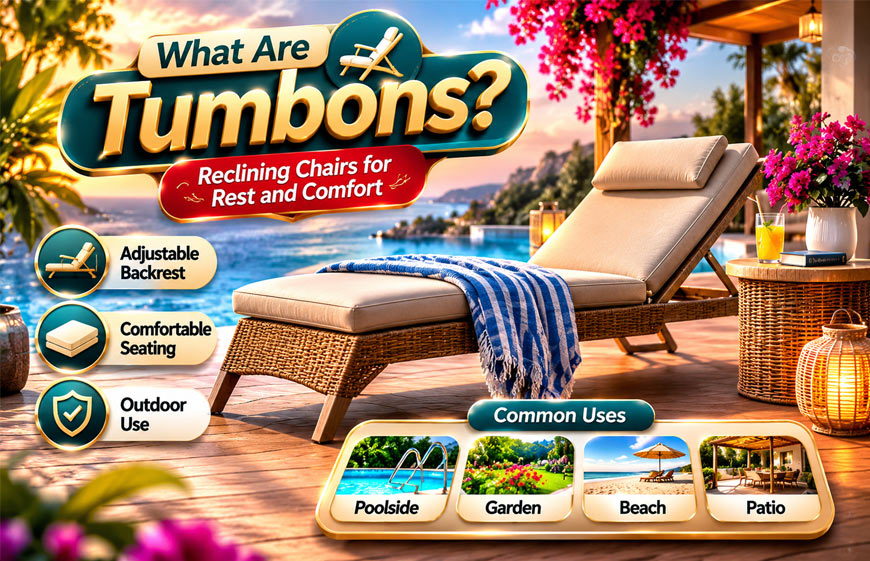
Tumbons are chairs or loungers made for sitting back and relaxing. They are often used in gardens, on patios, near pools, and at beaches.
The word “Tumbon” can be confusing because it is not a common English furniture term. It has a connection with Spanish words for reclining chairs. This guide explains what Tumbons are, their meaning, types, features, materials, uses, and how to care for them.
What Are Tumbons?
Tumbons are reclining chairs made for comfort and rest. Many have a long seat that supports the back and legs. Some can also move into an almost flat position.
There is no single Tumbon design. The name may be used for a folding beach chair, sun lounger, pool chair, or another type of recliner.
Most Tumbons are used outdoors. You may see them near pools, in gardens, on patios, or at beaches. Hotels and resorts also use similar loungers.
Some models can be used indoors. They may work in bedrooms, sunrooms, or reading areas.
Because the name is used for different chairs, always check the size, material, design, and reclining positions before buying.
What Does the Word Tumbon Mean?
The word has a connection with Spanish.
In Spanish, tumbona means a reclining chair or sun lounger. It is commonly used for chairs made for relaxing near pools, beaches, and other outdoor areas.
The name is also connected with the Spanish verb tumbar, which can mean to lie down or lay something down.
Another related word is tumbón. It can be used for someone who likes to rest or is lazy.
However, “Tumbons” is not a standard English furniture name. It appears to be an informal term used online for loungers and reclining chairs.
You may also find these chairs under names such as sun lounger, deckchair, sunbed, reclining chair, or outdoor recliner.
Tumbon and Tambon: Are They the Same?
Tumbon and tambon do not always mean the same thing.
In Thailand, a tambon is a local administrative area or subdistrict. Older English spellings may sometimes write this word as “tumbon.”
This meaning is not related to furniture.
This is why a search for “Tumbon” may show different results. Some pages may be about reclining chairs, while others may be about places in Thailand.
In this article, Tumbon means the furniture type.
Main Types of Tumbons
Tumbons come in different styles. The right type depends on where and how you want to use the chair.
Folding Loungers
Folding loungers are easy to move and store. They can be folded into a smaller size when they are not being used.
They are useful for patios, balconies, beaches, and camping. Lightweight models are easier to carry.
Fixed Sun Loungers
Fixed sun loungers usually have a long and strong frame. They are common near swimming pools, at hotels, and on large patios.
Some have adjustable backs. Others also have wheels, making them easier to move.
Zero-Gravity Chairs
Zero-gravity chairs move the back and legs together. As you lean back, your legs are raised.
Most models let you choose different sitting and reclining positions.
Chaise-Style Loungers
Chaise-style loungers have a long seat that supports the legs. Some have a more stylish or decorative design.
They can be used in bedrooms, hotels, sunrooms, or covered outdoor areas.
Padded Recliners
Padded recliners have soft cushions and may include armrests and head support.
They can be comfortable, but outdoor cushions need extra care. They should be kept dry and may need to be stored indoors during bad weather.
Main Features of Tumbons
Different Tumbons have different features. Most are made to improve comfort and make reclining easier.
Adjustable Backrest
Many Tumbons have an adjustable back.
You can keep the back high while reading or talking. You can lower it when you want to rest or sunbathe.
Some models can go almost flat. The back should always lock firmly before you sit down.
Leg and Body Support
Tumbons are usually longer than normal outdoor chairs. This gives more support to the back and legs.
Some have a separate footrest. Others use one long seat to support the body.
Folding Frames
A folding frame makes the chair easier to store and carry.
This feature is useful for small homes, camping trips, and beach visits.
Wheels and Stackable Frames
Some large loungers have wheels on the back. You can lift one end and roll the chair instead of carrying it.
Stackable models can be placed on top of each other. This saves storage space and can be useful for hotels, resorts, and pool areas.
Cushions and Head Support
Some Tumbons have cushions or small head pillows for extra comfort.
Outdoor cushions should be made for outdoor use. They should also be completely dry before they are stored.
Breathable Seats
Mesh seats allow air to pass through the material. This can make them more comfortable during hot weather.
Mesh also dries quickly, which makes it useful around pools and beaches.
What Materials Are Tumbons Made From?
Tumbons can be made from several materials. The material affects the chair’s weight, look, care, and strength.
Aluminum
Aluminum is light and easy to move. It also does not rust like normal steel.
This makes it useful around pools and other wet areas.
However, metal can become hot when left in strong sunlight.
Powder-Coated Steel
Steel is strong and usually heavier than aluminum.
Outdoor steel is often covered with a protective coating. If the coating gets badly scratched, the exposed metal may need extra care.
Wood
Wood gives Tumbons a natural look. Teak and ipe are examples of woods used for outdoor furniture.
Wood needs regular cleaning and may need extra treatment. Wooden loungers can also be heavier than metal ones.
Synthetic Rattan
Synthetic rattan has a woven look. It is often used on patios and at resorts.
Good outdoor rattan can handle sun and moisture. Poor-quality material may crack or become loose over time.
Plastic
Plastic loungers are usually light and easy to clean.
They can also cost less than some wood or metal models. However, heat and strong sunlight may affect some types of plastic over time.
Outdoor Mesh
Mesh is useful in warm or wet areas. Air can move through it, and it dries quickly.
It may not need a thick cushion. However, damaged mesh can sometimes be difficult to repair.
Are Tumbons Comfortable?
Tumbons are mainly made for comfort.
Their longer shape can support the back and legs. An adjustable back also lets you change your sitting position.
Comfort depends on the chair. Seat depth, back height, armrests, head support, and reclining angle can all make a difference.
Mesh can feel cooler in hot weather. Cushions are softer but may take longer to dry.
If possible, try the chair before buying it. Make sure your back, head, and legs feel comfortable.
Where Can You Use Tumbons?
Tumbons can be used in many indoor and outdoor spaces.
Gardens and patios are common places. You can place a lounger under a tree, near plants, or in a shaded area.
They are also useful around swimming pools. Aluminum frames and quick-drying mesh are good choices for places where the chair may get wet.
For beaches, lightweight chairs are easier to carry. Outdoor materials are also important because sand, salt, water, and sunlight can cause wear.
A large balcony may also have enough room for a Tumbon. Measure the area first because reclining chairs need more space when opened.
Some models can also be used indoors. They may work in bedrooms, sunrooms, studios, or reading areas.
Tumbons in Outdoor and Mediterranean Design
Tumbons can fit well in simple outdoor spaces.
Mediterranean-style areas often use stone, tiles, natural wood, woven furniture, plants, and light fabrics. Wooden or woven loungers can match this type of design.
Shade can make the area more comfortable. Trees, umbrellas, pergolas, and covered patios can help reduce direct sunlight.
A small side table can also be useful for keeping a drink, book, or other small items nearby.
The Mediterranean connection is mainly about outdoor design. It does not mean Tumbon is an official Mediterranean furniture term.
Tumbons and Slow Living
Some people also connect Tumbons with the idea of slow living.
In this meaning, the chair provides a place to stop and rest. People may use it for reading, listening to music, drinking tea, or spending quiet time outdoors.
It does not mean avoiding work. It simply means making some time for rest.
This is a lifestyle idea connected with Tumbons. It is not the official meaning of the word.
Tumbons vs Sunbeds and Regular Outdoor Chairs
Tumbons, sunbeds, loungers, and reclining chairs can look similar.
A sunbed is usually long enough to support most of the body. It is often used near pools or for sunbathing.
A reclining chair may be shorter. Its back can move, but it may not fully support the legs.
A normal outdoor chair is mainly made for sitting upright. It takes up less space and works well around a table.
The word Tumbon can be used for different reclining designs. Check the chair’s size, back positions, seat width, and leg support instead of relying only on its name.
How to Choose the Right Tumbon
First, decide where you will use the chair.
Measure the available space before buying. Remember that the chair may need more room when fully reclined.
Think about how often you will move it. A light aluminum or folding chair is easier to move. A heavy wooden lounger may be better if it will stay in one place.
Choose a material that suits the area. Mesh is useful near water because it dries quickly. Wood can work well in gardens, while synthetic rattan is common on patios.
Check the weight limit, frame, joints, and reclining system. The moving parts should work smoothly and lock properly.
Comfort also matters. Check the seat, back, armrests, head support, and leg position.
Also think about storage. Folding and stackable models usually need less storage space.
Safety Tips for Using Tumbons
Place the chair on flat and firm ground. Uneven ground can make it unstable.
Make sure the reclining system is locked before sitting down. Keep your fingers away from folding parts when opening or closing the chair.
Follow the weight limit given by the manufacturer. Do not stand or jump on the chair unless it is made for that purpose.
Children should not play with the folding or moving parts.
Check the chair for loose screws, broken wheels, damaged fabric, cracks, or problems with the reclining system.
Metal frames can become hot in direct sunlight. Check the surface before sitting down.
How to Clean and Maintain Tumbons
Outdoor chairs can collect dust, leaves, sand, sunscreen, salt, and other dirt.
For many plastic and metal surfaces, mild soap, clean water, and a soft cloth can be used. Always follow the manufacturer’s cleaning instructions.
Wood may need more care. Synthetic rattan should also be cleaned gently to avoid damaging the woven material.
Pool chairs may collect chlorine, while beach loungers can collect salt and sand. Rinse them with clean water when needed.
Let cushions and fabrics dry fully before storing them. Wet cushions can develop stains, smells, or mold.
Also check screws, wheels, hinges, and reclining parts regularly.
How to Protect Tumbons From Weather
Sun, rain, moisture, and salt can damage outdoor furniture over time.
A furniture cover can help protect a Tumbon when it is not being used. The cover should allow some airflow so moisture does not stay trapped underneath.
Keep cushions in a dry place during heavy rain or long periods of bad weather.
If you will not use the chair for a long time, storing it in a dry covered place can provide better protection.
Always follow the care instructions provided with the chair.
How Long Do Tumbons Last?
There is no fixed lifespan for a Tumbon.
How long it lasts depends on the material, build quality, weather, amount of use, and care.
A chair used every day beside a pool may wear faster than one kept under a covered patio. Sun, rain, salt, chlorine, and moisture can all cause wear.
Moving parts such as wheels, hinges, and locks can also wear over time.
Regular cleaning and proper storage can help the chair last longer.
Are Tumbons Worth Buying?
Tumbons can be useful if you want a comfortable place to sit back, read, rest, or enjoy an outdoor space.
They can work well in gardens, on patios, near pools, at beaches, and on larger balconies. Some can also be used indoors.
However, loungers need more space than normal chairs. Heavy models can also be harder to move.
A cheap chair is not always the best choice. Look at comfort, frame quality, material, size, and the reclining system.
The best Tumbon is one that fits your space and how you plan to use it.
Bottom Line
Tumbons are reclining chairs or loungers made mainly for rest and comfort. They can be used in gardens, on patios, beside pools, at beaches, and in some indoor spaces.
The word is not a standard English furniture term. Different sellers may use it for sun loungers, folding recliners, pool chairs, and other similar seats.
For this reason, check the actual product instead of focusing only on its name. Look at the size, material, comfort, reclining positions, weight limit, and storage needs.
Regular cleaning and proper storage can also help a Tumbon stay in good condition for longer.
Frequently Asked Questions
What are Tumbons?
Tumbons are reclining chairs or loungers mainly used for resting, reading, and sunbathing.
What does Tumbon mean?
The furniture term is linked with the Spanish word tumbona, which means a reclining chair or sun lounger.
Are Tumbons the same as sunbeds?
They can be similar. A sunbed is usually a long chair for lying back, while Tumbon can be used for several types of reclining loungers.
Can Tumbons lie completely flat?
Some models can lie flat or almost flat. Others only have a few reclining positions.
Can Tumbons be used indoors?
Yes. Some models can be used in bedrooms, sunrooms, studios, and reading areas.
What is the best material for a Tumbon?
It depends on where you use it. Aluminum is light, mesh dries quickly, wood has a natural look, and synthetic rattan works well on many patios.
How do you clean a Tumbon?
Use a cleaning method that is safe for its material. Mild soap, water, and a soft cloth work for many models.
How long do Tumbons last?
There is no fixed lifespan. Material quality, weather, use, cleaning, and storage all affect how long a Tumbon lasts.
Explore More:
Sodiceram Review 2026: History, Uses, Benefits, and Drawbacks

