


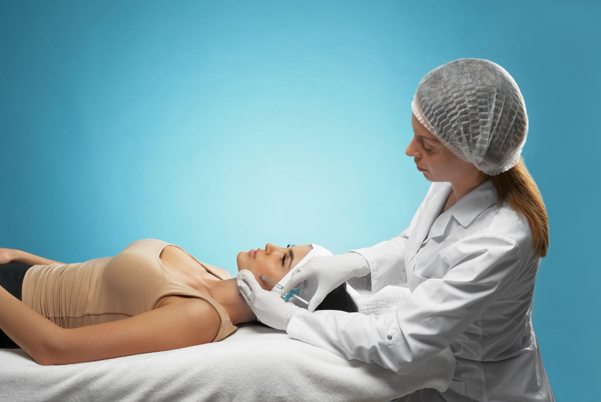
More nurses are looking beyond the hospital floor and toward aesthetic medicine, and many see a nurse injector certification as the first step. For many, the first serious question is whether formal training is really necessary when they already have years of clinical experience.
The short answer is yes. Nursing school teaches you how to assess patients, give injections, and spot complications. It does not teach you how to place a neurotoxin in the frontalis muscle or how to avoid a facial artery when injecting filler near the nose.
This article looks at why the move from traditional nursing into medical aesthetics works best with specialized injector training. It covers the skills involved, the role of hands-on practice, and how structured education supports a safe, lasting career.
The Growing Medical Aesthetics Industry and Why Nurses Are Paying Attention
Demand for nonsurgical aesthetic treatments has stayed strong even through uncertain economic years. Injectables sit at the center of that demand.
What the trends show
- Neuromodulators lead the market. Wrinkle-relaxing injections remain the most requested nonsurgical aesthetic treatment year after year.
- Fillers follow close behind. Dermal fillers for volume, contour, and lip enhancement continue to attract a broad range of patients.
- Med spas keep opening. New aesthetic clinics continue to appear in cities and suburbs across the country.
- Injectables drive the business. Most med spas offer facial injections, and these treatments are often the core of a clinic’s revenue.
Why this matters for nurses
Every one of those clinics needs licensed clinicians to perform treatments. Registered nurses, nurse practitioners, and physician assistants make up a large share of that workforce.
Many nurses are drawn by more predictable schedules, elective patients who are generally healthy, and the chance to build long-term relationships with clients. Others want a change after years of high-acuity work. Whatever the reason, the opportunity is real, and so is the responsibility that comes with it.
How Nursing Experience Builds the Foundation for Aesthetic Practice
Nurses do not start from zero. Years of bedside care give them skills that transfer directly into an aesthetic setting.
Skills that carry over
- Patient assessment: taking a thorough history, reviewing medications, and recognizing contraindications.
- Sterile technique and injection safety: aseptic practice, needle handling, and sharps disposal.
- Emergency awareness: recognizing an allergic reaction or a patient who is about to faint.
- Communication: explaining procedures, managing anxiety, and documenting care accurately.
Where the gaps are
Aesthetic injecting is a different discipline from intramuscular vaccines or IV starts. The goal is not only to deliver a drug safely but to produce a natural, balanced result on a patient’s face.
That requires detailed knowledge of facial muscles, fat pads, and blood vessels, along with an eye for proportion and symmetry. It also requires familiarity with specific products, their dilution, their behavior in tissue, and their risks. None of this is covered in depth in a standard nursing curriculum, which is why dedicated education matters.
Think of a nurse with ten years of ICU experience. She can manage a crashing patient with confidence, but on her first day in a med spa she may not know which muscle causes a patient’s “11” lines or how much product a crow’s feet treatment typically needs. Training closes that gap.
What Botox and Dermal Filler Training Covers
A well-designed injector program turns general clinical knowledge into aesthetic-specific competence. Most quality courses cover five core areas.
Facial anatomy
This is the backbone of safe injecting. Trainees learn the muscles of facial expression, the depth of fat compartments, and the location of key arteries and nerves. Knowing where the danger zones are, such as the glabella and the area around the nose, is what separates a safe injector from a risky one.
Product knowledge and injection techniques
Neuromodulators relax specific muscles, while dermal fillers restore volume or contour. Training explains how each product works, how long it lasts, and which techniques suit which areas, from serial puncture to cannula use.
Patient assessment and consultation
A good consultation goes beyond asking what the patient wants. Injectors learn to analyze facial proportions, assess skin quality, set realistic expectations, and recognize when a patient is not a suitable candidate, including signs of body dysmorphic concerns.
Treatment planning
Aesthetic results are rarely achieved in one area alone. Trainees learn to build staged plans, choose appropriate doses, and schedule follow-up visits that keep results natural over time.
Complication management
Every injector must know how to recognize and respond to adverse events. That includes bruising and swelling, eyelid ptosis after neurotoxin, and rare but serious events such as vascular occlusion from filler, which requires immediate action.
Why Hands-On Training and Patient Safety Come First
You cannot learn to inject from slides alone. Reading about the depth of the orbicularis oculi is useful, but feeling the needle reach the right plane on a live patient is how skill actually develops.
The value of supervised practice
Hands-on sessions with live models give trainees real feedback in real time. An experienced instructor can correct an angle, adjust a dose, or point out an asymmetry before it becomes a problem.
This kind of guided practice builds muscle memory and judgment together. It also gives new injectors a safe space to make small mistakes while someone is watching.
Understanding risk
Most injectable treatments are low risk when performed correctly. Problems tend to arise when injectors work outside their training, use unfamiliar products, or skip a proper assessment.
Patient safety depends on preparation: an emergency kit, a written complication protocol, hyaluronidase on hand for filler cases, and a clear plan for when to refer.
Key insights
- Anatomy knowledge is the single most important safety factor in aesthetic injecting.
- Supervised practice on live models builds confidence faster than observation alone.
- Being prepared for complications is part of the treatment, not an afterthought.
Limitations to keep in mind
- A short course gives you a foundation, not mastery. Competence grows with supervised experience over months and years.
- Certification is not a license. Your nursing license and your state’s rules determine what you can legally do.
- Scope of practice varies widely. In many states, RNs must work under a physician or NP with proper delegation and supervision, and rules on medical direction differ from one state to the next.
- Training quality is uneven. Programs differ in class size, live-model time, and instructor credentials, so research carefully.
How Nurse Injector Certification Supports Long-Term Career Growth
Structured training does more than teach technique. It gives nurses the confidence to speak with patients, collaborate with medical directors, and take on more responsibility over time.
Employers notice this too. Med spas and dermatology practices often prefer candidates who can show documented training in anatomy, injection techniques, and complication management. Completing a recognized nurse injector certification through Injector Training Academy, a medical aesthetic training academy, can make that first job search noticeably easier.
Continued education keeps skills current
Aesthetic medicine changes quickly. New products, new techniques, and updated safety guidance appear every year, so the best injectors treat their first course as a starting point.
Many progress from foundational neurotoxin and filler training to advanced courses in areas such as lip and cheek contouring, non-surgical rhinoplasty, or combination treatments with skin procedures like microneedling.
Practical steps to get started
- Confirm your scope of practice. Check your state board of nursing rules on aesthetic injections, delegation, and supervision.
- Choose a program with real hands-on time. Look for small class sizes, live models, and experienced instructors.
- Study facial anatomy before class. Arriving with a strong base helps you get more from practical sessions.
- Find a mentor or supervised setting. Early experience under a skilled injector or medical director builds judgment safely.
- Build a complication plan. Know your emergency protocols and keep the supplies you need on hand.
- Keep learning. Schedule advanced training and refresher courses as your experience grows.
Conclusion
The move from traditional nursing into medical aesthetics is less a fresh start than a change in direction. Your assessment skills, your instinct for safety, and your ability to earn a patient’s trust all come with you.
What changes is the level of precision. A few millimeters can decide whether a result looks natural or a vessel is put at risk, and only focused training and supervised practice build that precision reliably.
Perhaps the better question is not whether you can learn to inject, but what kind of injector you want to be. The answer usually starts with how seriously you take your education.

