


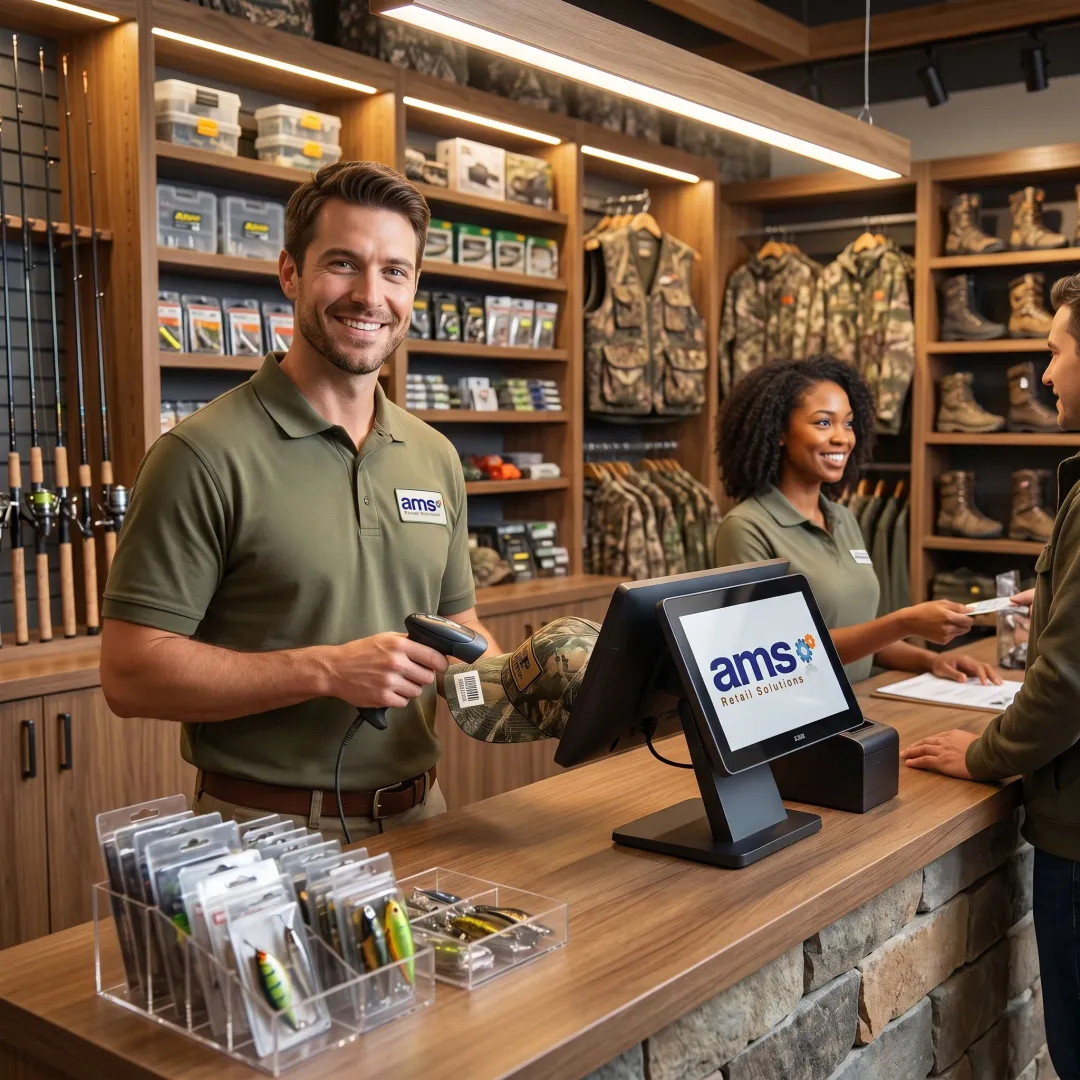
Hunting and fishing retailers operate under a different set of pressures than most specialty retailers. Between managing regulated inventory like firearms and ammunition, tracking seasonal demand cycles, handling license sales, and maintaining compliance with state and federal requirements, the point-of-sale system at the center of the operation carries more responsibility than it might appear from the outside. When that system fails, underperforms, or simply doesn’t match how the store actually runs, the consequences reach across every part of the business — from the customer waiting at the counter to the back-office reporting that informs buying decisions months down the line.
Choosing the wrong system isn’t just an inconvenience. It creates operational drag, introduces compliance risk, and often costs more to correct than the initial investment itself. Many store owners make this decision under time pressure — replacing an aging system, opening a new location, or reacting to a breakdown — without a structured way to evaluate what they actually need. This checklist is designed to slow that process down and give retailers a practical framework for evaluation before any agreement is signed.
What a Game Store POS Platform Actually Needs to Do
A game store pos platform is not a general retail tool applied to a specific context. It is a system built, or at minimum configured, around the specific inventory types, transaction requirements, and compliance obligations that define hunting and fishing retail. The distinction matters because a generic retail POS can process a sale, but it cannot manage the full workflow that surrounds that sale in a regulated environment. When evaluating options, retailers need to start from what the platform must do operationally, not from what features a vendor highlights in a demo.
Purpose-built or purpose-configured solutions for this category, such as those designed around a game store pos platform, are built with these workflows in mind from the ground up. That foundation matters more than surface-level features, particularly when transactions involve regulated items or require integration with state licensing systems.
Regulatory Compliance Cannot Be an Add-On
Hunting and fishing retail sits within a regulated category. Firearm transactions require bound book management and compliance with ATF recordkeeping standards. License sales, in many states, require direct integration with wildlife agency systems. These are not features a retailer can bolt onto a general retail platform after the fact. When compliance functions are embedded in the system’s core logic, they work consistently. When they are treated as optional modules or workarounds, they introduce gaps that can create real legal exposure.
Before signing any agreement, a retailer should confirm how compliance functions are handled — not just that they exist, but how they are maintained as regulations change. A vendor who cannot clearly explain their update process for compliance-related features is a meaningful risk.
Inventory Complexity Requires More Than SKU Management
Hunting and fishing inventory is not simple. Ammunition must often be tracked by caliber, quantity, and in some jurisdictions, buyer information. Firearms carry serial numbers that must be recorded at the point of sale and tied to specific transaction records. Seasonal products shift dramatically across the year. A system that treats all of this as interchangeable SKUs creates manual workarounds, which create errors, which create downstream problems in both operations and compliance.
Serialized Inventory Tracking
Firearms retail specifically requires serialized inventory management. Each unit has a unique identifier that must follow it through receiving, display, sale, and recordkeeping. A POS system that cannot natively handle serialized items will require manual workarounds, typically in spreadsheets or paper logs maintained alongside the digital system. This dual-tracking approach increases the probability of error and makes audits significantly more difficult. Serialized inventory support should be a confirmed capability, not an assumed one.
Seasonal Inventory Behavior
Hunting and fishing retail operates on seasonal rhythms that are more pronounced than most retail categories. A system should support the ability to anticipate these shifts through reorder point settings, seasonal pricing rules, and historical trend visibility. If the platform cannot reflect the way inventory actually moves through the year, replenishment decisions will consistently lag behind actual demand.
Integration With Licensing and Regulatory Systems
Many states require that hunting and fishing license sales be processed through a direct connection to the relevant wildlife or natural resources agency system. This is not a feature that can be approximated — either the integration exists and is maintained, or it does not. Retailers operating without this connection either cannot sell licenses through their POS or must maintain a completely separate terminal for that transaction type, which creates friction for both staff and customers.
According to the National Oceanic and Atmospheric Administration, fishing license and permit requirements vary significantly by state and fishery type, which means the compliance environment is not static. A platform must be capable of reflecting changes in licensing requirements over time, not just at the point of initial implementation.
Payment Processing and Transaction Reliability
A point-of-sale system that cannot process payments reliably during peak periods is a fundamental problem. Hunting and fishing retail often sees concentrated high-traffic windows — opening weekend of deer season, the weeks before a major fishing tournament, or holiday gift-buying periods. System slowdowns or payment processing failures during these windows affect revenue directly and damage customer confidence in the store’s ability to serve them efficiently.
Offline Capability
Retailers in rural or semi-rural locations, where many hunting and fishing stores operate, cannot always depend on consistent internet connectivity. A platform that requires a live connection for every transaction is vulnerable in these environments. Offline processing capability — the ability to complete a sale locally and sync when connectivity is restored — is a practical necessity for this retail category, not a premium feature.
Reporting That Reflects How the Business Is Actually Run
A game store pos platform should produce reports that align with how hunting and fishing retail actually operates. This means reporting that can break down performance by product category, track ammunition and firearm sales separately for compliance purposes, reflect license sales volume, and show seasonal comparison data. Generic retail reporting that flattens all of this into a single sales view provides limited value for operational decision-making.
Compliance Reporting Specifically
Beyond operational reports, the system must produce documentation that satisfies regulatory requirements. For firearm retailers, this means maintaining records that can be accessed in the format required for inspection or audit. A system that stores this information but cannot produce it in a usable format when needed has not solved the compliance problem — it has only deferred it.
Vendor Support and Implementation Experience
The vendor relationship matters beyond the software itself. A system is only as reliable as the support structure around it. For hunting and fishing retailers, this means working with a vendor who understands the regulatory environment, can respond during high-volume periods, and has a track record of successful implementations in similar store contexts. A vendor who has never implemented a system in a regulated retail environment will not understand the urgency of a compliance-related issue at the same level as one who operates primarily in this category.
Hardware Compatibility and Store Environment
Many hunting and fishing stores operate in environments that are not typical retail settings. Dust, humidity, and high foot traffic during peak seasons place different demands on hardware than a climate-controlled suburban retail environment. A game store pos platform evaluation should include the hardware it runs on, not just the software itself. Systems that require hardware replacements every two years because the recommended equipment is not rated for the environment introduce ongoing costs that compound over time.
Staff Training and Adoption Curve
A sophisticated platform that staff cannot use effectively is not an asset. In hunting and fishing retail, counter staff often include part-time seasonal employees who may not have prior retail POS experience. The system should be usable after reasonable training without requiring staff to memorize complex workflows or consult documentation for routine transactions. The adoption curve is a real operational cost — the longer it takes for staff to become proficient, the longer the store operates at reduced efficiency following implementation.
Scalability Across Locations or Business Changes
A game store pos platform chosen for a single location should still be evaluated for what happens if the business grows. Adding a second location, expanding into e-commerce, or introducing a wholesale channel all create integration requirements that a system either supports or does not. Switching platforms mid-growth is costly and disruptive. Evaluating scalability at the point of initial selection avoids that outcome.
Total Cost of Ownership Over Contract Duration
The price presented at the point of sale is rarely the complete picture. Retailers should evaluate the full cost across the term of any agreement, including implementation fees, hardware costs, ongoing licensing or subscription fees, support tiers, and the cost of any add-on modules required for compliance functionality. A lower upfront cost that requires several paid add-ons to reach functional equivalency is not a better deal — it is a pricing structure that obscures the true comparison.
Conclusion: Slow Down the Decision to Protect the Operation
Selecting a point-of-sale system for a hunting and fishing retail store is a decision that will shape daily operations, compliance posture, and reporting capability for several years. The pressure to move quickly — whether driven by an aging system, a new location opening, or a vendor deadline — is real, but that pressure should not compress the evaluation process to the point where critical questions go unasked.
This checklist is not exhaustive, but it covers the categories where misalignment between a platform’s capabilities and a store’s actual needs tends to create the most significant problems. Compliance functions, inventory complexity, licensing integration, payment reliability, and vendor support are not secondary considerations — they are the foundation of a system that either works in this environment or does not.
Before any agreement is signed, a retailer should be able to answer every item on this checklist with a clear, confirmed response — not a vendor assurance that something is possible, but a demonstrated understanding of how the system handles each requirement in practice. That standard of evaluation is what separates a decision made with confidence from one made with hope.

