


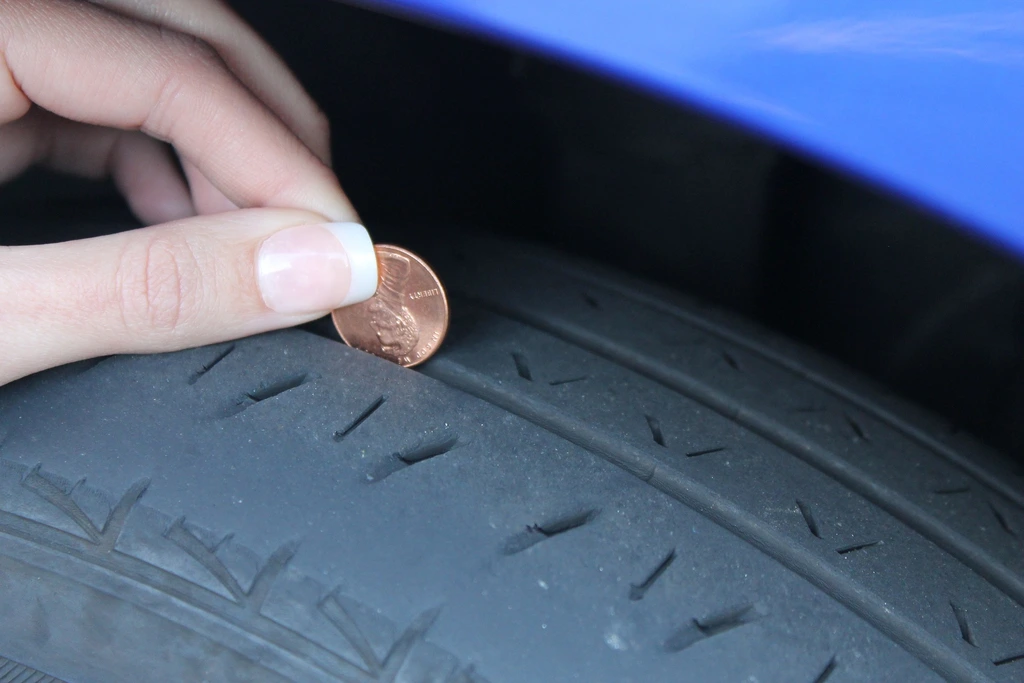
Premature tire wear is one of those operational problems that tends to get blamed on the wrong things. Drivers assume it is road conditions. Fleet managers point to alignment or inflation. Service departments focus on rotation schedules. And while each of those factors genuinely plays a role, there is a contributing cause that often goes unexamined until the damage is already done: how tires are handled and stored when they are not in use.
For auto service operations, seasonal tire swap programs, fleet maintenance facilities, and dealerships managing inventory, tires cycle in and out of storage regularly. Seasonal changeovers, spare sets, off-season stock — all of it accumulates. When that storage is improvised or unstructured, tires absorb damage that shortens their effective life before they ever return to a vehicle. The result is faster wear, earlier replacement, and costs that compound over time without a clear explanation for why.
This article examines five specific reasons tires degrade ahead of schedule, and why structured storage practices, rather than handling adjustments alone, are the more reliable solution.
Why Storage Conditions Directly Affect Tire Longevity
A tire storage rack is not simply a space-saving tool. It is a structural intervention in the degradation process that begins the moment a tire is removed from a vehicle. When tires are stacked flat in piles, leaned against walls at inconsistent angles, or left in contact with concrete floors, the material inside them responds to that stress over time. Rubber compounds, internal cords, and bead structures are all sensitive to sustained pressure applied unevenly or in directions they were not engineered to handle.
According to guidance from the National Highway Traffic Safety Administration, tire integrity is influenced not only by use but by storage and age conditions — making the storage period itself a meaningful variable in overall tire safety and performance.
Proper rack systems hold tires in orientations that distribute their weight appropriately, protect them from ground contact, and keep them separated in ways that prevent incidental damage. When operations rely on a well-designed tire storage rack, the tires that come out of storage perform more consistently than those kept in improvised conditions. The difference is not always visible at first. It shows up in handling characteristics, uneven wear patterns, and service intervals that come sooner than expected.
The Role of Resting Position in Structural Integrity
Tires are designed to bear load vertically while rotating. When they are stored flat and stacked, the weight of multiple tires pressing down on a single unit distorts the bead and sidewall over time. The longer the storage period, the more pronounced this deformation becomes. Even when the tire is remounted and inflated, the internal structure may retain some of that deformation, creating subtle inconsistencies in how the tire contacts the road surface.
Upright storage on a proper rack eliminates this entirely. Tires stand on their tread rather than resting on their sidewalls, which means the most structurally resilient part of the tire bears the minimal load involved in storage. This is not a marginal distinction — it is the difference between a tire that comes back into service in the same condition it left, and one that has been quietly compromised.
Reason One: Uncontrolled Ground Contact Accelerates Material Degradation
Concrete and asphalt floors are porous, often contaminated with oil, solvent residue, or moisture, and they conduct temperature changes that affect rubber chemistry. When tires rest directly on these surfaces for weeks or months, the contact area absorbs compounds from the floor and loses plasticizers from the rubber — a process that leaves the material harder and more brittle than it was before storage.
Why Floor Storage Is a Compounding Problem
The issue is not just what the floor transfers to the tire, but what happens structurally at the contact point. A tire sitting stationary on a hard surface develops flat spots. In some cases these relax after the tire warms up on the road. In other cases, particularly with longer storage periods or tires that have already accumulated mileage, the flat spot becomes semi-permanent. The resulting wear pattern accelerates unevenly and shortens the usable tread life considerably.
Rack-based storage eliminates direct floor contact entirely. The tire is supported at the tread or through a mounted structure, and the contact point with the rack is managed rather than arbitrary. This matters most in facilities where tires sit in storage for an entire season — enough time for floor-based degradation to become meaningful.
Reason Two: Improper Stacking Damages Internal Structure Before the Tire Is Used
Stacking tires flat is a common practice in facilities where storage space is limited and organization has not been formalized. It appears efficient because it uses vertical space, but it applies compressive force to the sidewall and bead of the lower tires in a way that accumulates over time. The tires at the bottom of a heavy stack absorb the most stress and are typically the last to be retrieved — meaning they spend the longest time under load.
Cumulative Load and What It Does to Bead Geometry
The bead is the part of the tire that seats against the rim. Its geometry needs to be precise for the tire to seal correctly and seat evenly during mounting. When bead geometry is distorted by sustained pressure, mounting becomes harder, seal quality is compromised, and the tire may develop slow leaks or uneven inflation retention from the first use. None of this is detectable by looking at the tire. It shows up in service, after the tire has already been sold or installed.
Rack systems that keep tires upright or mounted horizontally without stacking remove this risk entirely. Each tire bears only its own weight, stored in the orientation that best preserves its geometry through the full storage period.
Reason Three: UV and Ozone Exposure Breaks Down Rubber Compounds
Rubber is not a stable material when exposed to environmental stressors over time. Ozone and ultraviolet light both attack the polymer chains in rubber compounds, causing oxidation that makes the material harder, less flexible, and more prone to cracking. This process happens whether the tire is in use or in storage, but unprotected storage environments accelerate it significantly.
How Storage Location and Rack Design Interact With Environmental Risk
Facilities that store tires near windows, loading bay doors, or under fluorescent lighting expose the rubber to more UV than necessary. Tires stored near motors, compressors, or welding equipment are exposed to elevated ozone concentrations. Neither of these conditions is always avoidable, but the way tires are stored determines how much surface area is exposed and for how long.
Rack systems that allow tires to stand upright in a controlled area of the facility, away from direct light and electrical equipment, naturally reduce this exposure. Some facilities use covers for an added layer of protection. The important point is that environmental degradation during storage is not inevitable — it is a function of where and how the tires are kept, and those are decisions that storage infrastructure directly shapes.
Reason Four: Disorganized Storage Leads to Incorrect Rotation and Sequencing
Tire wear management depends on consistent rotation, and rotation depends on knowing which tire came from which position, how long it has been in service, and when it was last rotated. When storage is unorganized, that information gets lost. Tires get pulled in whatever order is convenient, matched imprecisely, and installed without reference to their history.
The Operational Cost of Lost Tire History
A tire that has worn unevenly on the front-left position and gets reinstalled on the front-left without correction is going to continue wearing unevenly. Without organized storage that links tires to their service records, rotation becomes a procedural gesture rather than a meaningful maintenance step. Over time, this leads to sets of tires that wear at different rates, creating handling inconsistencies and requiring replacement at uneven intervals.
Structured rack storage supports organization. When tires are labeled, positioned consistently, and retrieved in deliberate order, rotation programs work the way they are intended to. The rack itself is the physical infrastructure that makes this discipline possible at scale — particularly in high-volume operations handling dozens or hundreds of tires at any given time.
Reason Five: Handling Damage During Storage Cycles Goes Undetected
Every time a tire is moved — pulled from a pile, rolled across a floor, dropped against a wall — it has the potential to absorb impact that creates internal damage invisible to the naked eye. Sidewall bruising, cord separation, and bead distortion from handling impacts do not always show up as visible cuts or bulges. They can exist as internal weaknesses that only manifest under load or at high speed.
How Rack Systems Reduce Incidental Handling Damage
Facilities without organized storage systems handle tires more often than necessary. Tires get moved to access others, repositioned to create space, and stacked and unstacked repeatedly over the course of a storage season. Each of those interactions is an opportunity for impact damage. Rack systems reduce unnecessary handling by making every tire accessible without disturbing others. A tire goes into a designated slot and comes out from the same slot without requiring any reorganization around it.
- Reduced handling frequency means fewer opportunities for sidewall and bead impact during the storage period.
- Consistent access to individual tires eliminates the need to dismantle storage arrangements to retrieve a specific set.
- Designated positions for each tire support the labeling and tracking practices that prevent mix-ups and out-of-sequence installations.
- Upright or rack-mounted storage keeps tires in orientations that reduce the likelihood of rolling or falling during access.
The cumulative effect of these factors is meaningful. Tires that are handled carefully, stored properly, and retrieved without unnecessary disruption consistently perform closer to their rated service life than those managed in improvised environments.
Closing Thoughts
Premature tire wear is rarely the result of a single failure. It is usually the product of several small compromises that accumulate invisibly over time — in how tires are stored between seasons, how they are handled when not in use, and how they are selected and sequenced when it is time to reinstall them. Each of the five reasons outlined here contributes independently to early degradation, and each one is addressable through the same practical change: structured storage.
For operations that manage tire inventory at scale, the economic case is straightforward. Tires that reach their rated service life rather than falling short of it reduce replacement frequency, improve consistency across a fleet or service program, and eliminate the hidden costs associated with handling damage and deferred maintenance. The infrastructure required to achieve this is not complicated. It requires a storage system that respects the physical requirements of the tire — upright positioning, floor separation, consistent access, and a stable environment — rather than treating storage as an afterthought to the maintenance program itself.
Understanding why tires wear out early is useful. Acting on that understanding with practical storage infrastructure is what actually changes the outcome.

