


For a jewelry label developing its first branded bracelet, choosing a custom logo bracelet manufacturer involves more than sending artwork and selecting a metal color. The critical question is whether the logo will remain legible, comfortable and consistent when the bracelet is made at production scale. An attractive mockup does not answer that question. A physical sample and a written specification do.
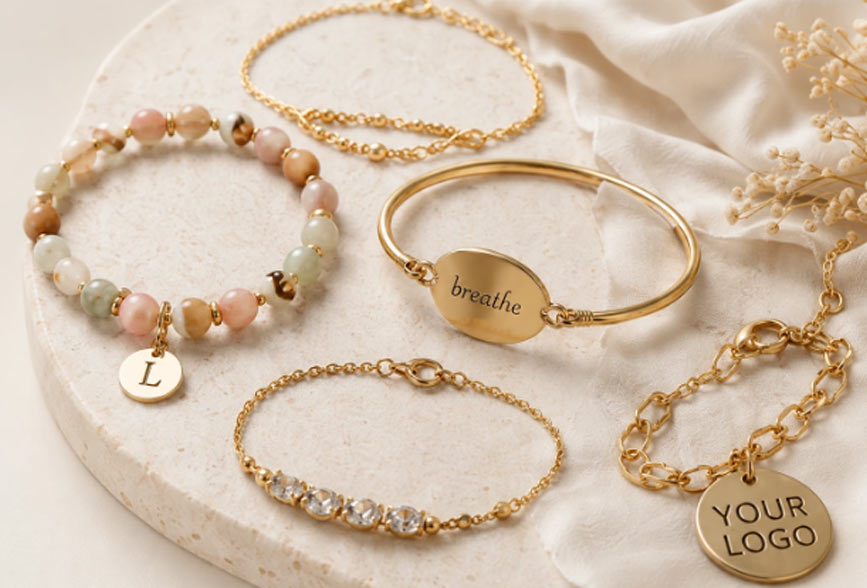
A logo can be placed on a charm, a flat nameplate, a clasp component, a small hanging tag or the inside of a rigid bangle. Each location changes how the design is worn and what manufacturing processes may be appropriate. The right choice depends on the bracelet’s construction, the size of the identity mark and the buyer’s intended presentation—not simply the amount of space available on a drawing.
Start with the bracelet type, not the logo file
On a chain bracelet, a free-hanging logo tag can reinforce identity without changing the main decorative element. But its weight, attachment ring and orientation deserve attention: a tag that flips behind the wrist may be nearly invisible in use. A central nameplate offers more visibility but becomes part of the bracelet’s fit and flexibility. On a cuff or bangle, an inside mark may preserve a clean exterior, provided the marking does not leave an uncomfortable edge.
A retailer may want a discreet maker’s mark; a fashion brand launching a signature collection may prefer a visible symbol. These are different briefs. Ask the design team to label each proposed logo position as visible when worn, visible when handled or visible only during unboxing. That simple distinction prevents a surprising number of disappointments at sampling.
Four decisions to confirm before sampling
- Application method. Engraving, stamping, casting a relief detail and attaching a separate logo charm have different constraints. Thin lines or tiny counters in letters may fill in or become unclear after finishing. Before selecting a method, request an assessment of the actual metal, surface geometry and artwork—not a universal promise that any logo can be copied perfectly.
- Minimum readable size. A design that reads well on a laptop can disappear at bracelet scale. Supply vector artwork where possible, identify the smallest acceptable letters and ask to see a photograph of the mark on the physical sample under ordinary light. Approve the front, reverse and edge appearance where each is relevant.
- Surface finish. Polished, brushed, textured and plated surfaces reflect light differently. A shallow mark on a mirror-polished charm may be less legible than expected. Compare the logo after the final surface finish is applied; the bare-metal prototype is not the final reference.
- Attachment and wear. A decorative logo plate should not introduce sharp corners or interfere with the clasp. A hanging tag needs a reliable connection; its dimensions can influence how the bracelet moves. Agree on the inspection points before approving the sample.
Why branding and packaging should be one specification
For many brands, the first clearly visible logo is not on the jewelry. It is on the display card, pouch or box. This creates a sensible alternative when the bracelet is too delicate for a prominent metal logo. However, the product mark and packaging artwork must still be coordinated: the spelling, proportions, colors and positioning should be consistent across both.
Packaging is also a production question. A rigid bangle needs different support from a fine chain bracelet. Charm-heavy pieces may need separation to reduce tangling. Ask for a packaging mockup with the actual approved bracelet inside it, rather than approving the card and the piece independently.
This approach is relevant to manufacturers that support both jewelry development and private-label presentation. For example, HaoLustra, a custom logo bracelet manufacturer operating a jewelry factory in Qingdao, China, discusses logo applications, sampling and branded packaging as connected parts of its manufacturing process. The useful lesson for buyers is to review the finished branded item—not just a logo graphic—before authorizing bulk production.
MOQ: define what counts as one style
A supplier may quote a minimum order quantity per style, per finish or per variation. For a logo bracelet, determine whether a different engraving, charm shape, metal color or packaging design constitutes another production configuration. Do not assume that 150 bracelets split across three logos will qualify for the same terms as 150 identical bracelets.
Prepare a quantity table with one row per design, material, finish, logo variation and packaging combination. Ask whether tooling, sample development, artwork preparation and packaging minimums are priced separately. A low headline MOQ can conceal a relatively expensive launch if those items were omitted from the first quote.
Use the sample as a miniature acceptance test
When the first branded sample arrives, examine it in the sequence a customer will experience it. Open the package; check orientation and presentation. Wear the bracelet; inspect comfort, length and closure. Look at the logo from a normal viewing distance, not only under magnification. Check whether the finish matches the agreed reference. Photograph the approved mark, including its dimensions and placement, and record any acceptable visual variation.
For a repeatable order, the approved sample should be paired with a concise specification: artwork revision, material direction, finished size, logo location, finish reference, attachment components, packaging and agreed inspection checkpoints. The document is valuable during the first production run and even more valuable when a bestselling style is reordered months later.
Questions worth asking a custom logo bracelet manufacturer
Can the logo appear directly on every bracelet style? Not necessarily. The feasible method depends on the available surface, metal, dimensions and construction. For delicate chains, a small tag or branded card may be more practical than a mark on the chain itself.
Does approval of a digital rendering mean the logo is production-ready? No. Digital artwork helps align expectations; a physical sample shows the actual legibility, surface finish, attachment and comfort that the buyer will receive.
What should a buyer send with an RFQ? Bracelet reference images, expected dimensions, logo artwork, preferred material and finish, approximate quantity by variation, packaging direction and the destination market. Unresolved details can then be identified before sampling.
The decision that matters
The strongest branded bracelet is not necessarily the one with the largest logo. It is the one whose identity remains recognizable without undermining fit, finish or durability. Choose a manufacturer willing to document those trade-offs, review the finished sample and use that approved reference for future production.

