


When a production run stalls because a surface finish failed quality inspection, or when a fabricated component arrives from a finisher with inconsistent color and adhesion problems, the cost is rarely just the part itself. Rework, delayed shipments, and damaged supplier relationships follow. For buyers in manufacturing, construction, agriculture equipment, and general fabrication, choosing a finishing partner is a procurement decision with real operational consequences — not simply a matter of comparing price per pound.
Powder coating has become one of the most widely used industrial surface finishing methods, but the range of quality, capability, and reliability across providers varies considerably. Understanding what separates a capable finisher from an unreliable one requires more than reading a service list. It requires knowing what questions to ask, what processes to look for, and what operational factors determine whether finished parts will perform in the field.
What Powder Coating Actually Involves and Why Process Matters
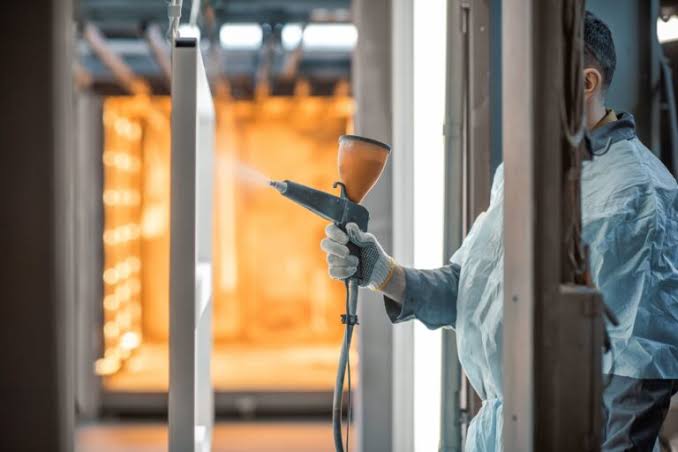
Powder coating is a dry finishing process in which electrostatically charged powder particles are applied to a grounded metal surface and then cured in an oven, where the powder melts and bonds into a continuous, hard film. Unlike liquid paint, there is no solvent carrier, which changes both the application method and the resulting finish properties. The process is well-documented by industry standards bodies including ASTM International, which outlines performance testing for coatings across adhesion, impact resistance, and weathering characteristics.
For buyers evaluating providers, the depth and discipline of a finisher’s process is what determines output quality. A useful starting point is reviewing a structured Powder Coating Services guide that outlines what a professional finishing operation should include at each stage — from pre-treatment through final inspection. Understanding that framework helps buyers ask the right questions before committing to a vendor.
Pre-Treatment Is Where Quality Is Won or Lost
The condition of the metal surface before powder is applied determines how well the coating will bond and how long it will last. Pre-treatment typically involves cleaning, degreasing, and chemical conversion coating — often phosphate or zirconium-based — that prepares the substrate to accept and hold the powder. If this stage is rushed or poorly controlled, the finished surface may look acceptable initially but will fail prematurely through adhesion loss, blistering, or corrosion working beneath the film.
When reviewing a finisher’s operation, the pre-treatment system is one of the most telling indicators of overall capability. A provider who treats pre-treatment as a secondary consideration or who uses a simplified wash process for all substrate types is signaling a limitation in their process discipline. Different metals — steel, aluminum, galvanized material — each benefit from different pre-treatment chemistry, and a capable finisher will acknowledge and accommodate those differences.
Cure Cycle Control Affects More Than Appearance
Curing is the thermal stage where powder transitions from a loose coating into a chemically cross-linked film. The oven temperature profile and dwell time must be appropriate for the specific powder chemistry being used, as well as the mass and geometry of the parts being processed. Undercured coatings are softer, less resistant to chemical exposure, and more likely to chip or delaminate under mechanical stress. Overcuring can cause brittleness and color shift, particularly in certain pigment systems.
A finisher with controlled, documented cure processes will be able to explain how they manage variation in part load, oven recovery time, and thermocouple calibration. These are not minor technical details — they are the variables that determine whether a batch of parts behaves consistently and whether the finish will hold up in its intended application environment.
Evaluating a Finisher’s Operational Capability
The capacity of a finishing operation goes beyond the size of the booth or the length of the conveyor line. Operational capability includes how the finisher manages throughput variability, how they handle custom or complex part geometries, and whether their quality control processes are reactive or built into production flow. For buyers managing regular production volumes, a finisher who lacks production discipline creates scheduling risk that compounds over time.
Line Configuration and Part Handling
The physical layout of a coating line — whether it runs as a batch system or a continuous conveyor — affects the type of work a finisher can process effectively. Batch operations are generally better suited for large, complex, or low-volume parts that require individual hanging and positioning. Conveyor lines are more appropriate for high-volume, consistent parts where speed and throughput consistency matter most.
Part handling is also a quality factor that buyers often overlook. How parts are racked, oriented, and transported through the system affects where Faraday cage shielding occurs, where film thickness may vary, and where the risk of contact marks appears. A finisher who has invested in thoughtful racking solutions and trained their operators accordingly will produce more consistent results across complex part profiles than one relying on standard hooks and improvised positioning.
Color Management and Change Procedures
For buyers requiring specific color matching or multiple colors across a product line, the finisher’s color management process is critical. Cross-contamination between colors — even small amounts of overspray from a previous run — can produce visible defects in light or neutral tones. A finisher with disciplined purge and changeover procedures, dedicated booths for specific color families, or filtered recovery systems reduces this risk considerably.
Color matching itself requires consistency in powder sourcing, mixing verification, and in some cases spectrophotometric measurement rather than visual approval alone. If color consistency across batches and over time is important to the buyer’s product, those expectations should be discussed explicitly before production begins — not after the first out-of-specification shipment arrives.
Understanding Powder Selection and Finish Performance
Not all powder coatings are formulated the same way. Powder chemistries — including polyester, epoxy, epoxy-polyester hybrid, polyurethane, and fluoropolymer systems — each offer different performance profiles in terms of UV stability, chemical resistance, flexibility, and hardness. The right chemistry depends on where and how the finished part will be used, and a competent finisher will help buyers identify the appropriate specification rather than defaulting to whatever powder they stock most heavily.
Exterior vs. Interior Application Requirements
Parts intended for outdoor exposure require UV-stable powder systems, typically polyester-based, that resist chalking and color fade over time. Epoxy-based powders offer excellent chemical and corrosion resistance but degrade under UV exposure and are generally limited to interior or protected applications. Using an interior-grade powder on an exterior application is a specification mismatch that a buyer may not discover until the finish fails in service — at which point the cost of replacement or refinishing typically exceeds the original finishing cost by a significant margin.
A finisher who asks about the end-use environment and makes recommendations based on that information is demonstrating the kind of application knowledge that reduces downstream risk. One who simply applies whatever powder is specified on a work order without question is providing a commodity service that places specification responsibility entirely on the buyer.
Specialty Finishes and Their Limitations
Textured, wrinkle, metallic, and clear powder coating formulations each introduce process variables that standard solid-color runs do not. Metallic powders, for example, can produce inconsistent appearance depending on the application angle and electrostatic settings. Texture finishes may trap contamination in their surface profile if post-coating handling is not managed carefully. Clear coats over metallics require precise cure management to avoid yellowing or adhesion issues.
Buyers specifying specialty finishes should confirm that the finisher has documented experience with that specific product type, has approved samples or strike-off panels available for review, and understands how to maintain appearance consistency across production volumes. Without that confirmation, specialty finish requirements introduce quality risk that may not surface until the parts are assembled or in the customer’s hands.
Certifications, Documentation, and Quality Traceability
Formal quality systems in a finishing operation create accountability that verbal assurances cannot. ISO certification, documented control plans, in-process inspection records, and batch traceability records all serve a practical function: they make it possible to identify when and where a quality deviation occurred, and to correct it before it propagates across a production run.
For buyers supplying to industries with regulatory or contractual quality requirements — aerospace, automotive, medical device, or government procurement, for example — a finisher’s quality documentation capability is not optional. Even for buyers in less regulated markets, a finisher who maintains systematic records is demonstrating the kind of operational discipline that reduces defect frequency and simplifies root-cause analysis when problems do occur.
Logistics, Lead Time, and Communication Expectations
The mechanical quality of a powder coating service is only part of what determines whether a finishing partnership works in practice. How a finisher communicates — about capacity constraints, delays, material shortages, or quality holds — determines how much planning visibility the buyer has. A finisher who operates as a black box, providing finished parts without updates or proactive notification of issues, creates scheduling uncertainty that propagates backward through a buyer’s production planning.
Lead time reliability matters as much as lead time length. A finisher with a consistent five-day turnaround is easier to plan around than one with a stated three-day turnaround that varies unpredictably between two days and ten. Before committing volume to a finishing partner, buyers should assess not just capacity but communication habits and their track record for delivery consistency across different demand periods.
Conclusion: Choosing a Finisher Is a Supply Chain Decision
Powder coating services sit at an important point in the manufacturing and fabrication supply chain. The finish applied to a component affects how it performs, how long it lasts, and how it represents the brand or product it is part of. Choosing the wrong finisher does not typically produce a single visible failure — it produces a pattern of small inconsistencies, rework events, and escalating quality conversations that erode time and margin quietly over months.
The buyers who make good finishing partnerships are those who approach the selection process the same way they approach any critical supplier relationship: with clear requirements, a structured evaluation process, and a willingness to invest time upfront in understanding a finisher’s actual capabilities. That investment consistently produces better outcomes than selecting on price alone and hoping the results speak for themselves.
When the process is understood, the right questions become obvious — and the answers a finisher provides will tell you a great deal about whether they are the right partner for your production environment.

