


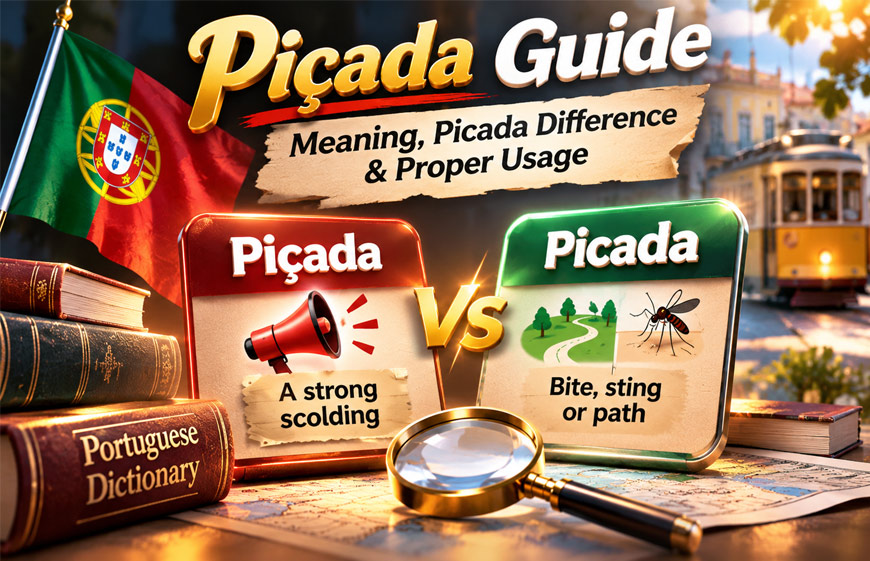
Piçada is a Portuguese word that can be confusing, especially for people learning the language. One reason is that it looks very similar to picada, but the two words can have different meanings.
Online sources also give different explanations for piçada. This guide explains its reported meaning, the difference between piçada and picada, its origin, how it is used, and why context matters.
What Does Piçada Mean?
Piçada is described in the collected source as an informal Portuguese word for a strong scolding or verbal correction.
In simple English, it can be understood as a telling-off, rebuke, reprimand, or scolding. The best translation depends on the situation.
For example, the word may be used when someone makes a mistake and another person speaks to them firmly about it. The correction is stronger than a normal reminder or calm piece of advice.
However, piçada does not always mean a serious fight or extreme argument. The strength of the word can change depending on who is speaking, how they say it, and the situation.
The collected material also describes the word as “taboo marked.” This suggests that it may have a rough or sensitive tone in some situations. Because other slang or vulgar meanings may also exist, readers should pay attention to the full sentence rather than translating the word by itself.
Piçada vs Picada
Piçada and picada look almost the same, but they should not be treated as the same word.
The main spelling difference is the ç, called a cedilla.
According to the collected information, piçada can refer to a strong scolding or telling-off.
Picada, without the cedilla, has several other meanings depending on language and context. In Portuguese, it can refer to a bite or sting. It can also refer to a path or trail in some uses.
The word picada is also used in parts of Spanish-speaking Latin America for a plate of small foods or snacks that people share. That food meaning belongs to a different regional and language context and should not be used as a definition of piçada.
Another similar word is pisada. In Portuguese and Spanish, words connected with pisar, meaning to step or tread, can relate to stepping or footprints. This may help explain why some online pages incorrectly connect piçada with “footstep.”
These similar spellings can cause problems in search results. A website may discuss picada or pisada while using information under piçada.
For readers, the easiest rule is to check the spelling carefully. The cedilla is not simply decoration. Changing one letter can lead to a different word and meaning.
Where Does the Word Piçada Come From?
The exact history of piçada needs to be treated carefully.
The supplied source connects the word with older ideas of stepping, pressing, or striking firmly. It suggests that a physical idea later developed into a verbal one, where a strong action became a way of describing a sharp verbal correction.
Languages often develop figurative meanings in this way. A word that first describes a physical action can later be used for an emotion, reaction, or social situation.
However, the information currently available does not provide enough strong linguistic evidence to present this explanation as the certain origin of piçada.
For this reason, it is better to treat the stepping or striking explanation as a reported origin rather than a fully confirmed etymology.
How Piçada Is Used in Portuguese
The collected material says piçada is mainly used when talking about a strong verbal correction.
For example, someone who repeatedly makes the same mistake may receive a piçada from another person. In this situation, the word tells us that the response was firm and direct rather than a simple reminder.
The word may also appear when people casually talk about an uncomfortable conversation, mistake, disagreement, or situation where someone was strongly corrected.
Context is important. A word used jokingly between close friends can feel different when used during a serious disagreement.
The relationship between the people also matters. A parent speaking to a child, a manager speaking to an employee, and two friends joking with each other are very different situations. The same informal word can therefore feel stronger or softer depending on the setting.
For language learners, it is better to understand the full situation before trying to use piçada themselves.
Is Piçada a Formal Word?
The collected source describes piçada as an informal expression. It also says the word can have a rough or taboo-marked tone.
This means it may not be a good choice for professional or formal writing.
For example, it is safer to avoid the word in a business email, job interview, school assignment, customer service message, or official document unless there is a clear reason to quote or discuss the term itself.
A more neutral Portuguese word is repreensão, which can mean a reprimand or rebuke. It is more suitable when a formal or neutral tone is needed.
At the same time, the exact strength of piçada should not be overstated. The collected information does not prove that the word is equally offensive in every situation. Regional use and context can change how a speaker understands it.
Piçada in Portugal and Brazil
Portuguese is spoken in several countries, and informal vocabulary can change from one place to another.
The collected source says piçada is more common in casual Portuguese in Portugal. It describes the word as being used in informal speech and online conversations there.
The same source says Brazilian Portuguese speakers may use other slang words for a similar type of strong verbal correction. It also suggests that piçada can still appear in some Brazilian contexts.
These regional claims should be treated carefully because we do not currently have detailed language data showing how often the word is used in each country.
Even within one country, vocabulary can change by city, age group, social setting, and personal background. A word familiar to one Portuguese speaker may sound uncommon to another.
For this reason, learners should not assume that everyone in Portugal or Brazil uses piçada in exactly the same way.
Other Meanings and Vulgar Uses of Piçada
Piçada may not always carry the same meaning.
The collected source mainly explains it as a scolding or strong verbal correction. However, it also notes that some online sources connect the word with physical or vulgar slang meanings in certain contexts.
There is not enough reliable information in the collected material to clearly define those additional meanings. They should therefore not be presented as confirmed definitions.
This is especially important with slang. Informal words can have local meanings, jokes, double meanings, or vulgar uses that do not appear in every region.
If piçada appears in a sentence where “scolding” does not make sense, the surrounding words may point to a different slang meaning.
Readers should check a reliable Portuguese dictionary or a trusted language source before assuming what an unfamiliar use means.
Piçada in Social Media, Music, and Online Content
Informal words often appear in social media posts, videos, jokes, memes, music, and online conversations.
The way a word is used online can be different from its normal dictionary meaning. People may use slang in an exaggerated or playful way to make a joke or react to something.
The supplied source suggests that social media, music, and other online content may have helped increase interest in the word piçada.
However, there is currently no clear evidence in the collected information showing that one specific song, video, meme, or online trend caused this interest.
It is therefore better not to describe piçada as a viral term without stronger evidence.
Online examples can still help language learners understand how a word is used. But they should be read together with reliable dictionary information because social media does not always follow standard language rules.
Why Piçada Causes Confusion Online
Piçada is easy to misunderstand online because several similar-looking words can appear in search results.
The clearest example is picada. Removing the cedilla changes the spelling and can lead to completely different definitions. Pisada is another word that may appear in searches and add to the confusion.
Some websites also repeat definitions from other pages without showing where the information came from. When this happens, an incorrect meaning can appear on several sites and start to look reliable.
This is why readers should be careful with claims that piçada means a path, trail, or footstep. Those meanings may come from confusion with similar words rather than from piçada itself.
For a more reliable answer, check established Portuguese dictionaries and language references. It also helps to search the exact spelling, including the ç.
When to Use Piçada
Based on the information collected, piçada is mainly suited to informal situations.
It may appear in a casual conversation when someone is talking about a strong correction or telling-off. It can also be used while describing a mistake, disagreement, or uncomfortable conversation.
The relationship between the speakers matters. An informal expression may sound natural between close friends but less suitable between strangers or in a professional setting.
People learning Portuguese should first become familiar with how the word is used in real sentences. This makes it easier to understand its tone before using it in conversation.
When to Avoid Piçada
Piçada may not be the best choice when polite, neutral, or formal language is needed.
It is safer to avoid it in professional emails, job interviews, customer service messages, academic work, and official communication.
A neutral word such as repreensão may work better when referring to a formal reprimand.
It is also better to avoid piçada when you are unsure about its meaning in a particular region. Informal words can change in meaning and strength, so using a more familiar term can prevent misunderstandings.
Common Mistakes With Piçada
One of the biggest mistakes is writing picada when piçada is intended. The words look similar, but changing the spelling can change the meaning.
Another mistake is giving “trail” or “path” as a direct definition of piçada. These meanings are more closely connected with picada in relevant contexts.
The word can also become confused with pisada, which is related to stepping or treading. This may explain some online claims connecting piçada with a footstep.
Another problem is treating one online definition as correct in every Portuguese-speaking region. Slang and informal vocabulary can vary between countries and communities.
Readers should also avoid assuming that piçada is always highly offensive. The collected material suggests a strong and informal tone, but the exact strength depends on the situation.
How to Understand Portuguese Slang More Accurately
Portuguese slang can be difficult to translate with a single English word. The safest approach is to check both the definition and the context.
Start with a reliable Portuguese dictionary. If the word is unusual, compare information from more than one established language source.
Regional labels are also useful. A dictionary may show whether a word is mainly European Portuguese, Brazilian Portuguese, informal, vulgar, old-fashioned, or connected with a particular region.
Complete sentences are more useful than isolated definitions. They show who is speaking, what happened, and how the word fits into the conversation.
Native speech can also help. Films, interviews, shows, and real conversations can show how a word sounds in context. However, social media posts and song lyrics should not be treated as dictionary definitions because people often use language creatively.
For a word like piçada, checking the exact spelling is especially important. Searching for a similar word can produce information about a completely different term.
Why the Cedilla Matters in Portuguese
The small mark under the ç is called a cedilla.
In Portuguese, ç is used to represent an s-like sound before certain vowels. It is a normal part of Portuguese spelling, not an optional symbol.
Changing or removing it can result in another spelling and may lead readers to a different word.
Piçada and picada show why this matters. They look very similar on a screen, especially to someone who is still learning Portuguese. However, they should not automatically be given the same definition.
Correct spelling also improves online searches. Searching for the exact word makes it easier to find relevant dictionary entries instead of results about similar terms.
Bottom Line
Piçada is presented in the collected material as an informal Portuguese term for a strong scolding, rebuke, or telling-off. Its exact tone can depend on the speaker, region, and situation.
It should not be confused with picada, which has other meanings, including a bite, sting, or path in relevant contexts. Pisada is another similar word that may contribute to incorrect definitions online.
Some details about piçada, including its exact origin, regional frequency, and additional slang meanings, are not well established in the information currently available. These claims should be treated carefully rather than presented as certain facts.
For language learners, the safest approach is simple: check the spelling, read the full context, and use reliable Portuguese language references before using an unfamiliar slang term.
Frequently Asked Questions
What does piçada mean in English?
Piçada can mean a strong scolding or telling-off. The exact meaning can depend on the situation.
Is piçada the same as picada?
No. Piçada and picada are different words. Picada can mean a bite, sting, or path.
What does picada mean?
Picada can mean a bite, sting, or path in Portuguese. Its meaning depends on how the word is used.
Is piçada a formal Portuguese word?
No. Piçada is mainly used informally. Repreensão is a safer word for formal situations.
Is piçada used in Brazil?
Piçada may be used in Brazil, but other words are often used instead. Its use can vary by region.
Is piçada an offensive word?
It can sound strong or rude in some situations. Its tone depends on the context and how it is used.
Why is piçada confused with picada?
The words look almost the same. The main spelling difference is ç in piçada and c in picada.
Can piçada have more than one meaning?
Yes, it may have other slang meanings in some contexts. Always check the full sentence to understand the intended meaning.
Explore More:
Platform Event Trap: What It Is, How It Works, and Security Benefits

