


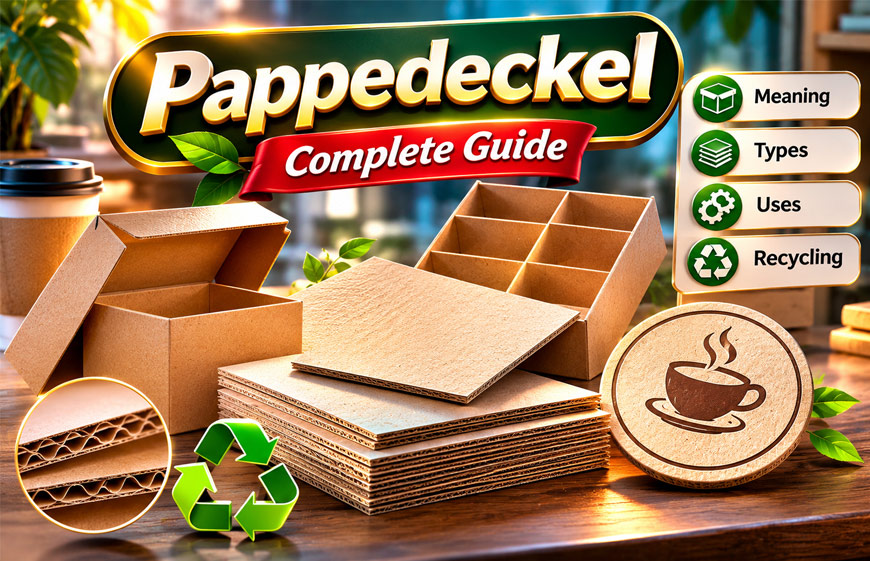
Pappedeckel is a German word linked with cardboard and paperboard. Its meaning can change depending on where the word is used. It may mean a cardboard lid, a flat piece of cardboard, a packaging insert, or a drink coaster.
This guide explains what Pappedeckel means, what it is made from, its common types, uses, benefits, limits, and recycling.
What Is Pappedeckel?
Pappedeckel is a German term connected with cardboard, paperboard, and items made from these materials.
There is no single English meaning that works in every situation.
The German word Pappe means cardboard or firm paperboard. Deckel means a lid or cover. Because of this, Pappedeckel can sometimes mean “cardboard lid.”
However, people may also use the word for other cardboard items. It can describe a flat piece of board, a packaging part, a backing board, or a coaster placed under a drink.
Pappedeckel is not one special type of cardboard. For example, a drink coaster and a box insert can both be made from paperboard, but they need different materials and features.
It is also not the name of a brand or one specific product.
Pappedeckel, Pappdeckel, and Pappendeckel
You may see similar words such as Pappdeckel and Pappendeckel when searching for Pappedeckel.
German words can change between regions and everyday speech. Different forms may appear in conversations, product descriptions, and online content.
The easiest way to understand the word is to look at the situation.
In a packaging description, it may mean a cardboard lid, cover, or insert. In a café, restaurant, or bar, it may mean a drink coaster.
The exact use of these words can also differ between German-speaking areas.
What Does Pappedeckel Mean in English?
The best English meaning of Pappedeckel depends on the object being described.
If it covers a box, cardboard lid or cardboard cover may be the best translation.
If it is simply a flat piece, cardboard, paperboard, or piece of cardboard may be more suitable.
Inside packaging, it may mean a cardboard insert, divider, separator, or backing board.
If it is placed under a glass, drink coaster or beer mat is usually the best meaning.
Looking at how the object is being used is often the easiest way to understand the word.
What Is Pappedeckel Made From?
Pappedeckel products are usually made from paper fibers.
These fibers may come from fresh wood, recovered paper, recycled paper, or a mix of different sources.
The finished board can be thin and easy to bend or thick and firm. Some types are made to absorb water. Others are made for strength, printing, folding, or protection.
Some products also contain other materials. These can include printing ink, glue, coatings, plastic films, or wax.
These extra materials can change how the board works. For example, a coating can help protect it from water or grease.
However, coatings and other materials can also affect recycling. This is why two cardboard products that look similar may need to be handled differently.
How Pappedeckel Is Made
Paperboard normally starts with paper fibers.
The fibers are mixed with water to make pulp. The pulp is then formed into sheets, pressed, and dried.
Manufacturers can change the thickness and strength of the board depending on how it will be used.
After the board is made, it can be cut, folded, printed, glued, pressed, or cut into special shapes.
Some board also receives a coating. A coating may improve its appearance or help protect it from water and grease.
The production process is not the same for every product. A drink coaster, box insert, and folding carton all need different features.
Common Types of Pappedeckel and Paperboard
Pappedeckel is not one type of board. Different kinds of cardboard and paperboard may be used depending on the job.
Folding Board
Folding board is often used for lightweight boxes and retail packaging.
It can be printed and folded into different shapes. You may see this type of board in many product boxes.
Greyboard
Greyboard is thicker and firmer than many lightweight paperboards.
It is commonly used for rigid boxes, book covers, backing boards, folders, models, and craft projects.
It is useful when the product needs more support.
Corrugated Board
Corrugated board has a wavy paper layer between flat sheets.
This design makes it stronger while keeping it fairly light. It is commonly used for shipping boxes and protective packaging.
Corrugated board is different from solid paperboard because its inside structure contains the wavy layer.
Coaster Board
Coaster board is commonly used to make drink coasters and beer mats.
It is made to absorb small amounts of water from cold glasses. It is usually thicker and more absorbent than normal paper.
However, this does not mean every Pappedeckel is a drink coaster.
Pappedeckel as a Drink Coaster
One common use of Pappedeckel is as a drink coaster or beer mat.
A cold glass can form small drops of water on the outside. This water can run onto the table and leave wet rings.
An absorbent coaster collects some of this water. It also creates a layer between the glass and the table, helping protect the surface from small scratches and marks.
Paper coasters are common in cafés, restaurants, pubs, and breweries.
Businesses can also print their name, logo, message, or event details on them. Some modern coasters include QR codes.
This means a coaster can protect the table while also showing a brand or message.
Some people even collect beer mats and drink coasters. This hobby is sometimes called tegestology. Collectors may keep older coasters because of their artwork, brewery names, locations, or history.
Pappedeckel in Packaging
Paperboard is also widely used in packaging.
A piece of Pappedeckel can work as a lid, cover, insert, divider, or backing piece.
It can help hold a product in place and stop different items from touching each other inside a box.
Paperboard inserts can be found in packaging for gifts, cosmetics, stationery, household products, accessories, and some small electronics.
The right thickness depends on the product. A small and light item may only need thin board. A heavier or fragile item may need stronger material.
The insert should also fit correctly. If it is too loose, the product may move during delivery.
Paperboard can sometimes replace plastic trays or inserts. However, it is not suitable for every product. Water, weight, storage, and the amount of protection needed should all be considered.
Shipping and Storage Uses
Cardboard and paperboard can also help protect products during shipping and storage.
Flat sheets can be placed between products to keep them apart. This may help prevent scratches and other small damage.
Paperboard can also be used as backing, storage dividers, layer pads, and simple protective sheets.
Stronger fiber-based materials are sometimes used around the corners and edges of packages.
However, a flat piece of paperboard does not provide the same protection as a strong shipping box or proper cushioning material.
Fragile products need enough protection to survive normal handling and delivery.
Bookbinding, Crafts, and Models
Thick paperboard is useful for books, crafts, and models.
Hardcover books often have stiff board inside their front and back covers. The board may then be covered with paper, cloth, leather, or another material.
Similar board can be used for folders, storage boxes, notebook backs, and book cases.
Paperboard is also useful for home and school projects. It can be used to make signs, picture frames, masks, templates, collages, and models.
Architects, students, and hobbyists may use it to build small models. Different thicknesses can be used for walls, floors, roofs, and other parts.
For some bookbinding projects, the direction of the paper fibers also matters. It can affect how the board bends and reacts to glue.
Thin board is usually easier to fold. Thick board gives more support and keeps its shape better.
Printing and Customization
Paperboard is easy to customize.
Businesses can print logos, text, pictures, product details, instructions, and recycling information on suitable board.
Different printing methods can be used depending on the material. These may include digital, offset, and screen printing.
Some types of board can also have raised or pressed designs, foil details, or other finishes.
Paperboard can be cut into many shapes using simple cutting tools or industrial machines.
However, not every type of board works well with every printing method. Thickness, surface texture, coating, and absorbency can affect the final result.
The board should therefore be chosen based on what the finished product needs.
Benefits of Pappedeckel
Pappedeckel has several useful features.
It is usually lightweight and easy to cut, shape, fold, and print. It can be made in many sizes and thicknesses.
These features make paperboard useful for packaging, displays, coasters, book covers, crafts, and many other jobs.
Flat sheets are also easy to stack and store before use.
Businesses can print their logo, instructions, product information, or recycling details directly on suitable board.
Some paperboard products contain recycled fibers. Clean paperboard may also be recyclable when local recycling systems accept it.
Paperboard can also be a low-cost choice for short-term packaging, events, displays, and promotional items.
However, the exact benefits depend on the type of board being used.
Limitations of Pappedeckel
Water is one of the main problems with ordinary paperboard.
Untreated board can absorb water. It may become soft, swollen, bent, or weak when it gets wet.
This can make it less suitable for outdoor use, wet food, refrigerated products, or other damp conditions.
Thin board can also bend or crush under pressure. It may not give enough protection to heavy or fragile products.
Coatings can help protect paperboard from water or grease. However, these coatings may change how the product can be recycled.
Paperboard is also not always suitable for products that need to last a long time or handle repeated use.
The right material should always be chosen for the job.
Pappedeckel and Food Safety
Normal craft cardboard should not automatically be used for food.
Materials that touch food need to be suitable for that purpose.
The board is not the only thing that matters. Printing inks, glue, coatings, and other materials can also affect whether a product is suitable for food contact.
A box for dry food may have different needs from a lid used with a hot drink. Steam, grease, heat, and water can all affect the material.
Businesses should check information from the manufacturer or supplier before using paperboard in direct contact with food.
Food safety and sustainability are also different issues. A product made with recycled paper is not automatically suitable for direct food contact.
Is Pappedeckel Sustainable?
Pappedeckel can be useful in more sustainable packaging, but this depends on the product and how it is used.
Some paperboard contains recycled fibers. Paperboard may also replace certain plastic inserts, dividers, covers, or trays when it can do the same job safely.
Many simple paperboard products can also be recycled.
However, paper is not automatically better for the environment in every situation.
Making paperboard uses raw materials, water, energy, and transport. Coatings and other added materials can also affect recycling.
Packaging also needs to protect the product properly. Replacing strong packaging with weak paperboard can create more waste if products become damaged.
The whole package should be considered, including the box, lid, labels, inserts, coatings, and other materials.
Claims such as “100% eco-friendly” or “always better than plastic” should only be used when there is clear evidence for that specific product.
Can Pappedeckel Be Recycled?
Many clean paperboard products can be recycled with paper and cardboard.
However, local recycling rules can be different.
Plastic films, wax, coatings, glue, and other materials may make recycling more difficult. Food, grease, and dirt can also affect whether the board can be recycled.
Tape, plastic pieces, and metal parts should be removed when possible.
A product should not be placed in paper recycling only because it looks like cardboard. Check the local recycling instructions when you are unsure.
Reusing Pappedeckel
Clean and strong Pappedeckel can sometimes be used again.
Large pieces can be used as packing dividers or protective sheets. Smaller pieces can be used for crafts, labels, backing boards, drawer dividers, and school projects.
The board should still be in good condition.
Wet, mouldy, dirty, or badly damaged cardboard should normally not be kept for reuse.
How to Choose the Right Pappedeckel
Start by thinking about what the board needs to do.
A drink coaster needs to absorb moisture. A packaging insert needs enough strength to hold the product. A book cover needs to be firm. Food packaging needs material that is suitable for food contact.
Thickness is also important. Thin board is easier to fold and cut. Thick board normally gives more support.
Think about water and moisture as well. If the material will come into contact with water, steam, grease, or condensation, normal untreated board may not be suitable.
If you want to print on it, check the surface and coating. These can affect how the final design looks.
For packaging, make sure the insert fits the product correctly and provides enough support.
Businesses should also check coatings, glue, recycled content, and recycling information when buying paperboard.
For large packaging orders, testing a small amount first can help. This makes it easier to check the fit, strength, and performance before ordering more.
Bottom Line
Pappedeckel is a German term linked with cardboard, paperboard, and items made from these materials.
Depending on the situation, it can mean a cardboard lid, flat board, packaging insert, backing piece, or drink coaster.
Pappedeckel can be used for packaging, coasters, books, crafts, models, displays, shipping, and storage.
However, different types of board have different properties. Some are strong, some are absorbent, and some have special coatings.
The right type depends on how it will be used. Food safety, water resistance, strength, and recycling should all be considered when choosing the material.
Frequently Asked Questions
What does Pappedeckel mean in English?
Pappedeckel can mean cardboard, paperboard, a cardboard lid, packaging insert, backing board, or drink coaster. The meaning depends on the situation.
Is Pappedeckel the same as cardboard?
It can refer to cardboard or an object made from cardboard. However, it does not mean one specific type of cardboard.
Is every Pappedeckel a drink coaster?
No. A drink coaster is only one possible meaning. Pappedeckel can also refer to packaging, lids, backing boards, and other cardboard items.
What is Pappedeckel made from?
It is usually made from paper fibers. These may include fresh wood fibers, recovered paper, recycled fibers, or a mixture.
Can Pappedeckel get wet?
Normal untreated paperboard can absorb water and become weak. Some products have coatings that provide better protection from moisture.
Can Pappedeckel be recycled?
Clean paperboard is often recyclable, but local rules vary. Plastic layers, coatings, grease, food, and other materials can affect recycling.
Is Pappedeckel safe for food?
Not every type is safe for direct food contact. The board and any ink, glue, or coating should be suitable for the type of food and how it will be used.
What is Pappedeckel used for?
It can be used for drink coasters, packaging, inserts, dividers, book covers, crafts, models, displays, backing boards, and protective sheets.
Explore More:
Artirix Review: Technology, Features, Benefits, and Current Status

