


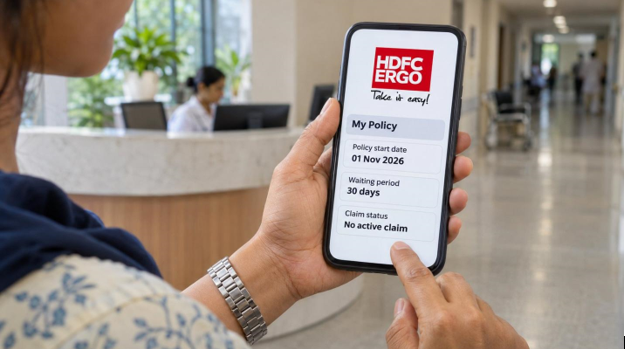
Your first claim may depend on when your policy started because certain medical expenses become eligible only after specific waiting periods. A hospital admission soon after the policy begins may not qualify for coverage, even if the treatment is included in your plan.
Claims involving accidents, newly diagnosed illnesses and pre-existing conditions may also follow different rules. Therefore, both the policy start date and the reason for hospitalisation play an important role in claim eligibility.
Your Policy May Start Later Than Your Application
Paying the premium or submitting a form does not necessarily activate cover. The insurer must accept the proposal, and your policy schedule shows the actual commencement date.
When you buy health insurance, check that date before arranging planned treatment. Waiting periods are generally counted from the start of cover, not when you first enquired. Keep this schedule for reference.
An Early Illness Can Fall Within the Initial Waiting Period
Many health insurance policies have an initial waiting period during which illness-related hospitalisation may not be covered. This can apply even when the illness develops after purchasing the policy.
HDFC ERGO’s Optima Secure plan also follows this approach, with an initial waiting period for illness-related hospitalisation. However, eligible accidental hospitalisation is treated differently. Therefore, the timing and reason for hospitalisation can affect whether your first claim qualifies.
A Previous Diagnosis Can Affect Your First Claim
A condition diagnosed before cover begins may be treated as a pre-existing disease. Related hospitalisation can have its own waiting period, even after the initial waiting period ends.
Declare earlier diagnoses, medicines and treatments when applying. Once the relevant waiting period is completed, eligible claims can be considered under the accepted policy terms.
Some Planned Procedures Have Longer Waiting Periods
Certain surgeries and listed conditions have specific waiting periods. A procedure scheduled soon after purchase may require a longer period of continuous insurance before expenses become eligible.
Check the list attached to your policy. Finishing the initial waiting period does not automatically make every planned operation payable.
An Accident May Qualify Earlier Than a Sickness Claim
Accidental injuries are commonly exempt from the initial illness waiting period. Treatment following an eligible road accident may therefore be considered soon after cover begins, even when an illness-related admission faces a waiting restriction. The accident and hospital expenses must still meet policy conditions.
A Gap in Renewal Can Affect Waiting Period Credit
Maintaining continuous cover helps preserve completed waiting periods. If a policy lapses, you may lose continuity benefits, depending on renewal rules.
When switching insurers through portability, eligible waiting period credits can transfer. Keep previous schedules and renewal receipts to show how long you have been insured.
An Increase in Cover May Start a New Waiting Period
Increasing your sum insured does not necessarily make the additional amount immediately available for every condition.
Some waiting periods may apply afresh to the enhanced portion, while earlier cover retains accumulated credit. Check the revised schedule before relying on the increased amount for planned treatment.
A Serious Diagnosis May Have a Different Claim Timeline
Unlike regular health insurance, critical illness insurance in India generally provides a fixed lump sum when a serious illness meets the policy’s conditions. The date of diagnosis is important because the claim may be subject to a waiting period.
Some policies also have a survival period that must be completed after diagnosis. Therefore, hospitalisation alone does not determine whether a claim is eligible.
What to Verify before Your First Claim
Before planned hospitalisation, check these details with your insurer:
- Start date: The commencement date on your policy schedule.
- Waiting period: The rule applying to your illness or procedure.
- Continuity credit: Any credit earned under earlier insurance.
- Claim process: Documents and authorisation requirements for admission.
In an emergency, seek necessary care promptly and inform the insurer as required by the policy.
Final Thoughts
The purchase date matters because it starts the timeline for several insurance conditions. Your first claim also depends on the illness, treatment and continuity of coverage. Check your schedule before planned hospitalisation and disclose your medical history accurately.
Understanding the applicable waiting period helps you plan treatment with clearer expectations. Every claim remains subject to the policy terms.

