


Good corporate event management in Prague starts long before anyone lands. Most events that go wrong do so months earlier: a venue booked before the objectives were clear, a hotel block signed without reading the attrition clause, or transfers planned around a schedule that later changed.
The fix is a timeline. The one below suits corporate events of 50 to 500 people, which is also where Prague is growing fastest: events of that size saw the strongest growth in the city in 2025.
Start with the brief, not the venue
Before you look at a single palace or ballroom, write down five things:
- Objective: what should attendees think, feel or do differently afterwards?
- Audience: who is coming, from where, and how senior are they?
- Format: plenary sessions, workshops, an awards dinner, an incentive programme, or a mix?
- Budget per person: including flights, or ground costs only?
- Measure of success: survey scores, deals closed, staff retention, or something else? Every later decision gets easier once this page exists.
9 to 12 months out: dates, venue and hotels
- Choose dates with care. April to June and September to October are Prague’s busiest months. January to March and November usually offer better rates and availability.
- Check the city calendar. A large congress in town can absorb hotel rooms across the city for days.
- Secure a hotel block. Read the attrition clause, which sets how many rooms you can release, and by when, without penalty.
- Hold the main venue. Ask about minimum food and beverage spend, set-up times and noise limits, especially in historic buildings.
- Map flights early. Prague’s airport served 194 destinations with 84 airlines in 2025, but routes and frequencies change by season.
6 months out: programme and production
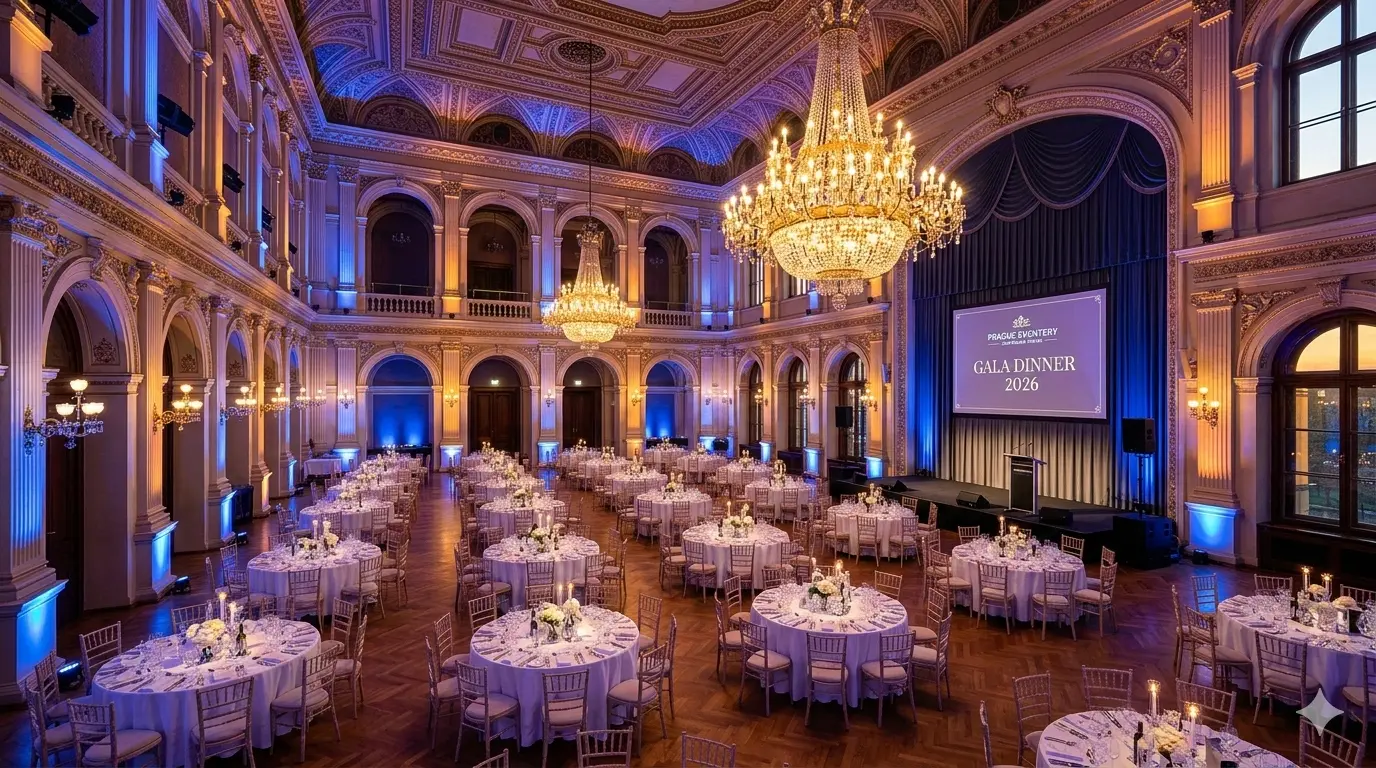
This is when the event takes shape. Draft the agenda, then build the Prague experience around it: a private tour of the castle district, a dinner cruise on the Vltava, a brewery visit or a gala dinner in a historic hall.
At the same stage, brief your audio-visual partner. Share room plans, the number of screens and microphones, any interpretation needs and whether sessions will be streamed.
Open registration now, so you start collecting dietary and accessibility details early.
3 months out: contracts and details
- Finalise supplier contracts and pay deposits.
- Confirm rooming-list deadlines with the hotel.
- Plan ground transport: airport arrivals, coach timings between venues and late-night returns.
- Send invitation letters to attendees who need a Schengen visa, since consular processing can take weeks.
- Lock in speaker travel and technical requirements.
The final month: run-of-show and contingencies
Write a minute-by-minute run-of-show and share it with every supplier. Reconfirm every booking in writing.
Then plan for what could go wrong. Have a wet-weather option for anything outdoors, a backup coach contact and a named person for medical issues. Make sure your on-site team knows who decides what.
On-site and after the event
Hold a short debrief at the end of each day. It catches small issues before they become big ones.
Send the attendee survey within 48 hours, while memories are fresh. Then reconcile final invoices against contracts line by line, especially room pick-up, catering numbers and overtime charges.
Budget notes specific to Prague
- Currency: hotels and venues may quote in Czech koruna (CZK) or euros. Fix the contract currency to avoid exchange-rate surprises.
- VAT: the standard Czech VAT rate is 21%. Check whether each quote includes it.
- Minimum spend: many restaurants and venues price a private buyout as a minimum food and beverage spend rather than a room fee.
- Value: hotel and catering costs generally run below Paris or London, which leaves more budget for the programme itself.
When to bring in a local partner
Running all of this from another country is possible, but it means a lot of email and a lot of risk. Many companies keep content and attendee communication in-house and hand venues, suppliers and
on-site delivery to a Prague-based team.
Local DMCs such as Prague Eventery bring those services together under one contract. When comparing options, look for corporate event management in Prague that covers venues, accommodation, transport and audio-visual, not just one of them.
Quick answers
What is the best month for a corporate event in Prague? May, June, September and October offer the best weather but also the highest demand. March and November usually offer better value, with cooler weather.
How many venues should a three-day programme use? Two or three is common: a main meeting venue plus one or two evening venues for variety.
Do attendees need visas? EU and Schengen-area citizens don’t. Many other nationalities can visit visa-free for short stays, but check each attendee’s nationality early.

