


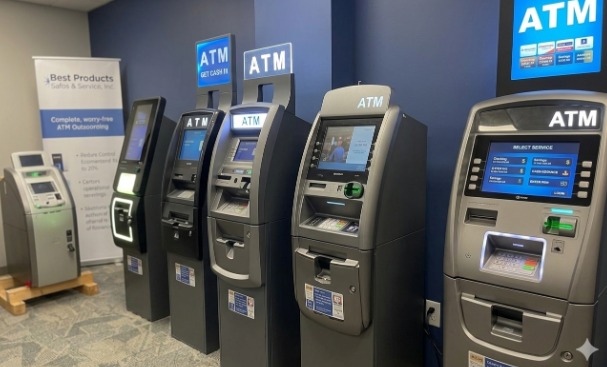
Installing an automated teller machine can be a practical decision for businesses that serve customers who regularly use cash. Convenience stores, gas stations, grocery stores, and entertainment venues often provide ATM access to make withdrawals easier without requiring customers to visit a bank. However, choosing suitable equipment involves more than comparing purchase prices.
When evaluating an ATM cash machine for sale, business owners should consider transaction demand, equipment features, installation requirements, ongoing expenses, and security standards. Understanding these factors can help prevent unnecessary costs and ensure the machine meets the needs of its intended location.
What Should You Know Before Buying an ATM Machine?
An ATM is an electronic banking terminal that allows authorized cardholders to withdraw cash and, depending on the machine and network, access other account services.
Unlike bank-operated machines that may offer deposits and additional banking functions, many independently operated ATMs primarily support cash withdrawals and balance inquiries.
Before purchasing equipment, business owners should identify the machine’s intended purpose.
For example, a convenience store may require a compact machine with straightforward cash dispensing capabilities, while a busy commercial location may need equipment with greater cash storage capacity.
The choice should reflect expected customer activity, available space, and ongoing operational responsibilities.
What Types of ATM Machines Are Available?
Businesses searching for an ATM cash machine for sale will encounter several equipment configurations.
Freestanding ATM Machines
Freestanding machines are commonly installed inside convenience stores, supermarkets, restaurants, and other commercial establishments.
These machines generally feature a self-contained cabinet, display screen, card reader, PIN entry device, and cash dispenser.
They are suitable for locations with enough floor space and reliable access to electrical power and network connectivity.
Wall-Mounted ATM Machines
Wall-mounted machines are designed for locations where floor space is limited.
Their compact configuration may suit smaller shops or other businesses with restricted installation areas.
However, buyers must verify mounting requirements, structural support, accessibility, and servicing clearance.
Through-the-Wall ATM Machines
Through-the-wall machines allow customers to access banking services from outside a building while placing certain equipment components within a secured interior space.
These machines may be suitable for locations requiring extended customer access, although installation can involve structural modifications and additional security considerations.
Refurbished ATM Machines
Refurbished machines are previously used units that have undergone inspection, repairs, or component replacement.
They may have lower initial purchase costs than comparable new equipment.
However, buyers should verify the machine’s condition, warranty, parts availability, software compatibility, and remaining manufacturer support.
What Features Matter Most When Choosing an ATM?
Not every ATM cash machine for sale offers the same technical capabilities. Comparing essential features can help businesses avoid purchasing equipment that does not match their operating environment.
Important features include:
- EMV chip compatibility: Supports chip-based card transactions using applicable payment network standards.
- Secure PIN entry: Protects sensitive authentication information during transactions.
- Cash cassette capacity: Determines how much cash can be stored before replenishment is required.
- Network connectivity: Enables communication with financial transaction processors.
- Remote monitoring: Allows operators to review certain transaction records, alerts, and equipment conditions.
- Receipt printing: Provides customers with transaction receipts where supported.
- Accessibility features: Helps accommodate customers with disabilities under applicable accessibility requirements.
Buyers should confirm which features are included as standard and which require additional hardware, software, or service arrangements.
How Much Does an ATM Cash Machine Cost?
ATM purchase prices vary based on equipment type, manufacturer, condition, configuration, and technical capabilities.
Basic indoor retail machines commonly cost a few thousand dollars, while larger or more advanced configurations may cost considerably more.
However, the initial purchase price represents only one part of the financial commitment.
Additional expenses may include:
- Installation: Delivery, positioning, setup, and necessary electrical or network work.
- Transaction processing: Fees associated with connecting to financial networks and processing withdrawals.
- Cash loading: Funds required to stock the machine and expenses associated with replenishment.
- Maintenance: Routine inspections, repairs, replacement parts, and technical support.
- Communication services: Internet or cellular connectivity charges.
- Insurance and security: Coverage and protective measures appropriate for the location.
For accurate budgeting, businesses should estimate both one-time expenses and recurring operating costs.
Where Should You Install an ATM for Better Accessibility?
Location is an important factor when evaluating the potential usefulness of an ATM.
A retail ATM placed in an accessible, visible area may be easier for customers to locate and use.
Potential locations include convenience stores, shopping centers, gas stations, grocery stores, and entertainment venues.
However, customer traffic alone does not guarantee frequent withdrawals.
Businesses should also consider whether visitors commonly need cash, whether nearby ATMs already provide sufficient access, and whether the premises can accommodate the machine securely.
Installation planning should account for lighting, electrical access, network connectivity, physical security, accessibility, and space for customers to complete transactions.
In the United States, applicable accessibility standards establish requirements for ATM features and accessible approaches. Businesses should review these requirements before installation rather than assuming that every commercially available machine is suitable for every location.
Can Owning an ATM Generate Additional Income?
Businesses considering an ATM cash machine for sale may also want to understand potential surcharge revenue.
Some independently operated ATMs charge customers a disclosed withdrawal surcharge, subject to applicable legal requirements and network rules.
The operator may receive a portion of that surcharge under the processing agreement.
For example, if an ATM completes 200 surcharge-paying withdrawals in one month and the operator retains $2 per transaction, gross surcharge revenue would be $400.
However, this example does not represent net profit.
Processing fees, maintenance expenses, communication costs, cash replenishment, location commissions, and other operating costs must be deducted when evaluating financial performance.
Actual transaction volume depends on customer demand, location characteristics, fees, competing cash-access options, and machine availability.
How to Compare ATM Suppliers Before Purchasing
Choosing an equipment supplier requires evaluating more than the advertised price.
Businesses should request clear information about warranty coverage, technical specifications, transaction processing compatibility, delivery arrangements, and maintenance responsibilities.
It is also useful to confirm whether the equipment can be connected to the intended processing network and whether software updates will remain available.
A lower-cost machine may become expensive to operate if replacement parts are difficult to obtain or repairs require specialized support.
Comparing the total cost of ownership provides a more complete picture than reviewing the purchase price alone.
Conclusion
Purchasing an ATM requires careful consideration of equipment design, installation conditions, transaction volume, security standards, and ongoing operating expenses. Understanding these factors helps businesses select machines appropriate for their customers and available resources. During equipment research, businesses may review product information from Best Products Sales & Service, inc. alongside other sources to compare machine configurations, technical features, and maintenance requirements. Ultimately, choosing an ATM cash machine for sale should involve balancing initial costs with long-term reliability and operational needs. Careful evaluation before purchasing can help businesses make informed equipment decisions and provide convenient, dependable access to cash.

