


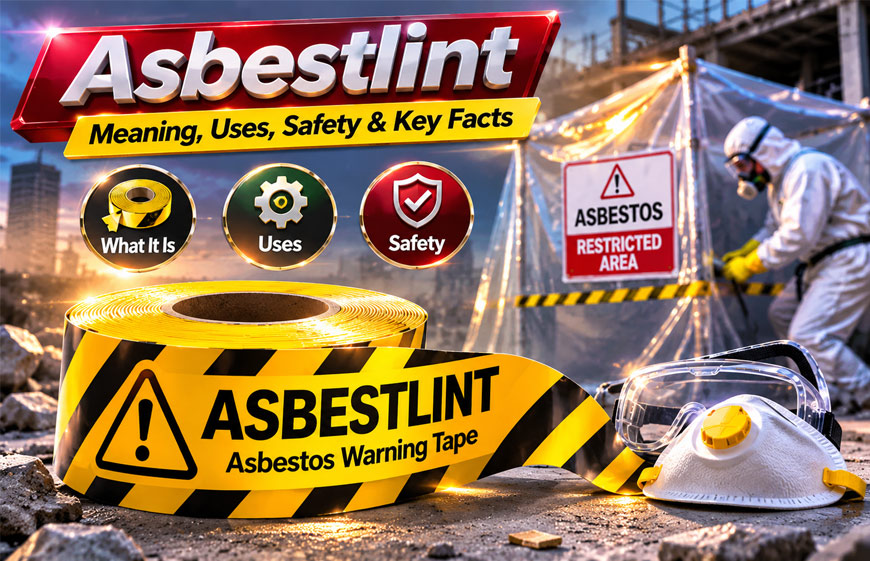
Asbestlint usually means warning tape used around an area where asbestos is found or may be present. It tells people to stay away from the marked area.
The word can also mean old woven tape that may contain asbestos. This is very different from modern plastic warning tape.
This article explains what Asbestlint is, how it is used, what it looks like, and its safety limits. It also explains old asbestos tape and what to do if you find it.
What Is Asbestlint?
Asbestlint is usually warning tape used around asbestos areas. In Dutch, it may also be called asbest-afzetlint.
The tape marks an area where asbestos is present, suspected, or being handled. It tells workers and other people that they should not enter without permission.
For example, workers may put the tape across a doorway or around part of a building. This creates a clear warning area.
Modern Asbestlint is not one specific brand. Different safety companies can make and sell this type of tape.
The tape does not remove asbestos or stop asbestos fibers. Its main job is to warn people and mark a restricted area.
Two Types of Asbestlint
The word Asbestlint can have two different meanings.
One meaning is modern plastic warning tape. The other is old woven tape that may contain asbestos.
The difference is important because the two products have very different purposes and risks.
Modern Asbestos Warning Tape
Modern Asbestlint is used to warn people about an asbestos risk.
It is usually made from plastic. Clear warning words are printed along the tape, and bright colors make it easy to see.
Modern warning tape normally does not contain asbestos. It simply tells people that asbestos may be nearby.
Old Woven Asbestos Tape
Old asbestos tape is different. Some older woven tapes were made with asbestos fibers because asbestos can handle high heat.
The material may look like cloth, thick fabric, webbing, or a woven strip. It was used in some industrial and heating systems.
Old asbestos tape may release harmful fibers if it is damaged or disturbed.
The main difference is simple: modern Asbestlint warns about asbestos, while old woven asbestos tape may contain asbestos.
What Does Modern Asbestlint Look Like?
Modern Asbestlint is made to be easy to notice.
Many products are yellow with black writing. Red and other colors may also be used. The exact design depends on the product and country.
The word “ASBEST” may appear many times along the tape.
Some Dutch tape says “ASBEST – GEEN TOEGANG.” This means “Asbestos – No Entry.”
Some products may also show a warning symbol.
Large letters and strong colors make the tape easier to see, especially on busy work sites.
What Is Asbestlint Made From?
Modern Asbestlint is usually made from lightweight plastic.
Some products use LDPE, or low-density polyethylene. This is a flexible type of plastic that is easy to unroll and place around an area.
The size and material can vary. Tape can have different widths, thicknesses, strengths, and roll lengths.
One product mentioned in the collected information is about 5 cm wide and 500 metres long. This is only one example. Not all Asbestlint comes in this size.
Tape used outside should also be suitable for the weather. Wind and rain can affect lightweight tape.
Why Is Asbestlint Used?
The main reason for using Asbestlint is to warn people and help keep them out of an asbestos area.
During asbestos inspection or removal, people who are not part of the work may need to stay away. Warning tape makes the restricted area easier to see.
It can also be used when asbestos is only suspected. For example, workers may find unknown material during renovation. Work may stop while the material is checked.
Asbestlint can then help keep other people away.
The tape does not prove that asbestos is present. It may be used for confirmed asbestos, suspected asbestos, or an area where asbestos work is taking place.
Where Is Asbestlint Used?
Asbestlint can be used in many places where an asbestos warning is needed.
It may be used during asbestos surveys, inspections, removal, renovation, demolition, and cleanup work.
Workers may place it around a room, hallway, work area, waste area, or temporary storage point. It may also mark a route used to move asbestos waste.
On larger sites, warning tape may be used with doors, fences, signs, or stronger barriers.
It can also be placed around an area after damaged or unknown material is found. This helps keep people away until the material can be checked.
How Is Asbestlint Used on a Worksite?
Workers can attach Asbestlint to posts, fences, barriers, or other strong points.
The tape should be easy to see before someone reaches the restricted area. Important entrances may also need warning signs.
Workers should make sure people cannot easily enter the area from another direction without seeing a warning.
The tape should be checked during the job. Wind, rain, vehicles, tools, and people can damage or loosen it.
Loose, torn, or unreadable tape should be replaced when needed.
Clean spare rolls should also be kept away from dirty or contaminated areas when possible.
What Asbestlint Cannot Do
Asbestlint is only a warning tool. It cannot make an asbestos area safe by itself.
The tape cannot catch asbestos fibers or stop them from moving through the air. It cannot clean asbestos dust or seal a room.
It also cannot tell you if an unknown material contains asbestos. An asbestos survey and laboratory testing may be needed to identify a material.
The tape also cannot prove that an area is safe after asbestos work.
Depending on the job, workers may need stronger barriers, protective clothing, breathing protection, safe cleaning methods, and proper waste handling.
Asbestlint should therefore be used as part of a larger safety plan.
Asbestlint and Asbestos Health Risks
Asbestos can be dangerous when its small fibers enter the air and are breathed into the lungs.
This can happen when some asbestos materials are cut, broken, drilled, scraped, or otherwise disturbed.
Asbestos exposure is linked to serious diseases. These include mesothelioma, asbestosis, and lung cancer. Some asbestos-related diseases may take many years to develop.
You cannot safely tell if asbestos fibers are in the air just by looking or smelling.
This is why people should take asbestos warning tape seriously. Do not cross Asbestlint simply because the area looks clean.
Other Safety Controls Used With Asbestlint
Warning tape is only one part of asbestos safety.
Warning signs may be placed at entrances. Doors may also be locked or controlled so that only allowed workers can enter.
Some jobs need stronger barriers or enclosed work areas. These controls can help keep people out and reduce the spread of asbestos dust.
Workers may also need protective clothing and suitable breathing protection.
Safe cleaning and waste handling are also important. Asbestos dust should not be carried from a work area into clean parts of a building.
Some asbestos jobs may also need air testing, inspections, or safety checks before normal access is allowed again.
The exact safety steps depend on the type of work and local rules.
Asbestlint vs. Regular Barrier Tape
Regular barrier tape can be used for many hazards. It may mark construction work, closed paths, damaged areas, or other unsafe places.
Asbestlint gives a more specific warning. It tells people that asbestos is the reason the area is restricted.
For example, “ASBEST – GEEN TOEGANG” tells people that asbestos is involved and that they should not enter.
This makes Asbestlint more useful for clearly marking an asbestos-related area.
Old Woven Asbestos Tape
Old woven asbestos tape is very different from modern plastic Asbestlint.
Asbestos was once used in textile products because it can resist high heat. Woven asbestos tape was used for insulation and heat protection in some places.
It may be found around old pipes, boilers, furnaces, heating equipment, electrical parts, machinery, or other equipment that becomes hot.
Similar asbestos textiles were also used in some ships and industrial buildings.
Old tape may look like cloth, webbing, thick fabric, or a woven strip.
The material can become weak or damaged as it gets older. If it contains asbestos, disturbing it may release fibers into the air.
How to Identify Suspect Old Asbestos Tape Safely
You cannot confirm asbestos just by looking at old tape.
Other types of insulation can look similar. Even a clear photo cannot prove that a material contains asbestos.
The age and location of the material can give useful clues. For example, old woven material around pipes, boilers, furnaces, cables, or machinery may need to be checked.
Older buildings and equipment are more likely to contain old asbestos products. However, age alone does not prove anything.
If confirmation is needed, a suitable laboratory can test a properly collected sample.
Do not damage the material yourself just to find out what it is.
What Not to Do With Suspect Asbestos Tape
Do not cut, tear, scrape, sand, drill, or pull apart material that may contain asbestos.
Do not rub it between your fingers or burn it to test it.
Do not sweep suspected asbestos dust with a normal broom. A normal household vacuum should also not be used on suspected asbestos waste or dust.
These actions may spread fibers if asbestos is present.
Do not depend on color, texture, or photos to identify asbestos. Professional assessment and proper testing are more reliable.
What to Do If You Find Suspect Asbestlint
If you find old woven tape that may contain asbestos, leave it alone.
Stop any work that could damage or disturb it. Keep other people away from the area.
Tell the property owner, employer, site manager, or person responsible for safety.
A qualified asbestos professional can check the situation and decide what should happen next.
The material may need testing, sealing, professional removal, cleaning, or another form of control. In some cases, safe material may be managed where it is.
Modern Asbestlint can be used to mark the area while it is being checked. However, the warning tape does not make the suspected material safe.
Can Old Asbestos Tape Be Left in Place?
Sometimes asbestos-containing material can stay in place if it is in good condition and will not be disturbed.
The right choice depends on where the material is, its condition, and what will happen in the area.
Damaged, loose, or breaking material needs more attention.
Future renovation, repair, or demolition work also matters. Material that is safe when left alone may become a problem if workers need to cut or remove it later.
A qualified asbestos assessment can help decide the safest option.
How to Choose Asbestlint
Good Asbestlint should be clear and easy to see.
Look for tape with large warning words and strong color contrast. People should be able to understand the warning before reaching the restricted area.
Choose a roll that is long enough for the area. Large work sites may need several rolls.
For outdoor use, choose tape that is suitable for the expected weather.
The language is also important. People using or visiting the site should understand the warning.
The tape should also meet any safety rules that apply to the work.
Handling and Disposal of Used Asbestlint
New plastic Asbestlint normally does not contain asbestos.
However, tape used close to asbestos work may collect asbestos dust or fibers.
For this reason, used tape should not always be treated as clean plastic waste.
Tape that may be contaminated should be handled according to the site’s asbestos safety and waste rules. It should not be moved through clean areas in a way that could spread dust.
Waste rules are different in different places. Potentially contaminated Asbestlint should not be placed in normal household waste without first checking the correct local disposal method.
Asbestlint Rules in the Netherlands
Asbestos work in the Netherlands is controlled by safety, environmental, and waste rules.
The exact rules depend on the asbestos material, its condition, and the type of work being done.
Some asbestos work may require official notice, professional checks, or work by a qualified or certified asbestos company.
Asbestos was widely used in older Dutch buildings before the general ban in 1993. For this reason, older buildings may need asbestos checks before some renovation or demolition work.
Dutch homeowners may be allowed to remove certain asbestos materials themselves in limited cases. These rules have specific conditions and do not cover every type of asbestos.
Putting Asbestlint around an area does not give someone permission to remove asbestos.
Homeowners and workers should check current rules from the Dutch government, their municipality, or the Netherlands Labour Inspectorate before starting asbestos-related work.
Benefits and Limitations of Asbestlint
Asbestlint is a simple way to warn people about an asbestos area, but it also has clear limits.
Benefits
- Easy to see.
- Light and simple to place.
- Clearly warns people about asbestos.
- Can mark a large area.
- Easy to replace when damaged.
- Useful during surveys, removal, and other asbestos work.
- Some products can be used outside.
Limitations
- Cannot stop asbestos fibers.
- Is not as strong as a solid barrier.
- Can become loose or torn.
- Wind and rain may affect it.
- People can step over or move it.
- Used tape may become contaminated.
- Cannot replace testing, protective equipment, proper barriers, or trained workers.
Its main purpose is to give a clear warning and mark the restricted area.
Common Problems With Asbestlint
Loose or Torn Tape
Wind, vehicles, equipment, or people can damage the tape.
Check it during the work and replace damaged sections when needed.
Hard-to-See Tape
Tape placed too low or hidden behind equipment may be difficult to notice.
Place it where people can clearly see it before reaching the restricted area.
Incomplete Boundaries
A warning on only one side may leave another way into the area.
Make sure all important entry points are clearly marked or controlled.
Unclear or Faded Warning Text
Old or damaged print may become difficult to read.
Replace the tape when the asbestos warning is no longer clear.
Unstable Fixing Points
Tape attached to weak objects can fall or move.
Use stable posts, fences, or other strong points.
Contaminated Used Tape
Tape used around asbestos work may collect asbestos dust.
Handle it according to the site’s safety and waste rules instead of treating it as normal clean plastic.
Bottom Line
Asbestlint usually means warning tape used to mark an area where asbestos is present, suspected, or being handled.
Modern Asbestlint is normally made from plastic and does not contain asbestos. Its job is to warn people and help keep them away from a restricted area.
Old woven asbestos tape is different. It may contain asbestos and can release fibers if it is damaged or disturbed.
Asbestlint cannot stop asbestos fibers or make an area safe by itself. If you find old material that may contain asbestos, do not disturb it. Keep people away and get professional advice when needed.
Frequently Asked Questions
What is Asbestlint?
Asbestlint is usually warning tape used to mark an area where asbestos is present, suspected, or being handled.
Does Asbestlint contain asbestos?
Modern plastic Asbestlint normally does not. Old woven asbestos tape, however, may contain asbestos.
What does Asbestlint look like?
It is often bright yellow with dark warning text. Colors and designs can be different depending on the product.
Can Asbestlint stop asbestos fibers?
No. It only warns people and marks a restricted area. It cannot stop asbestos fibers in the air.
Is Asbestlint the same as normal barrier tape?
No. Normal barrier tape can warn about many hazards. Asbestlint specifically warns people about asbestos.
Can you identify old asbestos tape from a photo?
No. A photo cannot confirm that a material contains asbestos. Proper testing may be needed.
What should I do if I find old woven tape that may contain asbestos?
Do not touch, cut, or damage it. Keep people away and ask a qualified asbestos professional for advice.
Can homeowners use Asbestlint?
Yes. It can help keep people away from a suspected area. However, using the tape does not mean a homeowner is allowed to remove asbestos.
Explore More:
Active System Console: What It Is, How It Works, Features, and Uses

