


A solar generator can be filled from a wall socket, a car socket or a panel, and the three clocks are wildly different. The three sources are not interchangeable, and the gap shows up in the first hour. That gap decides whether a unit is ready before a storm or still charging when the lights go out. Whichever source you use, the unit accepts only what its input stage allows, so that ceiling matters more than the panel count. Being wrong by a factor of two is the difference between a charged unit and a dead one. This article sets out to give a charge time for each source and to show which limit applies in your case.
Wall and Car Charging
Wall Outlet Charging Time
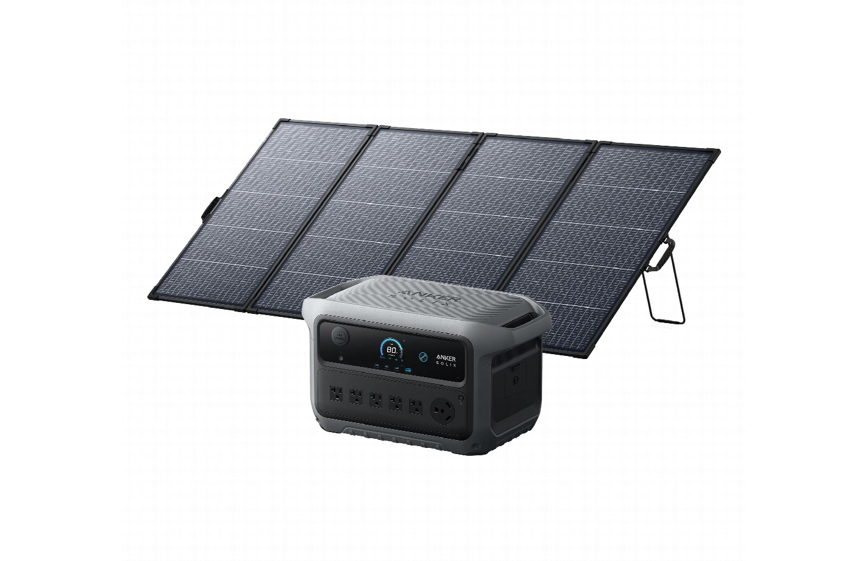
The wall is the fastest source most households have, and the limit is rarely the socket. A standard circuit delivers about 1,800W, so a unit that accepts 1,000W will fill a 2kWh battery in roughly two and a half hours, including the slow final stretch. Charging tapers above eighty per cent by design, because the last fifth is where heat builds. A unit that reaches eighty per cent in three quarters of an hour has a bigger charger inside, and that ceiling is part of what separates the best solar generator from a large battery with a plug on it. The Anker SOLIX C2000 Gen 2 is built around that ceiling: 80 per cent in about 45 minutes from a wall socket, which is the number that matters when a storm is two hours out.
Car Charger Charging Time
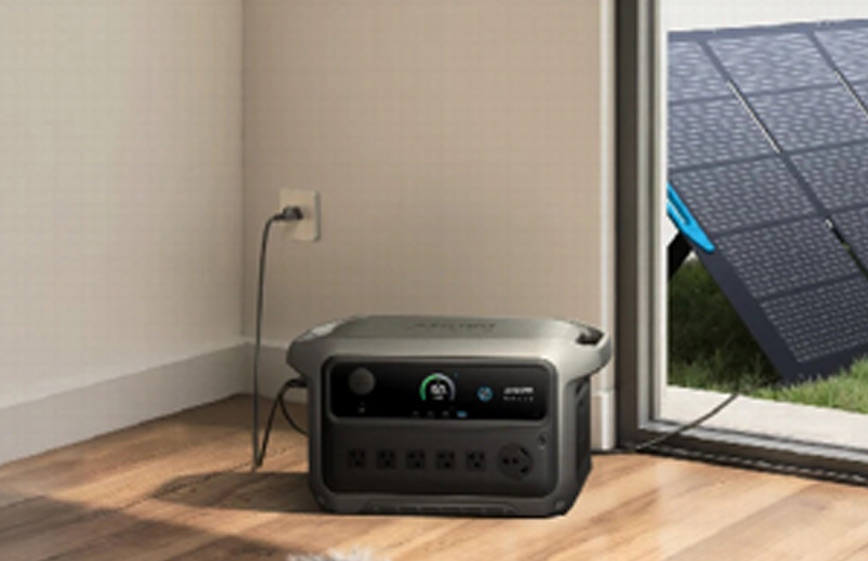
A car socket is the slowest of the three sources and the most misunderstood. The 12V outlet usually supplies 120 to 180W, so a 2kWh battery needs twelve hours or more, which means a day of driving rather than an hour of idling. The alternator can supply far more, but the socket and the wiring behind it cannot, and a blown fuse is cheaper than a new loom. Charge while you drive and treat the socket as a top-up rather than a plan. An inverter that turns 12V into mains power adds a second conversion, and each conversion costs a little of the current. Idling the engine to charge is the least efficient way to do it, since most of the alternator’s output goes to the vehicle.
Solar Charging
Panel Wattage and Charge Rate
Panels are rated in ideal light, and the unit accepts only what its input stage allows. A 400W panel in full sun delivers roughly 320W to the battery after conversion, so a 2kWh unit needs six hours of good light rather than five. Two panels in series raise the voltage and two in parallel raise the current, and the unit’s own limit decides which of those is worth doing. Read the input ceiling before buying a second panel. A controller that tracks the maximum power point extracts perhaps a fifth more than a simple one, which is worth more than another 100W of panel. Panels also lose output as they warm, so a cold clear morning beats a hot one.
Sunlight and Weather Effects
Light is the variable nobody can control, and it moves the clock more than the panel rating does. A clear June day in the south-west gives six usable hours; the same panel in December in the north-east gives two, and a flat grey sky gives a fraction of either. Angle matters, and a tree that shades the array at four in the afternoon removes the best hour of the day. Plan the charge around the weather rather than around the label on the box. Weather moves the number by more than the panel does, which is why a bigger array is often a worse answer than a better angle. Check the forecast the night before and move the charge into the clear window.
Battery Size and Input Limits
Capacity and Charging Duration
The duration is capacity divided by accepted input, then divided again by the losses. A 1kWh battery fed 300W takes three and a half hours in theory and closer to four in practice, because conversion costs about ten per cent and the final stage tapers. Doubling the battery doubles the time; doubling the charger may not, if the input stage is already at its ceiling. Write both numbers down before comparing two units by their advertised charge time. A 2kWh battery at 400W input takes five hours in theory and six in practice, and the extra hour is not a fault. Divide, then add ten per cent, and the estimate holds.
Input Rating Ceilings
Every unit has a maximum input, and beyond it extra panels or a larger charger do nothing at all. A 500W ceiling means four 200W panels behave like two and a half, and the surplus is refused rather than stored. This is the specification that decides whether an array is worth expanding, and it is usually printed in the manual rather than on the box. Buy panels against the ceiling, not against the battery. Two 200W panels on a 300W input waste a third of what they collect, and the waste is invisible. The manual’s input figure is the real ceiling, not the sum on the panel labels.
Conclusion
Three sources, three clocks, and one ceiling that applies to all of them. The wall is fastest, the sun is cheapest and the car is slowest, while the input rating decides how much of any of them you can use. Know the ceiling and the times stop being a surprise. A unit that fills from the wall in an hour is a convenience, while one that refills from the sun by afternoon is an independence. Both are worth having, and neither replaces the other, which is the part most buyers only learn after the first storm. The clock is set by the weakest link.

