


As leaves turn vibrant shades of amber and crisp autumn breezes settle in across the country, we naturally spend more time indoors. We switch our thermostats from cooling to heating, brew warm drinks, and get ready for cozy season.
However, autumn brings a silent shift inside our homes. As outside temperatures drop, cold air loses its ability to hold moisture. The moment your home’s furnace or heat pump kicks on to warm that dry outdoor air, indoor relative humidity plummets.
Before you know it, you’re waking up with a scratchy throat, fighting static cling, and wondering why your skin feels like parchment.
Understanding whether your home’s air is too dry and taking simple steps to fix it is one of the most effective ways to stay healthy and comfortable all season long. Here is your complete fall home climate guide.
5 Warning Signs Your Home’s Air Has Gone Autumn-Dry
Indoor air doesn’t turn bone-dry overnight, but your body and your home will leave subtle clues. If you notice any of the following scenarios in your household this autumn, low humidity is likely the hidden culprit.
The “Morning Throat” and Persistent Dry Cough
You wake up feeling like you swallowed sandpaper, even though you aren’t sick. When indoor air lacks adequate moisture, your nasal passages and throat membranes dry out overnight, leaving you prone to throat irritation and morning congestion.
Constant Static Electricity Shocks
You reach for a metal doorknob after walking across the living room rug, and zap—a sharp spark jump-starts your morning. Dry air prevents static charges from naturally dissipating, leading to clingy blankets, frizzy hair, and constant shocks.
Irritated Skin and Flaky Lips
No matter how much lotion or lip balm you apply, your hands feel tight and rough. Low humidity draws moisture directly out of your skin, exacerbating conditions like eczema and winter rashes.
Gaps in Hardwood Floors and Creaky Furniture
Your house itself reacts to dry air. Wood is a natural sponge that expands with moisture and shrinks without it. If you notice wide gaps appearing between your hardwood floorboards or your dining chairs groaking louder than usual, your indoor environment is lacking moisture.
Drooping or Crispy Houseplant Leaves
Your indoor pothos, monstera, or fiddle-leaf fig starts getting crispy brown edges on its leaves despite regular watering. Plants transpire quickly in dry conditions, causing them to dry out from the tips backward.
Why You Must Measure Before You Humidify
When facing dry indoor air, many homeowners make a common mistake: they drag out a portable humidifier, crank it to maximum, and let it blast moisture continuously.
However, guessing your home’s humidity level is a risky game. According to the U.S. Environmental Protection Agency (EPA), the ideal indoor relative humidity (RH) should be kept strictly between 30% and 50%.
If humidity falls below 30%: Air becomes harsh on your respiratory tract, increases susceptibility to seasonal viruses, and damages wooden home structures.
If humidity rises above 60%: Excessive moisture condenses on cold window panes, creating a breeding ground for mold, mildew, and dust mites.
Because human perception of humidity is unreliable, relying on a dedicated, accurate indoor monitor is the only way to strike the perfect environmental balance.
How to Measure Indoor Humidity in Fall
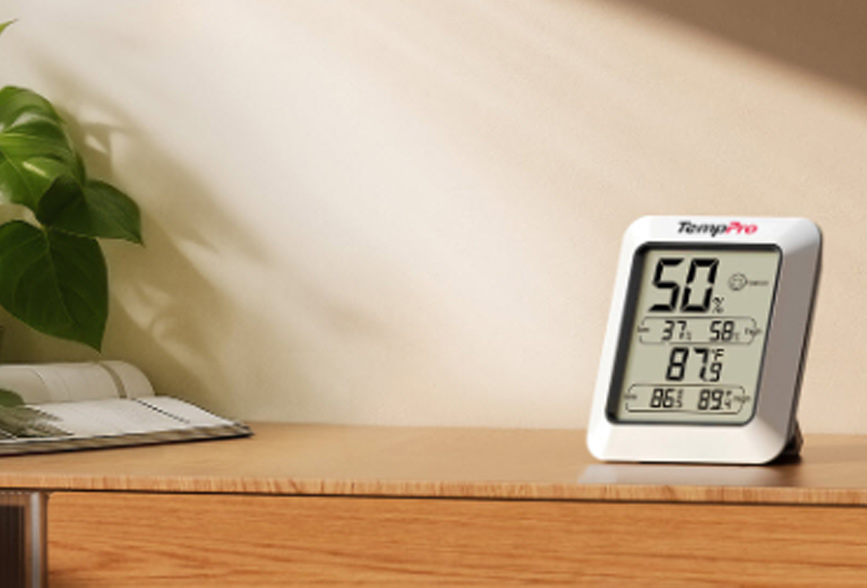
To monitor your indoor conditions without guesswork, you need a accurate, simple device that fits right into your daily routine. The TempPro TempAir CORE TP50 Digital Indoor Thermometer Hygrometer is engineered specifically to give homeowners fast, reliable environmental insights.
- High Accuracy Readings: Delivers temperature accuracy within ±1°F and humidity accuracy within ±2-3% RH for reliable environment monitoring.
- 10-Second Refresh Rate: Data updates automatically every 10 seconds so you always have current readings, not stale data.
- Instant Comfort Indicators: Humidity level icons (DRY / COMFORT / WET) let you instantly see whether your environment is in the optimal zone without interpreting numbers.
- High/Low Records: Tracks the highest and lowest temperature and humidity readings since your last reset, helping you spot trends and overnight changes.
- Versatile Placement Options: Features a magnetic back and tabletop stand so you can place it anywhere from a fridge to a nursery wall.
- Wide Measuring Range: Temperature range of -58°F to 158°F and humidity range of 10% to 99%, suitable for almost any indoor environment.
- Easy to Use: Runs on a single AAA battery (included), ready to use right out of the box.

4 Practical Ways to Restore Balance to Dry Fall Air
Once your TempPro TempAir CORE TP50 gives you a baseline reading below 30% RH, here is how you can comfortably raise indoor humidity without over-saturating your home.
Strategically Deploy a Humidifier
Place a cool-mist or warm-mist humidifier in rooms where you spend the most time, such as bedrooms or home offices. Keep your TempPro TempAir CORE TP50 on a nearby nightstand or desk to ensure the room stays within the golden 30%-50% range. Turn the humidifier down once the TempPro TempAir CORE TP50 displays the COMFORT icon.
Leverage Kitchen and Bathroom Vapor
Don’t let free humidity go down the drain. After taking a warm shower, leave the bathroom door open to let the steam wander into adjoining rooms. When boiling pasta or simmering soups, leave pots uncovered for part of the cooking time to release beneficial moisture into the kitchen.
Air-Dry Laundry Indoors
Instead of tossing every wash load into the clothes dryer, hang your damp laundry or towels on a folding drying rack inside your living space or bedroom. As the fabrics dry naturally, they release gentle moisture into the air.
Group Your Houseplants Together
Plants naturally release moisture through transpiration. Grouping several houseplants together creates a small, natural microclimate that boosts humidity for both the plants and your living area.
FAQs about Indoor Humidity in Fall
Where is the best place to put a digital hygrometer in a room?
Place your digital indoor hygrometer at chest height on an interior wall or a bedside nightstand. Avoid placing it directly next to windows, exterior doors, heating vents, or in direct sunlight, as these areas create artificial temperature and humidity spikes that don’t reflect the rest of the room.
Can low indoor humidity actually make you get sick more often?
Yes. Dry air thins the protective mucus layer lining your nasal passages and throat. This mucosal barrier is your body’s primary defense against airborne viruses and bacteria. When it dries out, viruses find it much easier to enter your system.
How many hygrometers do I need for my house?
Because heating patterns and airflow vary dramatically between rooms, it is best to place one monitor in main living spaces, typically the primary bedroom, the nursery, the living room, and a finished basement.
Final Thoughts
Fall should be a time for crisp outdoor walks and cozy indoor evenings, not itchy skin and sleepless, dry nights. By keeping a compact, accurate monitor like the TempPro TempAir CORE TP50 Digital Indoor Thermometer Hygrometer in your home, you can easily keep dry air at bay and enjoy a healthier, more comfortable autumn season.

