


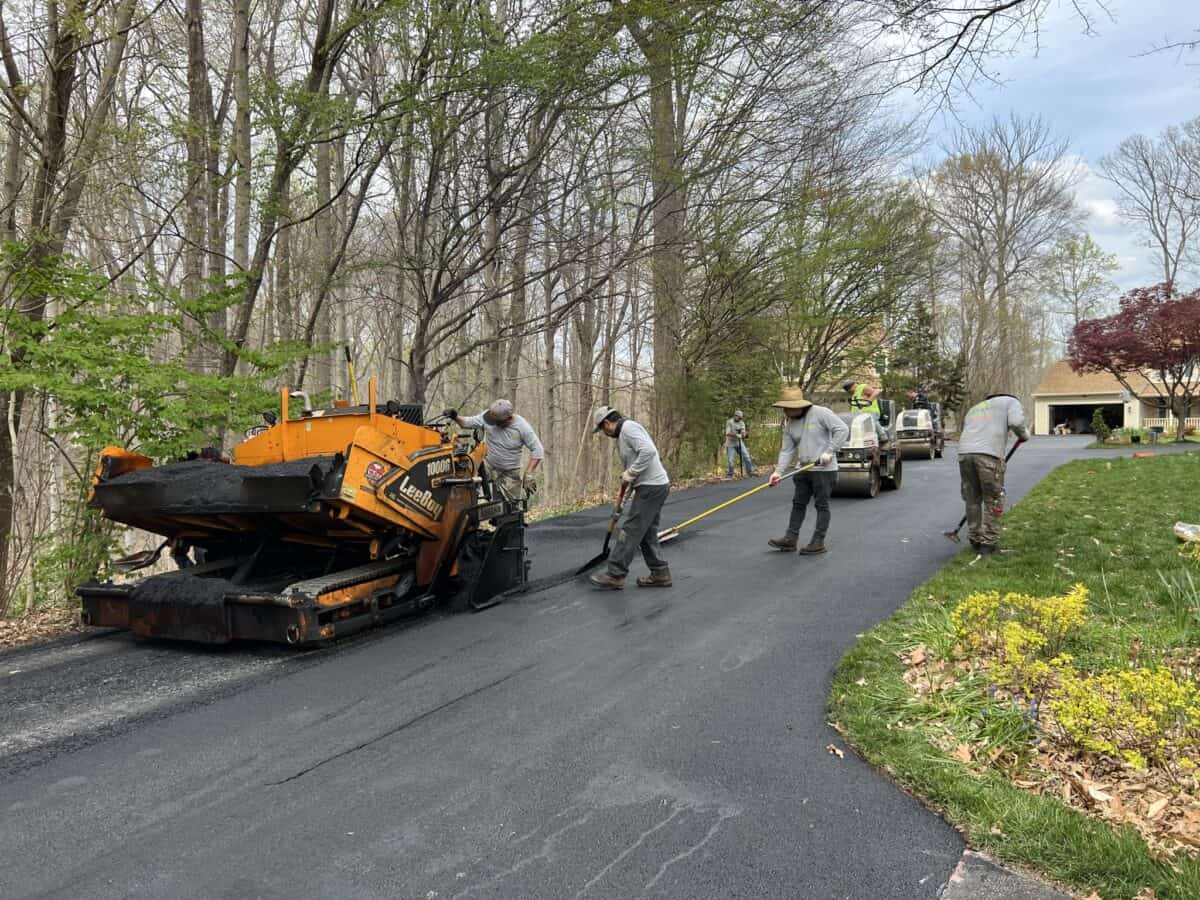
Hiring someone to pave a driveway, parking lot, or commercial access road is a decision that carries more weight than most property owners initially expect. Paving work is not easily reversed. A poorly executed surface can fail within a few seasons, creating drainage issues, liability exposure, and repair costs that far exceed the original project price. Yet contracts are often signed after a single conversation, with little structured evaluation of who is actually doing the work or how they plan to do it.
This is not an argument for excessive caution. It is a recognition that paving projects — residential or commercial — involve significant material costs, site disruption, and long-term consequences. The questions you ask before signing a contract determine whether your project goes smoothly or becomes a drawn-out problem. What follows is a structured set of questions that help you assess a contractor’s qualifications, process, and accountability before any work begins.
Why the Contractor Selection Process Matters More Than the Quote
Most property owners evaluate paving contractors primarily on price. This is understandable, but it often leads to selecting a crew that wins the bid by cutting corners on materials, crew experience, or process. The lowest quote is frequently the one that excludes what the project actually requires. Understanding who you are hiring — not just what they are charging — is the more reliable way to protect your investment.
When reviewing paving contractors for any project, the evaluation should extend beyond cost to include documented experience, operational transparency, and the ability to explain their process in plain terms. A directory of vetted paving contractors can help property owners identify qualified professionals in their region before beginning the selection process. From there, the questions below give you the framework to evaluate each one properly.
The Difference Between a Bid and a Scope of Work
A bid is a number. A scope of work is a document that describes what that number actually covers. Many disputes between property owners and contractors arise because both parties interpreted the same bid differently. Before signing anything, you need a written scope that details the materials to be used, the depth of the base layer, how the existing surface will be handled, and what drainage accommodations are included. If a contractor is unwilling to produce this document, that reluctance is itself useful information.
Question One: Are You Licensed and Insured in This State?
Licensing requirements for paving work vary by state and, in some cases, by county or municipality. A contractor operating without the appropriate credentials creates direct liability for the property owner if something goes wrong — from a worker injury to surface failure. Insurance coverage, specifically general liability and workers’ compensation, protects you from costs that would otherwise fall on you as the property owner.
What to Ask for Specifically
Request a copy of the contractor’s license number and verify it with your state licensing board. Ask for a certificate of insurance that lists you or your property as an additional insured party for the duration of the project. A legitimate contractor will have these documents readily available. If you are met with vague assurances rather than actual paperwork, that is a sign to keep looking.
Question Two: How Long Have You Been Doing This Type of Work?
General construction experience does not automatically translate to paving expertise. Asphalt and concrete work involves specific knowledge about base preparation, compaction, drainage grading, and material behavior under different climate conditions. A contractor who has spent years doing residential driveways may not have the same depth of experience required for a commercial parking lot, and vice versa.
Why Relevant Experience Matters
Ask not just how many years they have been in business, but how many projects similar to yours they have completed. A contractor who has handled dozens of projects of your scale and type will anticipate problems that a less experienced crew might not recognize until they have already caused one. Request references from comparable projects and follow through by actually contacting them.
Question Three: What Materials Will You Use, and Where Do They Come From?
The quality of asphalt or concrete mix varies depending on the supplier and the specifications of the mix itself. Not all materials are appropriate for all climates or load conditions. A contractor who cannot explain what type of mix they plan to use, or who is vague about their supplier, may be planning to use whatever is cheapest at the time of your project.
Understanding Material Accountability
Ask for the name of the mix supplier and the type of material being used. According to the Federal Highway Administration, pavement performance is directly tied to the quality and consistency of base and surface materials. This applies to private projects as much as public infrastructure. If a contractor cannot provide basic material specifications, that gap in knowledge or transparency will likely show up in the finished surface.
Question Four: Who Will Actually Be on the Crew?
The contractor you meet during the estimate is often not the person who will be managing the work on the day of the project. Subcontracting is common in the paving industry, and it is not inherently a problem — but you need to know about it. An experienced general contractor who manages a reliable subcontractor relationship is different from someone who simply hires whoever is available the week of your project.
Subcontracting and Quality Control
Ask directly whether any portion of the work will be handled by a subcontractor, and if so, what oversight the primary contractor maintains during the project. Understand whether the person responsible for quality control will be present on site. Projects that go unsupervised by the person who sold you the job are far more likely to produce inconsistent results.
Question Five: How Do You Handle Base Preparation?
Surface failure in paving work is almost always a base problem, not a surface problem. A beautifully finished asphalt surface laid over a poorly compacted or inadequate base will crack, settle, and deteriorate well before its expected lifespan. Base preparation — including excavation depth, gravel type, compaction method, and grading for drainage — is where the real work happens, and it is also where corners are most easily cut.
What a Thorough Answer Sounds Like
A contractor who understands their work should be able to explain their base preparation process in clear terms without being prompted. They should describe how they assess existing soil conditions, how deep they plan to excavate, what compaction equipment they use, and how they account for drainage. Vague or dismissive responses to this question are a significant warning sign.
Question Six: What Is the Project Timeline, and What Could Affect It?
Paving work is weather-dependent. Temperature, rain, and humidity all affect how materials are applied and how they cure. A contractor who gives you a firm completion date without mentioning weather contingencies either has not thought it through or is telling you what you want to hear. A realistic timeline includes buffer time and a clear explanation of what conditions would require rescheduling.
Question Seven: What Warranty Do You Offer, and What Does It Cover?
Warranty terms in paving work vary widely. Some contractors offer a written warranty covering workmanship defects for a defined period. Others offer nothing beyond a verbal assurance. Understanding what is covered — and what is excluded — matters before you sign. A warranty that excludes drainage-related cracking or settling is essentially a warranty on appearance only, which has limited practical value.
Question Eight: Can You Provide a Detailed Written Contract?
A contract should describe the project scope, the materials to be used, the timeline, the payment schedule, and the terms of any warranty. It should also include what happens if there are unforeseen site conditions, how change orders are handled, and what constitutes project completion. Signing a one-page agreement with minimal detail leaves too much room for interpretation and dispute.
Question Nine: How Is Payment Structured?
A contractor who requests full payment upfront before work begins presents a higher risk than one who structures payments around project milestones. A reasonable payment structure might involve a deposit to secure the project date, a second payment when materials are delivered or work begins, and a final payment upon satisfactory completion. This structure keeps both parties accountable and gives you some recourse if the work does not meet the agreed standard.
Question Ten: How Do You Handle Problems After the Project Is Complete?
Surface issues, drainage problems, and material defects do not always appear immediately. Some take a full freeze-thaw cycle or a heavy rain event to become visible. Ask the contractor directly how they respond to post-completion issues and what the process is for getting them addressed. A contractor who is confident in their work will describe a clear process. One who becomes evasive or defensive at this question may not expect to be reachable once the final payment clears.
Closing: How These Questions Work Together
No single question on this list is a guarantee of a good outcome. But together, they create a structured conversation that shifts the evaluation from price to substance. A contractor who answers all ten questions clearly, provides documentation when asked, and explains their process in concrete terms is demonstrating the kind of operational transparency that tends to produce reliable results.
Paving projects are not glamorous, but they are consequential. A well-executed surface holds up for years under traffic, weather, and load. A poorly executed one becomes a recurring maintenance problem. The time spent asking the right questions before signing a contract is the most cost-effective part of the entire project. Use this list as a working checklist during your contractor conversations, and weight your decision on how clearly and honestly each contractor responds — not just on who offers the lowest number.

