


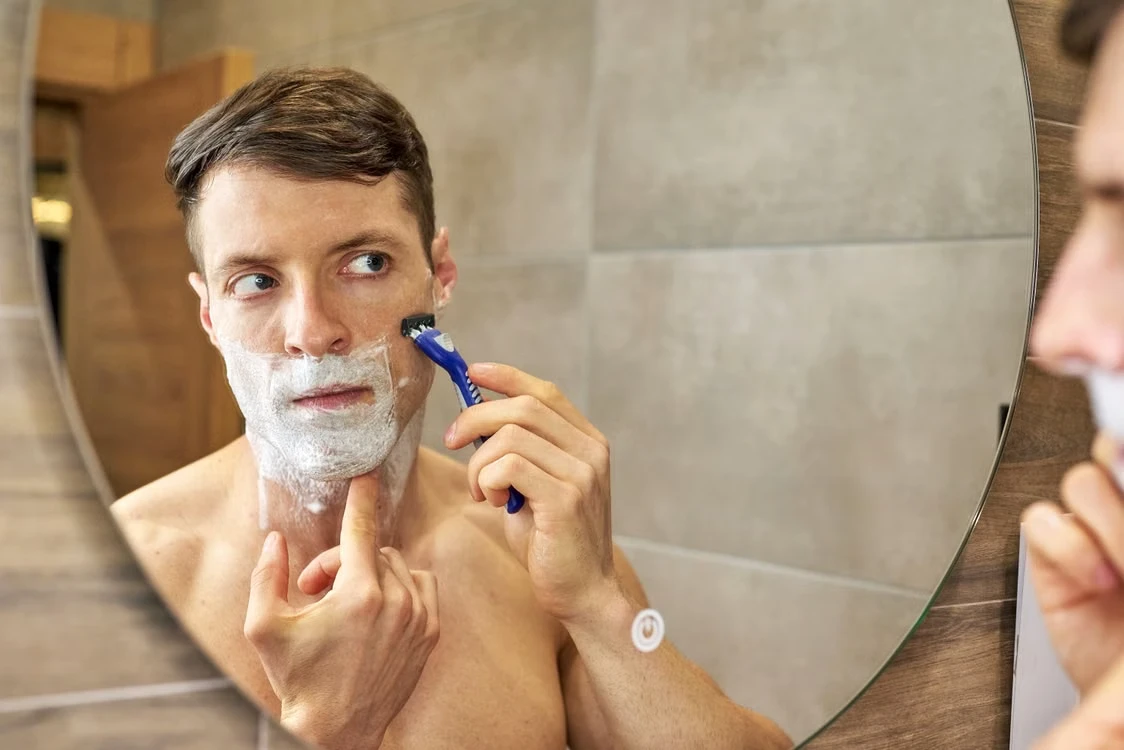
It happens to plenty of men: a big day, an early alarm, a quick shave to look sharp, and then a row of red bumps along the jaw just as the photographer arrives. Shaving right before photos is a habit that works against itself, and the pictures last far longer than the irritation.
Timing matters more than any product. If shaving usually causes immediate redness, doing it earlier gives your skin time to calm down; if you tend to develop ingrown hairs or delayed razor bumps, plan around your skin’s usual reaction or use a trimmer instead. When the timing fails anyway, a pimple remover app becomes plan B, quietly removing the redness and bumps from the photos that matter.
Why Shaving Day Is the Wrong Day
Shaving removes a thin layer of skin along with the hair, and freshly shaved skin often reacts with redness, small bumps or nicks that take hours to calm down. Under a camera flash or in a close-up, that irritation shows clearly.
Rushing makes it worse. A hurried shave on a stressful morning, often against the grain and with a blade that has seen better days, often leads to irritation, exactly when you least want it.
Timing and Technique
A small plan removes most of the risk. A simple timeline looks like this:
- well before the event: test your shaving routine and note how your skin reacts over the following days;
- the evening before: shave with a fresh blade, warm water and a gel or cream;
- the same evening: rinse with cool water and apply a fragrance-free moisturizer;
- the morning of: only tidy edges or the neckline if needed, without a full shave.
Shaving with the direction of hair growth, rather than against it, also tends to cause less irritation for many men. Those with very curly beard hair are often more prone to bumps, so for them a trimmer or an earlier shave may work better.
If the Bumps Are Already There
If irritation appears anyway, avoid the urge to pick or squeeze, which makes redness last longer and can leave marks. A cool compress for a few minutes can calm the skin, and a light, non-tinted moisturizer reduces the shine that makes bumps stand out under a flash. Tinted products can help on the day, but test them in advance, since the wrong shade looks worse on camera than redness.
Photo editing handles the rest. Small red dots, bumps and nicks are local, temporary marks, exactly the kind that can be removed without changing the face. If bumps keep returning after every shave or become painful, it is worth talking to a dermatologist rather than treating each event as a one-off.
Stubble as a Backup Plan
Sometimes the simplest fix is not shaving at all. A short, even stubble, trimmed with a guard a few days before, looks deliberate in photos and avoids the irritation of a close shave entirely.
The neckline and cheek lines make the difference. Trimming those cleanly the evening before keeps stubble looking groomed rather than forgotten, and it photographs well in both close-ups and group shots. Stubble also hides small differences in skin tone along the jaw.
Plan the shave the way you plan the outfit: ahead of time, with a fresh blade and enough time for your skin to recover. Keep stubble in mind as an alternative, and leave editing for the few red marks that slip through despite good preparation.

