


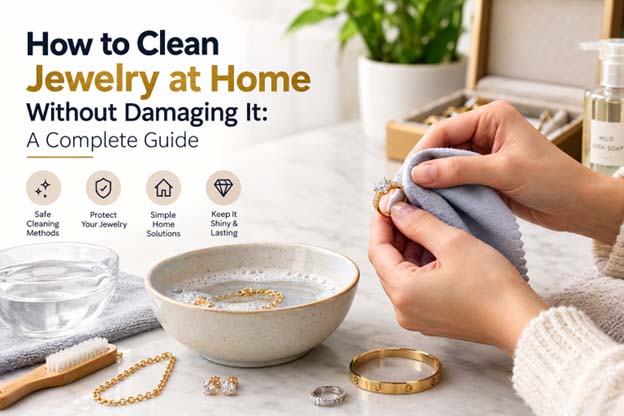
Jewelry rarely loses its sparkle overnight. Lotion, skin oils, soap residue and everyday dust build up slowly until a once-brilliant ring looks flat and cloudy. The good news is that you don’t need a weekly trip to the jeweler to fix it. With a gentle formula, a simple routine and one of these jewelry cleaning bundle deals that put everything you need into a single order, you can restore that shine at your own kitchen table in just a few minutes.
The biggest mistake most people make is reaching for whatever happens to be under the sink. Household cleaners that contain bleach, harsh chemicals or gritty abrasives can dull gold alloys, weaken the tiny prongs that hold your stones, and scratch softer gems. A purpose-made ammonia-free jewelry cleaner is a far safer choice because it lifts away grime without attacking the metal or the stone. Below, we walk through exactly how to clean your pieces, what to avoid, and how to keep them sparkling for longer.
Why Jewelry Loses Its Shine
Every time you wash your hands, apply moisturizer or spray perfume, a little residue lands on your jewelry. Over days and weeks, that residue forms a thin film. On metal, the film blocks light and makes polished surfaces look hazy. On gemstones, it is even more noticeable. Diamonds, for example, naturally attract oil, so a greasy layer on the back of the stone stops light from bouncing back out through the top, and the sparkle you love simply disappears.
Sterling silver has its own challenge. It reacts with sulfur compounds in the air, which creates the dark gray or black layer we call tarnish. Gold and platinum don’t tarnish the same way, but they still collect dirt in engraving, settings and chain links.
What You’ll Need
You don’t need professional equipment to get great results at home. Gather the following before you start:
- A gentle, non-abrasive jewelry cleaner made for precious metals and gemstones.
- An extra-soft toothbrush, such as one designed for babies, to reach behind stones and into settings.
- A lint-free microfiber cloth for drying and buffing.
- A small bowl of lukewarm water for rinsing.
- A towel or a mesh strainer, so nothing slips down the drain while you work.
Step-by-Step: How to Clean Your Jewelry at Home
Step 1: Inspect Each Piece First
Before cleaning, hold the piece up to the light and check for loose stones, bent prongs or weak clasps. Gently tap a ring near your ear; a rattling stone is a sign it needs a jeweler, not a cleaning session. Cleaning a damaged setting can loosen it further.
Step 2: Apply the Cleaner
Spray a small amount of cleaner directly onto the piece or onto your soft cloth, following the directions on the label. Make sure it reaches the underside of stones and the inside of the band, since that is where most buildup hides.
Step 3: Brush Gently
Use the soft toothbrush with light, circular motions around the setting and along any engraved details. Let the formula do the work. Pressing hard won’t make the piece cleaner, but it can scratch soft metals.
Step 4: Rinse and Dry
If the product directions call for rinsing, dip the piece in lukewarm water over your towel or strainer. Then pat it completely dry with a lint-free cloth. Avoid paper towels, which contain wood fibers that can leave fine scratches on polished gold.
Step 5: Buff to a Brilliant Finish
Finish with a few light passes of a clean microfiber cloth. This final buff brings out the mirror-like shine on metal surfaces and removes any lingering streaks from your stones.
Cleaning Tips by Material
Gold
Gold is soft, especially at 18 karat and above, so gentle pressure is essential. Keep gold away from chlorine, which can weaken the alloy over time, and always dry it thoroughly after cleaning.
Platinum
Platinum is dense and durable, but it develops a soft, satin “patina” with wear. Regular cleaning keeps it bright, while a jeweler can restore the high polish if you prefer a mirror finish.
Diamonds and Hard Gemstones
Diamonds, sapphires and rubies handle cleaning well. Focus on the back of the stone, where oil collects, to bring the fire and brilliance back.
Sterling Silver
Clean silver regularly so tarnish never gets the chance to build up. Store it in an airtight bag or an anti-tarnish pouch between wears.
Delicate Stones: Pearls, Opals and Emeralds
Porous and treated stones need extra care. Never soak them. Wipe them with a soft, slightly damp cloth instead, and ask a professional jeweler about deeper cleaning.
Common Mistakes to Avoid
- Using toothpaste or baking soda, which are abrasive and can leave micro-scratches.
- Soaking pieces that have glued-in stones or pearls, since moisture can loosen the adhesive.
- Cleaning over an open sink drain without a stopper or strainer.
- Wearing jewelry in pools or hot tubs, where chlorine can damage metal.
- Putting jewelry on before lotions and perfumes have dried. Make jewelry the last thing you put on.
How Often Should You Clean Your Jewelry?
Pieces you wear every day, such as engagement rings and wedding bands, benefit from a quick clean once a week. Occasional pieces can be cleaned after each wear before they go back in the box. In addition, have a jeweler inspect your most valuable items once or twice a year to check prongs and settings.
Choosing the Right Size for Your Routine
The right bottle size depends on how much jewelry you own. A small 2oz spray fits easily in a purse or travel bag for touch-ups on the go. An 8oz bottle suits most households, while 16oz and 32oz sizes are ideal for collectors, families or anyone who cleans watches and jewelry often. Bundles that pair a jewelry cleaner with a metal polish give you the most value if you also care for silverware, watches or other metal items around the home.
Frequently Asked Questions
Can I clean my jewelry with dish soap?
Mild dish soap and water will remove light dirt, but it often leaves a residue that dulls the shine. A dedicated jewelry cleaner removes buildup more effectively and leaves a cleaner finish.
Is it safe to clean my engagement ring at home?
Yes, as long as the setting is secure and you use a gentle, non-abrasive product with a soft brush. If a stone feels loose, take it to a jeweler first.
Why does my ring look cloudy right after cleaning?
Cloudiness usually means residue was left behind or the piece wasn’t dried well. Buff it again with a clean, dry microfiber cloth.
Final Thoughts
Keeping your jewelry brilliant isn’t complicated. Inspect your pieces, use a gentle formula, brush softly, dry thoroughly and buff to finish. With a few minutes of care each week, your favorite rings, bracelets and necklaces will keep catching the light the way they did on the day you first wore them.

