


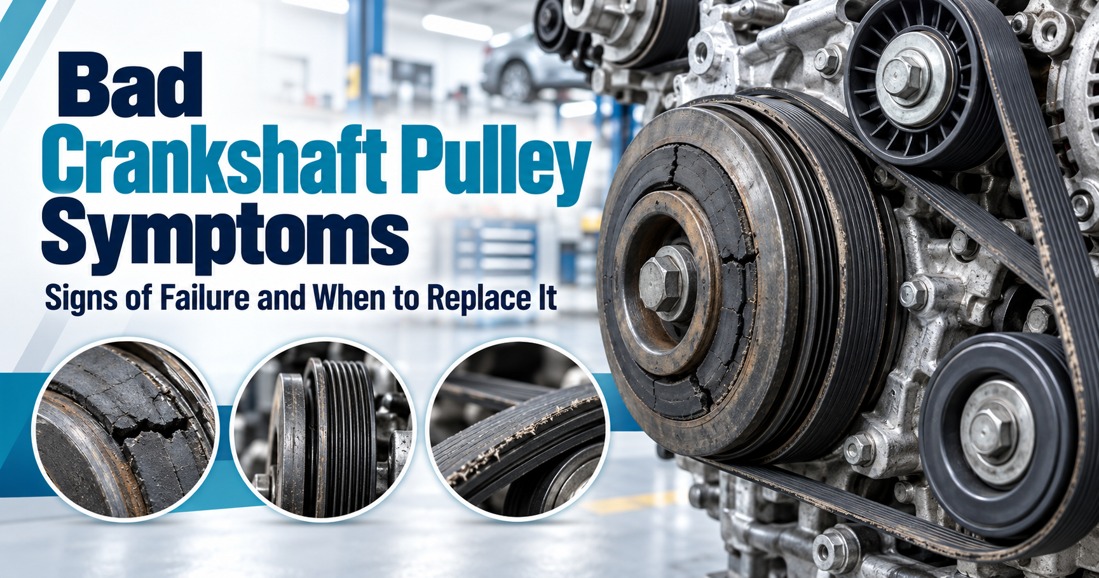
A car engine relies on precise timing to operate efficiently. One of the components responsible for maintaining this precision is the timing chain tensioner. Although it is relatively small compared with other engine components, its role is essential for keeping the timing chain correctly tensioned and preventing excessive movement.
When a timing chain tensioner begins to fail, the engine may produce unusual noises, develop performance problems, or struggle to start. Ignoring these warning signs can allow the timing chain to become loose, potentially leading to extensive engine damage and expensive repairs.
Understanding the top symptoms of a failing timing chain tensioner can help drivers recognise potential problems early, arrange the right inspections, and protect their vehicles from avoidable damage.
What Does a Timing Chain Tensioner Do?
The timing chain connects the crankshaft to the camshaft, ensuring that the engine’s valves open and close at the right moments during the combustion cycle. For the engine to operate smoothly, this relationship must remain accurate.
The timing chain tensioner maintains the appropriate tension in the chain by applying pressure to a guide. This helps control chain movement as engine speed changes and the components experience normal wear.
Many modern engines use hydraulic tensioners that rely partly on engine oil pressure, while other designs use mechanical or spring-assisted mechanisms.
Over time, wear, poor lubrication, or internal component failure can reduce the tensioner’s effectiveness. When this happens, the timing chain may develop excessive slack, increasing the risk of damage to the guides, sprockets, and other timing components.
1. Metallic Rattling Noise During Engine Start-Up
One of the most recognisable symptoms of a failing timing chain tensioner is a metallic rattling noise immediately after starting the engine.
The noise may last only a few seconds, particularly after the vehicle has been parked overnight. It can sound like loose metal components moving around inside the engine.
In engines fitted with hydraulic tensioners, the problem may occur when the tensioner cannot maintain sufficient pressure while the engine is switched off. After starting, it may take a short time for oil pressure to build and the tensioner to control the chain properly.
A brief rattle does not automatically confirm tensioner failure. Worn chain guides, timing chain stretch, variable valve timing components, and other engine parts can produce similar sounds.
Nevertheless, repeated rattling during cold starts should be investigated promptly, especially if the noise becomes louder or lasts longer over time.
2. Persistent Engine Rattle or Clattering
A more serious warning sign is a rattling or clattering noise that continues after the engine has started.
When the tensioner can no longer maintain the correct chain tension, the chain may strike its guides or surrounding components. The noise may become more noticeable at idle or change with engine speed.
A persistent rattle can indicate a worn tensioner, but it may also suggest that the chain has stretched or that the guides and sprockets have deteriorated.
Continuing to operate the engine without investigating the cause can increase wear throughout the timing system. If the chain moves far enough to jump a tooth, the relationship between the crankshaft and camshaft may be disrupted.
If the noise is loud, continuous, or accompanied by poor engine performance, switch off the engine when safe and arrange a professional inspection rather than continuing to drive.
3. Engine Warning Light Appears on the Dashboard
A failing timing chain tensioner can contribute to incorrect valve timing, which may cause the engine management system to detect a discrepancy between the crankshaft and camshaft positions.
When the system identifies an unexpected timing relationship, it may store a diagnostic fault code and illuminate the engine warning light.
Depending on the severity of the problem, the driver may also notice reduced engine performance, hesitation, or difficulty starting the vehicle.
However, an illuminated warning light alone does not prove that the tensioner is defective. Faulty position sensors, wiring problems, oil control solenoids, and variable valve timing issues can produce similar warnings.
A diagnostic scan, followed by appropriate mechanical checks, helps identify the underlying cause before replacement parts are ordered.
4. Rough Idling and Excessive Engine Vibration
A properly functioning engine should idle smoothly once it has reached a stable operating condition.
When timing chain tension becomes inadequate, the chain may move excessively and affect valve timing. This can interfere with the engine’s normal combustion process, resulting in an uneven idle.
Drivers may notice the following changes:
- The engine shakes more than usual while stationary.
- The rev counter fluctuates unexpectedly.
- The vehicle vibrates when waiting at traffic lights.
- The engine sounds uneven or struggles to maintain a consistent idle.
These symptoms can also result from worn spark plugs, faulty ignition coils, fuel system problems, air leaks, or damaged engine mounts.
If rough idling occurs alongside a metallic rattle or timing-related fault code, the timing chain assembly should be examined as part of the diagnosis.
5. Reduced Engine Power and Poor Acceleration
A failing tensioner can allow the timing chain to become loose enough to affect the synchronisation between the crankshaft and camshaft.
When valve timing is no longer correct, the engine may struggle to draw in air and expel exhaust gases efficiently. This can reduce performance and make acceleration feel sluggish.
Possible symptoms include:
- Slower acceleration than usual.
- Hesitation when pressing the accelerator.
- Reduced pulling power during overtaking.
- An engine that feels less responsive under load.
In some vehicles, the engine management system may also limit performance after detecting a timing-related fault.
Reduced power is not exclusive to timing chain problems. Fuel delivery issues, blocked filters, turbocharger faults, and sensor failures can cause similar behaviour. A proper diagnosis is therefore essential before deciding whether the tensioner needs replacement.
6. Difficulty Starting the Engine
Starting problems may develop when a worn tensioner allows the timing chain to move excessively or prevents the engine from maintaining the correct valve timing.
The engine may take longer than normal to start, require repeated attempts, or crank without firing.
If the chain has jumped out of its correct position, the engine may become extremely difficult to start or fail to start altogether.
Drivers should not assume that every starting problem is caused by the timing system. A weak battery, faulty starter motor, fuel supply problem, or defective crankshaft position sensor can produce similar symptoms.
However, starting difficulties combined with timing chain noise or an engine warning light warrant urgent investigation.
If the engine makes a loud mechanical noise while cranking, stop attempting to start it and seek professional advice. Repeated cranking could worsen an existing mechanical fault.
7. Engine Misfires or Unexpected Stalling
A loose timing chain can disrupt valve timing enough to interfere with normal combustion. As a result, the engine may misfire, hesitate, or stall unexpectedly.
A driver might experience jerking during acceleration, uneven power delivery, or an engine that switches off while idling.
In severe cases, a timing chain may jump or break, causing the engine to stop running and potentially resulting in substantial internal damage.
These symptoms should never be attributed to the tensioner without further testing. Ignition faults, fuel system defects, electrical problems, and sensor failures are also common causes of misfires and stalling.
If stalling or severe misfiring occurs alongside persistent timing chain noise, avoid driving the vehicle until the cause has been identified.
8. Metal or Guide Material in the Engine Oil
A failing timing chain tensioner can contribute to excessive chain movement, which may accelerate wear on the timing guides and sprockets.
As these components deteriorate, fragments of guide material or metal particles may enter the engine oil.
Such contamination may be discovered during an oil change or when a mechanic inspects the oil filter. It is a potentially serious finding because the damage may extend beyond the tensioner itself.
The timing chain, guides, sprockets, oil passages, and other associated components may require further inspection.
Metal particles can originate from other engine components, so their presence does not automatically establish a timing chain fault. A qualified mechanic should determine their source and assess the extent of any damage.
What Causes a Timing Chain Tensioner to Fail?
Several factors can contribute to timing chain tensioner problems, including normal wear and inadequate lubrication.
Common causes include:
Poor engine oil maintenance: Dirty or degraded oil can interfere with lubrication and may contribute to blocked oil passages in hydraulic tensioners.
Low engine oil level: Insufficient oil can affect the performance of oil-dependent tensioners and increase wear throughout the engine.
Low oil pressure: A hydraulic tensioner may not operate correctly if the engine cannot supply adequate oil pressure.
Worn timing chain components: A stretched chain or deteriorated guides can place additional demands on the tensioner.
Internal tensioner wear: Springs, valves, seals, and other internal components may deteriorate over time.
Incorrect installation: Using an unsuitable part, failing to follow the manufacturer’s fitting procedure, or incorrectly setting engine timing can cause problems after a repair.
Identifying the underlying cause is important. Replacing the tensioner without addressing poor oil pressure or excessive chain wear may not provide a lasting solution.
How Is a Failing Timing Chain Tensioner Diagnosed?
Accurate diagnosis helps prevent unnecessary part replacement and reduces the risk of overlooking related damage.
A mechanic will usually begin by listening to the engine and identifying when the noise occurs. The vehicle’s service history, oil level, and previous warning lights can provide useful information.
The diagnostic process may include:
- Checking engine oil: Inspect the oil level and condition, verify the recommended specification, and investigate any suspected oil pressure problems.
- Scanning for fault codes: Read stored engine management codes and examine relevant camshaft and crankshaft data.
- Inspecting the timing system: Assess the tensioner, chain guides, sprockets, and chain condition using the appropriate workshop procedure.
- Verifying mechanical timing: Confirm that the crankshaft and camshaft remain correctly synchronised.
- Assessing related damage: Check for worn guides, damaged sprockets, debris, or other problems that could affect the repair.
The precise procedure varies by engine design. Following the vehicle manufacturer’s repair instructions is essential, particularly when specialist timing tools are required.
Should You Replace the Tensioner or the Complete Timing Chain Kit?
The appropriate repair depends on the condition of the entire timing system.
A tensioner-only replacement may be suitable when the chain, guides, and sprockets remain within the manufacturer’s specifications, and the cause of the tensioner fault has been identified.
However, if the chain has stretched or the guides and sprockets show significant wear, replacing only the tensioner may leave the underlying problem unresolved.
In these circumstances, a complete timing chain kit may be the more appropriate option. Depending on the vehicle, a kit may include the chain, tensioner, guides, sprockets, seals, and other required fitting components.
Choosing the correct kit is equally important. Parts can vary according to the vehicle’s model, engine code, production year, and specification.
Before purchasing replacement components, confirm compatibility using the vehicle registration, VIN, engine code, or original part number wherever possible.
How to Prevent Timing Chain Tensioner Problems?
Although normal wear cannot always be avoided, appropriate maintenance can help reduce the risk of premature timing system failure.
Consider these practical measures:
- Follow the manufacturer’s recommended oil and filter service intervals.
- Use the correct engine oil specification for your vehicle.
- Check the oil level regularly, particularly if the engine consumes oil.
- Investigate oil pressure warnings immediately.
- Arrange an inspection when new rattling noises develop.
- Ensure replacement timing components are compatible with the engine.
- Use a qualified mechanic for repairs requiring specialist timing tools.
Most importantly, do not ignore repeated cold-start rattling or changes in engine performance. Early diagnosis may help prevent a relatively contained repair from developing into a much more expensive engine problem.
Final Thoughts
A failing timing chain tensioner can cause several warning signs, from metallic rattling and rough idling to poor acceleration, starting difficulties, and engine misfires.
Although these symptoms can indicate a timing system problem, none is conclusive on its own. A professional inspection is the best way to establish whether the tensioner, chain, guides, sprockets, or another engine component is responsible.
Addressing unusual noises and performance changes early can help protect the engine and avoid unnecessary repair costs.
When replacement parts are required, choosing components that match the vehicle’s exact engine specification is essential. Apex Auto Parts can be a useful starting point for drivers and workshops researching suitable automotive replacement parts.
By combining regular maintenance, prompt diagnosis, and correctly matched components, vehicle owners can help maintain reliable engine performance and reduce the risk of serious timing-related damage.

