


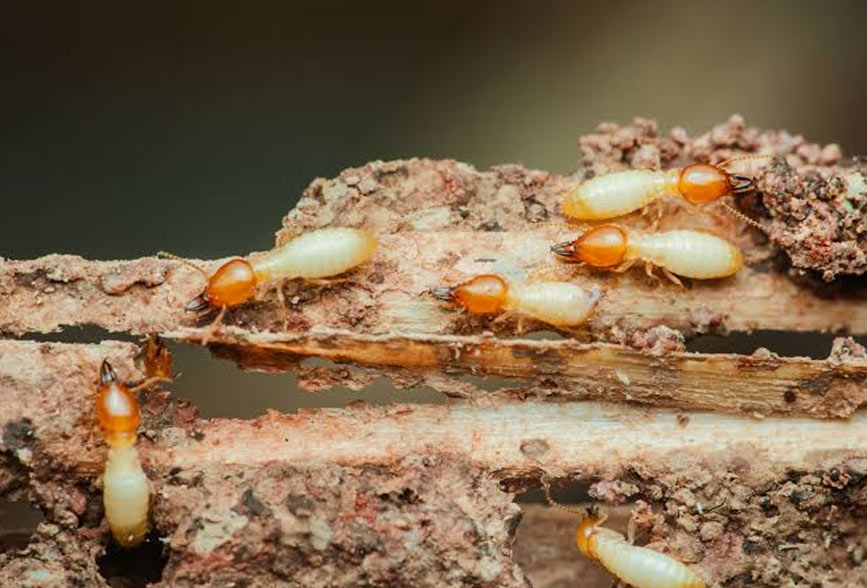
Termites are among the most destructive pests that can affect residential and commercial properties. These small insects feed primarily on cellulose-based materials, including wood, paper, cardboard, and other plant-based materials. Because termites often remain hidden inside walls, floors, foundations, soil, and wooden structures, an infestation can continue for a long time before visible damage becomes obvious. By the time a property owner notices hollow-sounding wood, damaged structures, discarded wings, mud tubes, or other warning signs, the colony may already be well established.
Understanding how termites live, where they hide, what attracts them, and how professionals identify and control infestations can help property owners protect their buildings. Effective termite management involves more than eliminating visible insects. A successful approach generally requires identifying the species or type of termite, locating areas of activity, determining how the insects are accessing the structure, treating the affected areas, and reducing conditions that could encourage future infestations.
Understanding Termites and Their Behavior
Termites live in organized colonies that can contain large numbers of individuals. Different members of a colony have different roles, including workers, soldiers, and reproductive termites. Workers are responsible for gathering food and maintaining the colony, while soldiers help protect it from threats. Reproductive termites are responsible for producing new generations.
Their social structure makes termites particularly difficult to control through simple surface treatments. Killing a few visible insects does not necessarily eliminate the colony. Other termites may remain hidden in soil, wall cavities, structural wood, or other protected areas.
Termites are attracted to materials containing cellulose, but moisture and access to shelter can also influence where colonies establish themselves. Buildings with leaking pipes, poor drainage, damaged wood, or direct contact between soil and structural materials may provide favorable conditions.
Common Types of Termites
There are several types of termites, and their behavior can vary considerably. Subterranean termites generally live in soil or moist environments and can enter buildings through foundations, cracks, utility penetrations, and other pathways. They may construct mud tubes that protect them while traveling between their colony and food source.
Drywood termites can live directly inside dry wooden structures and do not necessarily require contact with soil. They may infest furniture, roof components, framing, doors, and other wooden materials.
Dampwood termites are associated with moist or decaying wood and are more commonly found where excessive moisture is present. Their presence may indicate an underlying moisture problem that should be corrected.
Correct identification matters because treatment strategies can differ according to termite type, colony behavior, property construction, and the extent of the infestation.
Warning Signs of Termite Activity
Recognizing early signs can help property owners respond before extensive damage develops. One common warning sign is the presence of mud tubes along foundations, walls, crawl spaces, or other structural surfaces. These narrow structures can provide protected pathways for certain termite species.
Discarded wings can also indicate termite activity. Reproductive termites may leave established colonies during swarming events, shed their wings, and attempt to establish new colonies.
Damaged wood is another important sign. Termites can consume wood from the inside, leaving the outer surface relatively intact. Tapping or probing affected areas may reveal hollow sections, although professional inspection is preferable when structural damage is suspected.
Other signs can include small openings, droppings, bubbling paint, sagging surfaces, damaged flooring, or doors and windows that become difficult to operate. None of these signs should be considered definitive by themselves, but together they can justify further investigation.
Why Termite Damage Can Be Serious
Termite damage can develop gradually, making it easy to underestimate the problem. Because termites often remain hidden, they can continue feeding on structural components without attracting immediate attention.
Over time, significant damage may affect beams, joists, framing, flooring, roof components, doors, window frames, and other wooden materials. The severity depends on factors such as the termite species, colony size, duration of activity, moisture conditions, and construction of the building.
Not every termite infestation causes immediate structural failure, but extensive damage can weaken important components and lead to expensive repairs. This is why early inspection is valuable.
A property owner should not assume that a small visible sign means the problem is minor. The visible evidence may represent only a small portion of a larger hidden infestation.
Professional Termite Inspection
A professional inspection typically involves examining both the structure and surrounding property. Inspectors may look for visible termites, mud tubes, damaged wood, moisture sources, swarm evidence, droppings, and potential entry points.
The inspection should include areas where termites commonly remain concealed. Depending on the building, this may include crawl spaces, basements, attics, wall edges, foundations, utility penetrations, wooden structures, and areas near plumbing.
Moisture conditions should also be assessed. Leaking pipes, poor drainage, condensation, and water accumulation can create environments that are more favorable to termite activity.
The inspector may document findings with photographs, measurements, and written notes. A detailed inspection report can help property owners understand the locations of concern and determine what additional action may be appropriate.
How Termites Enter Buildings
Termites can access structures through surprisingly small pathways. Cracks in foundations, gaps around plumbing and utility lines, expansion joints, and areas where wood contacts soil can all provide opportunities for entry.
Subterranean termites may construct protected pathways from the soil toward a building. Once inside, they can travel through concealed spaces to reach wooden materials.
Landscaping can also influence termite access. Soil, mulch, plants, and other materials placed directly against a structure can make it more difficult to identify termite pathways.Reducing unnecessary contact between structural wood and soil and maintaining appropriate drainage can help make the property less attractive to termites and easier to inspect.
Termite Treatment Options
Termite treatment depends on the type of termite, the extent of activity, construction details, and other site conditions. Professional pest-management providers may use liquid treatments, baiting systems, localized treatments, wood treatments, or combinations of approaches.
Liquid termiticides may be applied to soil or other appropriate areas to create a treated zone that helps prevent termites from accessing the structure.
Bait systems use specially designed stations that termites encounter while foraging. Depending on the system, workers may carry bait material back toward the colony, where it can affect other members.
Localized treatment can sometimes be appropriate when activity is concentrated in a specific area. However, the suitability of this method depends on the infestation and the ability to identify its extent.A professional should select the treatment strategy after evaluating the property rather than relying on a one-size-fits-all solution.
Understanding Termite Bait Systems
Baiting can be an important component of termite management. Stations are strategically placed and monitored for termite activity. When termites begin feeding on suitable bait material, the system is managed according to the manufacturer’s instructions and the pest professional’s treatment plan.
One advantage of bait systems is that they can provide ongoing monitoring. Instead of relying entirely on a single treatment event, technicians can periodically inspect stations and identify changes in termite activity.
However, baiting requires patience and consistent monitoring. It is not necessarily an instant solution because termite colonies may take time to encounter and consume the bait.Property owners should follow the service provider’s recommendations and avoid disturbing or relocating monitoring stations without professional guidance.
The Role of Moisture Control
Moisture management is an important part of termite prevention. Although termites do not all require the same environmental conditions, excessive moisture can make certain areas more attractive and can contribute to wood deterioration.
Leaking plumbing should be repaired promptly. Gutters and drainage systems should direct water away from foundations, and standing water should be minimized.
Ventilation can also be important in enclosed spaces. Crawl spaces and other poorly ventilated areas may develop moisture problems that contribute to conditions favorable to pests.
Reducing moisture does not guarantee that termites will never appear, but it can remove conditions that support activity and can make the property easier to inspect.
Protecting Wooden Structures
Wooden components should be maintained in good condition. Rotting, damaged, or persistently damp wood should be repaired or replaced as appropriate.
Where possible, structural wood should remain separated from direct soil contact. Landscaping materials should not be piled against wooden siding or structural components.
During renovations, property owners should also consider how new wood, decks, fences, sheds, and other structures interact with the existing building. Poorly planned additions can unintentionally create new access points.
Regular inspections of wooden structures can help identify early signs of damage before they become more extensive.
Termites and New Construction
Termite prevention should begin during construction whenever possible. Building practices can incorporate barriers, appropriate soil treatments, physical separation, drainage planning, and other preventive measures.
Wood should be protected from prolonged moisture exposure, and construction debris containing cellulose should be managed appropriately.
The foundation and utility penetrations should also be constructed with termite access in mind. Prevention measures are generally easier to incorporate during construction than after an infestation has developed.
Property owners building or renovating should discuss termite-resistant construction practices with qualified professionals before work begins.
Termite Prevention for Existing Properties
Existing properties can also benefit from a preventive strategy. Regular inspections are useful because termite activity can develop without obvious signs.
Keep wood, cardboard, paper, and other cellulose materials away from areas where they may become exposed to moisture or direct contact with the building.
Firewood and lumber should be stored appropriately rather than directly against the structure. Yard debris should also be removed regularly.Cracks, gaps, and damaged seals around the structure should be evaluated and repaired where appropriate. Vegetation should be maintained so that inspectors can access foundations and other important areas.
These measures cannot guarantee complete protection, but they can reduce favorable conditions and make signs of activity easier to detect.
Repairing Termite Damage
Eliminating termites and repairing damage are separate parts of the process. Once an infestation has been controlled, damaged materials should be assessed to determine whether repair or replacement is required.
Cosmetic damage may be relatively straightforward to restore, while damage to structural components may require qualified building professionals or structural specialists.
Replacing damaged wood without addressing the termite problem first can result in new materials becoming infested again. Pest control and structural repair should therefore be coordinated appropriately.The extent of repairs depends on how long the termites have been active and which parts of the property have been affected.
Common Mistakes Property Owners Make
One common mistake is treating only the termites that are visible. Because colonies can remain hidden, surface-level treatment may not address the underlying infestation.
Another mistake is waiting for obvious structural damage before arranging an inspection. Termites can remain unnoticed for extended periods, so early evaluation is preferable.Ignoring moisture problems can also contribute to recurring pest issues. Even after treatment, unresolved leaks or drainage problems may continue to create favorable conditions.
Property owners sometimes attempt to use household insecticides for termite problems. These products may kill individual insects without eliminating a colony or preventing continued access to the structure.Finally, it is important not to assume that one treatment automatically provides permanent protection. Depending on the treatment system and property conditions, monitoring and follow-up may be necessary.
Choosing a Termite Control Professional
When selecting a termite specialist, consider experience, qualifications, inspection procedures, treatment methods, warranties, monitoring services, and communication.
Ask the provider to explain what was found during the inspection and why a particular treatment approach is being recommended. A clear explanation can help property owners understand the relationship between the infestation and proposed solution.
A written treatment plan should identify the areas being treated, the general method being used, preparation requirements, follow-up expectations, and warranty conditions when applicable.Property owners should also understand that termite control can be a long-term process. Monitoring may be recommended after treatment to confirm that activity has stopped and to detect potential reinfestation.
Long-Term Termite Management
Effective termite management does not end when visible insects disappear. Regular inspection, moisture control, structural maintenance, and monitoring can all contribute to long-term protection.
Properties with a history of termite activity may benefit from scheduled professional inspections. Monitoring allows potential activity to be identified before significant damage develops.
Homeowners should also remain alert to changes in their property. New mud tubes, discarded wings, damaged wood, or unexplained changes in doors and flooring should be investigated rather than ignored.Preventive maintenance is generally easier and less disruptive than dealing with extensive damage after an infestation has become established.
Final Thoughts on Termite Protection
Termites can remain hidden for long periods while gradually damaging wooden structures, making early detection an important part of property maintenance. Recognizing warning signs, arranging professional inspections, controlling moisture, protecting wooden materials, and addressing potential entry points can all help reduce the risk of serious problems.
When termites are discovered, treatment should be based on the type and extent of the infestation. Professional methods may include baiting, liquid treatments, localized applications, or other strategies designed for the specific property.
The goal of termite control is not simply to remove visible insects. A complete approach should address active colonies, access points, environmental conditions, and future prevention. Structural damage should also be evaluated and repaired appropriately after the pest problem has been controlled.
With regular monitoring and responsible property maintenance, homeowners can improve their ability to detect termite activity early and protect important structural components. Taking signs seriously and seeking professional evaluation when necessary can help prevent a manageable pest problem from developing into a costly and disruptive property issue.

