


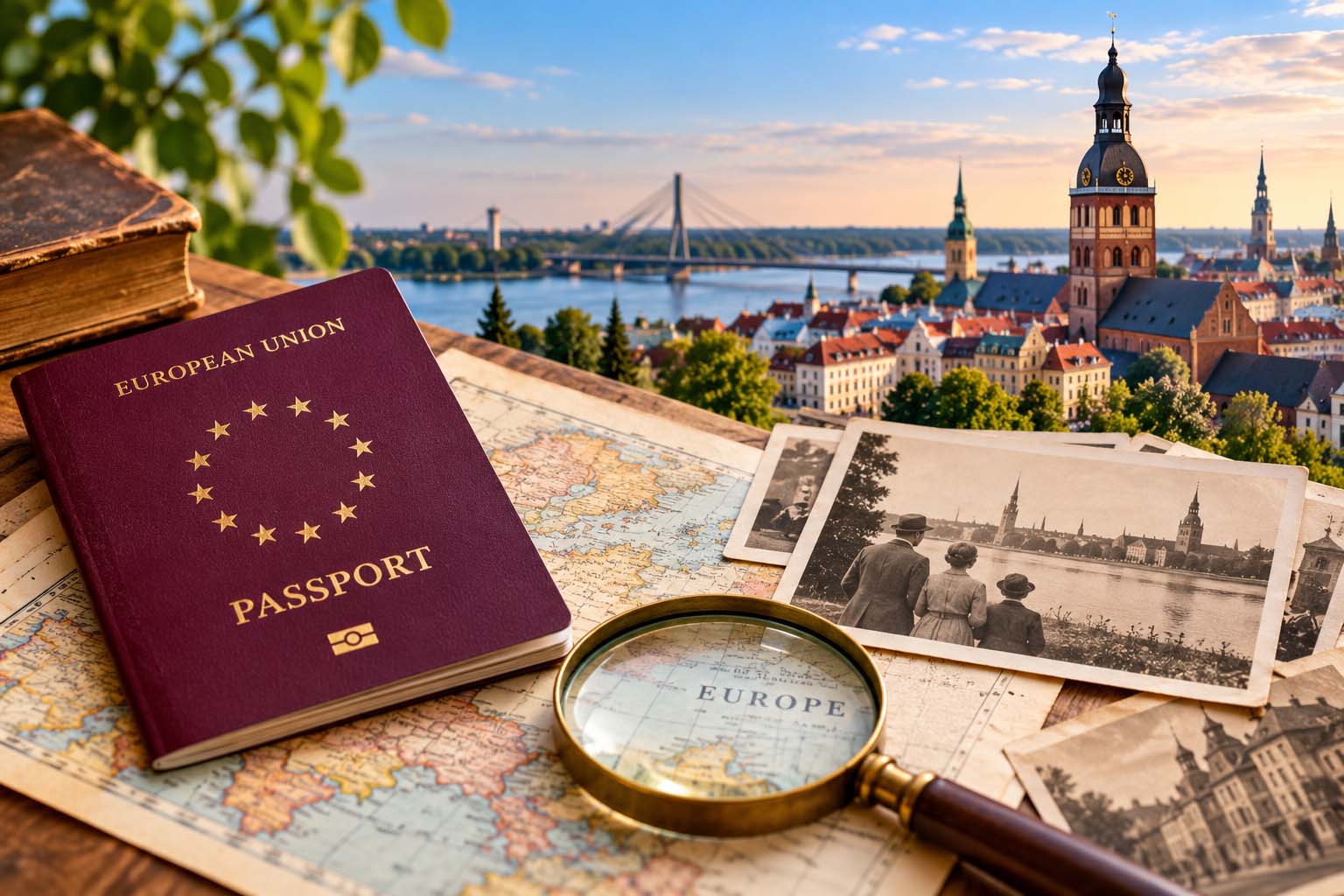
Family history can tell you more than where your grandparents or great-grandparents lived. In some cases, it may also help you discover a possible path to citizenship in a European country.
Several European countries have citizenship rules connected to parents, grandparents, or earlier generations. However, having European ancestry does not automatically make someone eligible. Each country has its own rules, and details such as dates, previous citizenship, migration history, and family records can make a difference.
For anyone exploring this possibility, the best place to start is usually not an application form. It is their own family history.
Start With What You Know About Your Family
Before looking at citizenship rules, build a basic picture of your family tree.
Talk to parents, grandparents, and older relatives if possible. Ask where previous generations were born, where they lived, and when they moved to another country. Even small details can help later.
Old family documents are also worth checking. Useful records may include:
- Birth certificates
- Marriage certificates
- Old passports
- Naturalization papers
- Immigration records
- Military records
- Death certificates
- Name-change documents
Do not worry if you cannot find everything at home. Civil registries, national archives, churches, immigration databases, and historical records may help fill in missing information.
Why the Date Your Ancestor Left Can Matter
Knowing that a grandparent came from Europe is useful, but it is often not enough.
Citizenship laws can depend on what happened at a particular point in history. An ancestor may have lost citizenship after becoming a citizen of another country, while another person may have kept it. Borders and nationality laws also changed significantly across Europe during the 20th century.
This is why two people with family roots in the same country may not have the same eligibility.
Create a simple timeline for the ancestor you are researching. Include their birth, marriage, migration, naturalization, and other major events. You can then compare that timeline with the citizenship rules that applied to them.
Citizenship by Descent Is Different Across Europe
There is no single European rule for citizenship through ancestry.
Each country decides who qualifies for its nationality. Some routes are closely connected to a parent, while others may recognize more distant family connections under certain conditions. There can also be limits based on generation, dates, dual citizenship, or whether citizenship was passed from one generation to the next.
Be careful with general claims such as “anyone with a European grandparent can get an EU passport.” Family ancestry may create an opportunity, but eligibility still has to be established under the law of the particular country.
If citizenship is successfully acquired in an EU member country, that person also becomes an EU citizen.
Latvia Shows Why Historical Records Matter
Latvia is a useful example of how ancestry and history can come together in citizenship research.
Official Latvian guidance includes routes involving descendants of Latvian citizens as well as certain Latvian exiles and their descendants. The exact requirements depend on the applicant’s family circumstances and citizenship history.
People who discover Latvian roots can use resources such as https://latviancitizenship.eu/ to understand the subject before comparing their family records with official Latvian requirements.
Historical dates are particularly important in Latvian cases. For example, Latvia’s Office of Citizenship and Migration Affairs provides specific guidance concerning people who were Latvian citizens before the Soviet occupation and their descendants.
This is a good reminder that ancestry research should go beyond simply finding a country name on an old birth certificate.
Build a Clear Paper Trail Between Generations
Once you identify a possible citizenship route, the next challenge is proving the family connection.
Imagine that you are applying through a grandparent. You may need documents showing the relationship from your grandparent to your parent and then from your parent to you.
A simple document chain could look like this:
Grandparent’s record → Parent’s birth record → Your birth record
Marriage certificates and legal name-change records may also be needed when surnames have changed between generations.
For Latvian families, researching latvian citizenship by descent can help explain why the identity and citizenship status of an ancestor, historical dates, and proof of the family relationship deserve close attention.
The stronger and clearer the paper trail is, the easier it becomes to understand whether the family history matches the legal requirements.
Expect Old Records to Have Differences
Historical documents are rarely perfect.
A person’s name might appear differently on a birth certificate and an immigration document. A town may have changed names or become part of another country. Dates may also differ between family stories and official records.
These differences do not necessarily mean the research has reached a dead end.
Instead, record each variation you find. Search alternative spellings of surnames and place names, and look for other records that connect the same person to known relatives.
This can be especially important when researching families that moved across borders during periods of war or political change.
Check the Current Rules Before Making Plans
Citizenship laws can change, so old blog posts and family stories should not be treated as final proof of eligibility.
Once you have identified the country and family line, check the latest information from its government, embassy, consulate, or citizenship authority.
Pay attention to questions such as:
- Which ancestors can create eligibility?
- Does the ancestor need to have been a citizen on a particular date?
- What documents prove the relationship?
- Do foreign documents need translation or legalization?
- Are there rules concerning dual citizenship?
- Where must the application be submitted?
These details can save a great deal of time later.
Do Not Confuse Ancestry With Automatic Citizenship
Finding an ancestor from a European country can be exciting, but ancestry itself is not the same as citizenship.
A family connection may give you a reason to investigate. The legal result depends on the country’s current law and the history of citizenship within your family.
It is better to think of ancestry as the starting point of the research rather than proof that an application will succeed.
Your Family Records Are the Best Place to Begin
European ancestry can sometimes lead to citizenship opportunities that families did not realize existed. Discovering those opportunities starts with understanding who your ancestors were, where they lived, and what happened when they moved elsewhere.
Gather the records you already have, build a family timeline, and then compare that information with the current rules of the relevant country.
Even if the research does not lead to citizenship, it can still reveal something valuable: a clearer picture of your family’s history and the journey that brought it from one generation to the next.

