


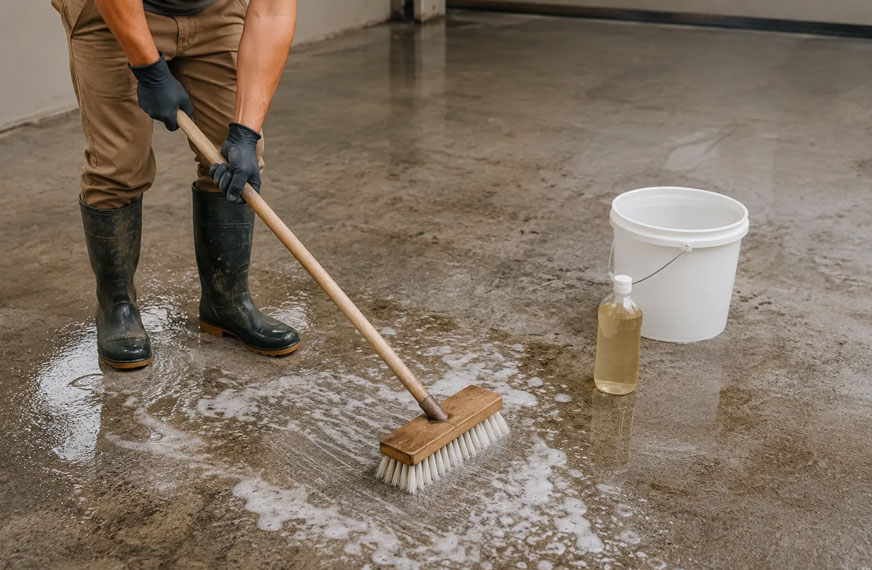
Concrete is a durable and practical material used for driveways, patios, walkways, sidewalks, pool decks, garages, parking areas, and many other exterior surfaces. Despite its strength, concrete is constantly exposed to dirt, rain, dust, vehicle fluids, leaves, algae, mildew, mud, and everyday foot traffic. Over time, these contaminants can create stains and discoloration that make clean surfaces appear worn or neglected. Regular maintenance can help preserve the appearance of concrete while making it easier to identify cracks, surface deterioration, and drainage problems. Concrete power washing can be an effective method for removing accumulated grime when the equipment, pressure, and cleaning techniques are properly matched to the surface.
Understanding Why Concrete Gets Dirty
Outdoor concrete is exposed to many conditions that contribute to gradual buildup. Dust and airborne particles settle into the textured surface, while rainfall can carry soil and organic material across patios, driveways, and walkways. Leaves can remain on the surface and leave dark stains as they decompose. Shaded areas may stay damp for longer periods, creating favorable conditions for algae, mildew, and moss. Vehicles can also introduce oil, grease, tire residue, and other contaminants. Understanding these sources makes it easier to develop a practical maintenance routine and address stains before they become increasingly difficult to remove.
Why Regular Concrete Maintenance Matters
Regular maintenance can help preserve the visual appeal and usability of concrete surfaces. When dirt and stains remain for extended periods, they may become more deeply embedded and require additional effort to remove. Routine cleaning can reduce accumulated grime and make outdoor areas look more organized. Concrete power washing can be especially useful for larger surfaces where sweeping or ordinary rinsing cannot remove embedded contaminants. Cleaning also creates an opportunity to inspect the concrete more closely. Once dirt and organic growth have been removed, cracks, chips, surface scaling, and other concerns may become easier to see.
Common Types of Concrete Stains
Concrete can develop many different types of stains depending on how the surface is used and the conditions surrounding it. Oil and grease are common around driveways, garages, and parking areas, while food and beverage spills may affect patios and outdoor entertainment spaces. Leaves and vegetation can create dark organic stains when they remain on the surface. Rust may appear near metal objects, while algae and mildew can create green, dark, or slippery-looking areas. Different contaminants may require different treatments, so identifying the type of stain before cleaning can help determine the most appropriate approach.
The Porous Nature of Concrete
Concrete may look solid, but its surface contains microscopic pores that can absorb moisture and contaminants. Oil, dirt, and organic residue can gradually move into these pores, making older stains more difficult to remove. The finish, age, texture, and condition of the concrete can also affect how readily it releases dirt. Because concrete is porous, using excessive pressure is not necessarily the best solution for every stain. A thoughtful cleaning approach considers both the surface condition and the contaminant rather than relying solely on high pressure.
Selecting Suitable Equipment
The right equipment plays an important role in achieving consistent cleaning results. Pressure-washing machines are available in different sizes and pressure ranges, and the appropriate choice depends on the type of concrete and contamination being treated. Nozzle selection, water flow, spray distance, and cleaning speed can also influence the final appearance. Equipment that is too powerful may damage a surface, while equipment that is too weak may not remove embedded dirt effectively. Experienced operators can adjust these factors according to the condition and requirements of the concrete.
Using Pressure Carefully
More pressure does not automatically mean better cleaning. Excessive pressure can remove surface material, expose aggregate, create visible lines, or worsen existing deterioration. Older concrete may be particularly vulnerable to aggressive treatment. Concrete power washing should therefore involve controlled movements and a pressure level appropriate for the specific surface. Keeping the nozzle at a consistent distance can help produce a more even result. Working systematically across the surface is generally preferable to repeatedly concentrating intense pressure on isolated stains.
Preparing the Area Before Cleaning
Preparation helps make a cleaning project safer and more efficient. Vehicles, outdoor furniture, planters, toys, decorations, and other objects should be moved away from the concrete whenever possible. Loose leaves, branches, and larger debris should be removed before washing begins. Nearby windows, walls, doors, landscaping, and outdoor equipment may need protection from water and loosened dirt. Drainage should also be considered because large amounts of water and debris can move during the cleaning process. Good preparation reduces interruptions and helps prevent avoidable problems around the work area.
Removing Organic Growth
Algae, mildew, and moss can develop on concrete when moisture remains on the surface for extended periods. These contaminants may create discoloration and can sometimes make walkways slippery. Rinsing alone may not always remove established growth, particularly when it has penetrated textured areas. Suitable cleaning products may be used when appropriate for the surface and surrounding environment. Concrete power washing can help remove loosened organic material, but recurring growth may require attention to the conditions that support it. Better drainage, reduced debris, and improved airflow can help limit future buildup.
Handling Oil and Grease
Oil and grease stains can be particularly challenging because concrete can absorb these substances. A simple rinse may remove surface residue without eliminating the deeper stain. A suitable degreasing product may need to be applied before or during the cleaning process. Cleaning agents should be selected according to the concrete’s condition and used as directed. Older stains may require more than one treatment, and some deeply absorbed discoloration may remain even after thorough cleaning. Realistic expectations are important when dealing with long-established oil contamination.
Maintaining Driveways and Parking Areas
Driveways and parking areas experience considerable exposure to vehicles, dirt, rain, tire marks, oil, and other contaminants. Over time, this combination can create uneven discoloration and make the concrete look heavily used. Regular cleaning can help restore a more consistent appearance and make future maintenance easier. Areas where vehicles regularly stop or park may require additional attention because contaminants tend to accumulate there. Before cleaning, cracks and damaged sections should be inspected so that the cleaning method can be adjusted when necessary.
Caring for Patios and Outdoor Spaces
Concrete patios are exposed to food spills, drinks, dirt, leaves, pollen, and everyday outdoor activity. Keeping these surfaces clean can improve the appearance and comfort of an outdoor living area. Furniture and decorations should be moved before washing so the entire surface can be treated consistently. After cleaning, the concrete should be allowed to dry thoroughly before items are returned. Concrete power washing can help refresh heavily soiled patios, especially when ordinary sweeping and rinsing are no longer sufficient to remove accumulated grime.
Cleaning Walkways and Pathways
Walkways are constantly exposed to foot traffic and outdoor conditions. Dirt can become embedded in textured areas, while leaves and moisture may contribute to staining and organic growth. Regular cleaning can improve the appearance of pathways and make surface problems easier to identify. Cracks, uneven sections, and damaged edges should be inspected before washing. Cleaning cannot correct structural damage, so repairs may be necessary when deterioration is present. Maintaining clean walkways as part of general property care can help create a more orderly and presentable outdoor environment.
Protecting Landscaping and Nearby Areas
Concrete cleaning can involve significant amounts of water and, depending on the situation, cleaning solutions. Nearby plants, grass, shrubs, flower beds, and trees should therefore be considered before work begins. Certain chemicals can affect vegetation if runoff reaches sensitive areas. Water flow and cleaning products should be managed responsibly to reduce unnecessary exposure. Nearby windows, painted surfaces, and outdoor furniture may also need protection. Thoughtful preparation helps ensure that the cleaning process improves the concrete without creating avoidable issues elsewhere.
Avoiding Common Cleaning Mistakes
A common mistake is assuming that maximum pressure will always produce the cleanest result. Excessive pressure can create uneven patterns or damage the surface, especially when the nozzle is held too close. Another mistake is remaining in one spot for too long, which can leave visible marks. Using an unsuitable chemical can also cause discoloration or surface deterioration. Failing to remove loose debris before washing can make the process less efficient. A controlled and methodical approach generally produces better results than relying on excessive force.
Identifying Damaged Concrete
Cleaning can reveal defects that were previously hidden beneath dirt and stains. Cracks, spalling, scaling, exposed aggregate, chips, and uneven areas may become easier to see after the surface has been washed. These conditions should be evaluated rather than ignored. Concrete cleaning does not repair structural or surface deterioration. Depending on the severity, repairs may involve patching, resurfacing, sealing, or replacement. Identifying these problems early can help property owners address them before they become more extensive.
When Professional Cleaning May Be Useful
Professional cleaning can be valuable when surfaces are large, heavily stained, difficult to access, or affected by extensive organic growth. Experienced technicians can evaluate the condition of the concrete and select suitable pressure levels, nozzles, cleaning agents, and techniques. Concrete power washing performed by a knowledgeable professional can reduce the risk of accidental damage caused by incorrect settings or poor technique. Professional assistance may also be useful when property owners do not have appropriate equipment or want consistent results across large areas.
Determining the Right Cleaning Frequency
The ideal cleaning frequency varies according to traffic, weather, surrounding vegetation, moisture levels, and the type of concrete surface. A frequently used driveway may need attention more often than a sheltered patio. Areas surrounded by trees may accumulate leaves and organic material quickly, while shaded surfaces may develop algae and mildew. Instead of following a rigid schedule, property owners can inspect their concrete periodically and clean it when visible buildup becomes significant. Routine cleaning can help prevent contaminants from becoming deeply established.
Considering Concrete Sealing
After thorough cleaning and complete drying, some concrete surfaces may benefit from an appropriate sealer. Sealing can provide additional protection against moisture and certain types of staining, depending on the product and surface. However, not every concrete area requires the same type of sealer. The age, finish, condition, and intended use of the concrete should be considered before a product is selected. A sealer should never be applied over significant dirt or moisture because doing so can interfere with adhesion and produce poor results.
Maintaining Concrete After Cleaning
A successful cleaning project should be followed by regular care. Leaves, dirt, and organic debris should be removed before they remain on the surface for extended periods. Oil and grease spills should be addressed as soon as practical to reduce absorption. Drainage should also be monitored so water does not repeatedly collect in the same areas. Concrete power washing can provide a substantial improvement, but ongoing maintenance helps preserve that improvement for longer. A simple routine can reduce the need for frequent intensive cleaning.
Improving Outdoor Appearance
Clean concrete can have a noticeable effect on the overall appearance of an outdoor property. Stained driveways, darkened patios, and dirty walkways can make surrounding landscaping and exterior features appear less maintained. Removing accumulated grime can create a cleaner foundation for other property maintenance tasks. Clean surfaces also make it easier to see cracks, discoloration, and changes that may indicate a need for repair. Maintaining concrete is therefore not only about appearance but also about keeping the surface easier to inspect and manage.
Safety Considerations
Pressure-washing equipment can create safety risks if it is used incorrectly. High-pressure water can cause injuries, damage surfaces, and propel loose debris toward people or nearby property. Wet concrete can also become slippery during and immediately after cleaning. Operators should use appropriate protective equipment and keep children and pets away from the work area. Cleaning chemicals should be handled according to their instructions. When a project involves large areas, difficult access, or unfamiliar equipment, professional assistance can provide a safer approach.
Environmental Considerations
Responsible cleaning should account for where wastewater and loosened contaminants will travel. Runoff may contain dirt, oil, cleaning agents, and organic material that should not be allowed to spread unnecessarily. Cleaning methods and products should be selected with the surrounding environment in mind. Where appropriate, runoff can be managed to reduce contact with landscaping and sensitive drainage areas. Using only the amount of cleaning product necessary for the task can also reduce unnecessary environmental impact. Good planning allows concrete surfaces to be cleaned effectively while maintaining responsible practices.
Building a Long-Term Maintenance Routine
A long-term concrete maintenance plan does not need to be complicated. Regular sweeping can remove loose dirt before it becomes embedded, while prompt attention to spills can reduce staining. Leaves and organic debris should be cleared before they remain on the surface for extended periods. Periodic inspections can identify cracks, drainage problems, and surface deterioration. Deeper cleaning can then be scheduled according to actual conditions. Combining these simple practices with appropriate sealing and timely repairs can help preserve both the appearance and functionality of concrete surfaces.
Final Thoughts
Concrete is durable, but it still requires regular care to remain clean, attractive, and functional. Dirt, oil, grease, leaves, algae, mildew, pollen, and other contaminants can gradually become embedded in porous surfaces and create difficult stains. Concrete power washing can be an effective way to remove accumulated grime when the pressure, equipment, cleaning products, and techniques are carefully selected. Proper preparation, controlled pressure, responsible runoff management, surface inspection, and ongoing maintenance all contribute to better results. By establishing a consistent cleaning routine and addressing repairs when necessary, property owners can help protect their concrete surfaces and keep outdoor areas looking their best for years to come.

