


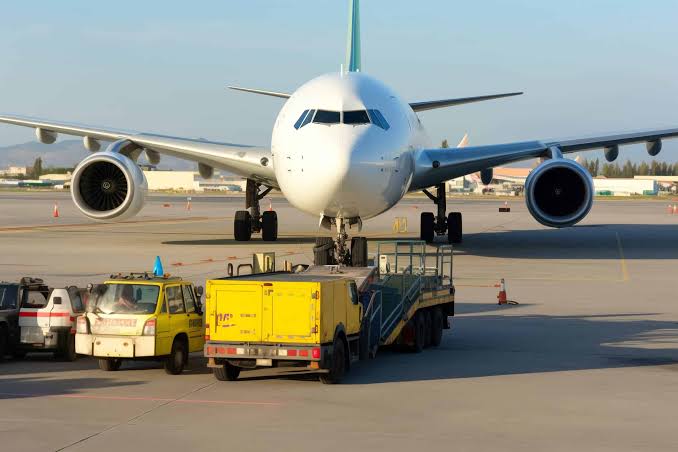
When a commercial flight cancellation delays a critical shipment, or when a supplier’s production schedule runs ahead of plan and cargo needs to move faster than any scheduled service allows, importers and exporters are left with very few options. Most of those options involve waiting. Air cargo charter is one that does not.
For US businesses that move goods internationally — whether industrial components, perishable freight, medical equipment, or high-value manufactured products — the gap between scheduled air freight and actual operational need is a recurring problem. Scheduled carriers operate fixed routes on fixed timelines. When business conditions shift, which they do constantly, that rigidity creates real cost: delayed production lines, missed delivery windows, strained client relationships, and inventory disruptions that compound over days or weeks.
This guide is written for operations managers, logistics coordinators, supply chain directors, and procurement leads who need to understand how air cargo charter works in practice — not in theory — and how to evaluate whether it fits their freight requirements in 2025.
What Air Cargo Charter Actually Means in a Freight Context
Air cargo charter is the process of contracting an entire aircraft, or a defined portion of its capacity, exclusively for the movement of a specific shipment. Unlike standard air freight, where your cargo shares space with dozens of other consignments and moves on a carrier’s predetermined schedule, a chartered aircraft operates on terms set by the shipper. The route, timing, aircraft type, and handling requirements are all negotiated in advance and structured around the freight itself.
For US importers and exporters who work with time-critical or non-standard cargo, this distinction matters considerably. A well-structured Air Cargo Charter guide will typically cover not just the mechanics of booking, but the operational conditions under which charter becomes the more rational choice compared to scheduled alternatives. Understanding those conditions is the starting point for evaluating cost and service fit.
The charter model has existed for decades across both passenger and cargo aviation. Its application in freight has grown significantly as global supply chains have become more time-sensitive, more geographically dispersed, and more exposed to disruption. The International Air Transport Association has consistently documented the expansion of cargo capacity constraints across commercial networks, which has pushed more shippers toward dedicated charter arrangements as a structural solution rather than a last resort.
Full Charter Versus Part Charter Arrangements
There are two primary ways to engage an air cargo charter: contracting the full aircraft or purchasing a defined block of space within a charter flight organized by a broker or operator. Full charter gives the shipper complete control — departure time, routing, ground handling coordination, and priority loading are all aligned to their shipment alone. Part charter arrangements can reduce cost for smaller volumes, but they reintroduce some of the scheduling constraints that make standard freight less flexible.
For most US exporters moving time-sensitive freight, the decision between full and part charter comes down to cargo volume and urgency. A full charter is most defensible when the cost of delay — measured in production downtime, contract penalties, or perishable loss — exceeds the premium over scheduled freight. That calculation is rarely abstract. It usually involves a specific shipment, a specific deadline, and a specific consequence if the deadline is missed.
When Importers and Exporters Use Charter Instead of Scheduled Freight
Scheduled air freight works well when cargo volumes are predictable, timelines are flexible, and the routes involved are well-served by commercial carriers. Many US importers and exporters operate comfortably within that framework for routine shipments. Charter becomes relevant when one or more of those conditions breaks down.
The most common triggers for air cargo charter among US-based shippers include supply chain disruptions caused by port congestion or carrier cancellations, production emergencies that require urgent delivery of components or equipment, seasonal surges that exhaust available commercial capacity, and cargo types that cannot move on standard flights due to size, weight, or hazardous classification requirements.
Cargo That Does Not Fit Standard Commercial Networks
A significant portion of air cargo charter demand in the US comes from freight that commercial airlines cannot physically accommodate. Oversized industrial machinery, oil and gas equipment, aerospace components, and large humanitarian or government shipments often exceed the dimensional limits of standard cargo holds. Even when size is not the issue, certain commodities — live animals, temperature-sensitive pharmaceuticals, dangerous goods — require aircraft configurations and ground handling protocols that scheduled carriers may not offer on specific routes or within required timeframes.
Charter operators typically work with a range of aircraft types specifically suited to non-standard freight. This includes freighter aircraft with nose-loading capability, aircraft with reinforced floors for heavy cargo, and temperature-controlled configurations for sensitive goods. The ability to match the aircraft to the cargo, rather than adapting the cargo to fit available aircraft, is one of the more practical advantages of the charter model.
Time-Critical Shipments Where Delay Has a Measurable Cost
The economics of air cargo charter are most straightforward when delay has a direct and calculable cost. Automotive manufacturers running just-in-time production lines, aerospace contractors supplying components on tight assembly schedules, and medical device companies meeting surgical or regulatory deadlines all share a common characteristic: the cost of not delivering on time is often far greater than the cost of chartering an aircraft to ensure delivery.
In these contexts, charter is not a luxury decision. It is a risk management decision. The premium paid for a dedicated aircraft is offset against the cost of a production stoppage, a contract breach, or a lost client relationship. Framed this way, charter frequently represents the lower-cost option when the full picture is considered.
How the Air Cargo Charter Process Works for US Shippers
The charter process begins with a freight inquiry that includes cargo specifications, origin and destination, required delivery window, and any special handling requirements. A charter broker or operator then identifies suitable aircraft types, checks availability, and presents routing options with associated costs. Unlike booking scheduled freight through an online platform, air cargo charter requires direct communication between the shipper and the operator or broker.
This communication-heavy process is not a flaw in the system. It exists because every charter arrangement is different. Two shipments of identical weight may require entirely different aircraft configurations depending on their dimensions, classification, or the airports available at origin and destination. The back-and-forth involved in confirming a charter flight is the mechanism by which those variables get resolved before the aircraft departs.
The Role of Brokers Versus Direct Operators
US importers and exporters typically access air cargo charter through one of two channels: a charter broker who sources aircraft from multiple operators, or directly through an operator that owns or manages a specific fleet. Brokers offer wider access to aircraft options and can move quickly when availability is tight. Direct operators offer deeper knowledge of their specific aircraft and may provide more consistent handling for repeat shipments on familiar routes.
For one-off emergency charters, brokers are often the faster starting point. For recurring or program-based charter needs — such as a seasonal agricultural exporter moving perishable goods on a weekly basis — direct operator relationships tend to deliver better consistency and more predictable pricing over time.
Documentation and Compliance Requirements
Air cargo charter does not simplify customs and trade compliance. US exporters are still subject to Export Administration Regulations and must file Electronic Export Information through the Automated Export System for most international shipments. Importers must comply with Customs and Border Protection requirements, including advance cargo filing and applicable duty and classification rules.
What charter does change is the coordination timeline. Because the flight schedule is controlled by the shipper, there is more predictability around when documents need to be filed and when cargo will arrive at the destination. That predictability reduces the last-minute pressure that often leads to documentation errors on time-critical shipments.
Cost Factors That Influence Air Cargo Charter Pricing
Air cargo charter pricing is not standardized in the way that scheduled freight rates are. Each quote reflects a combination of aircraft type, distance, routing, turnaround requirements, ground handling costs, fuel conditions, and crew positioning. Understanding the major cost drivers helps shippers evaluate quotes accurately and avoid surprises after a contract is signed.
Aircraft positioning — the cost of flying an empty aircraft to the origin airport — is one of the most significant variables in charter pricing. When an operator has an aircraft already close to the departure point, positioning costs are low. When the nearest available aircraft is on the opposite side of the country or overseas, that positioning flight adds meaningfully to the total cost. Brokers with access to real-time fleet positioning data can often identify lower-cost options that would not be obvious to a shipper working independently.
Comparing Charter Cost Against Total Freight Cost
A common mistake among shippers evaluating air cargo charter for the first time is comparing the charter price directly against a scheduled freight rate on a per-kilogram basis. That comparison misses the operational context. Charter pricing reflects access to a dedicated aircraft, a guaranteed departure, and a controlled handling chain. Scheduled freight pricing reflects a spot on a shared service with inherent variability at every stage.
The more accurate comparison includes the probability of delay on a scheduled service, the downstream cost if that delay occurs, and the total handling and transit time for each option. When those factors are included, the cost differential between charter and scheduled freight often narrows considerably — and in high-stakes situations, it disappears entirely.
Selecting an Air Cargo Charter Provider in 2025
The criteria for evaluating an air cargo charter provider go beyond price and aircraft availability. Reliability, communication quality, and operational experience with cargo types similar to yours are the factors that determine whether a charter arrangement delivers on its premise.
Providers should be able to demonstrate experience with the specific cargo classification involved, familiarity with the airports and airspace at both origin and destination, and clear processes for managing weather, mechanical, or regulatory delays. A provider that can only operate smoothly when everything goes to plan is a liability on a time-critical shipment. The ability to adapt — and to communicate clearly when adaptation is needed — is what separates capable operators from those who simply fill a market gap.
- Verify that the operator or broker holds appropriate certifications and authority for the routes and aircraft types involved in your shipment.
- Confirm that the provider has direct experience with your cargo category, particularly if the freight involves hazardous materials, perishables, or oversized dimensions.
- Ask specifically how the provider manages delay scenarios, including who communicates with the shipper, at what point, and what alternative arrangements are available.
- Review contract terms carefully for fuel surcharge provisions, positioning cost allocation, and what constitutes a cancellation or force majeure event.
- For recurring charter needs, evaluate whether the provider can offer program pricing or fleet priority arrangements that reduce per-flight cost over time.
Conclusion: Evaluating Air Cargo Charter as a Practical Freight Option
Air cargo charter is not the right solution for every shipment. For routine, predictable freight moving on well-served commercial routes, scheduled air freight continues to offer adequate capacity at lower cost. But for the significant portion of US import and export activity that involves non-standard cargo, compressed timelines, supply chain disruptions, or route gaps in commercial networks, charter represents a legitimate and often essential operational tool.
The shippers who use charter most effectively are not those who treat it as a crisis response. They are the ones who understand in advance which freight categories may require it, which cost thresholds justify it, and which providers are equipped to execute it reliably. That preparation — knowing when charter makes sense and how to engage it quickly — is what determines whether the option is actually useful when it is needed.
In 2025, as commercial cargo capacity continues to face pressure from demand growth, fuel costs, and route rationalization, having a clear understanding of air cargo charter as part of a broader freight strategy is becoming less optional for US importers and exporters who move anything other than the most straightforward commodity freight. The value is not in the aircraft itself. It is in the control, reliability, and certainty that a dedicated flight provides when the alternative is waiting.

