


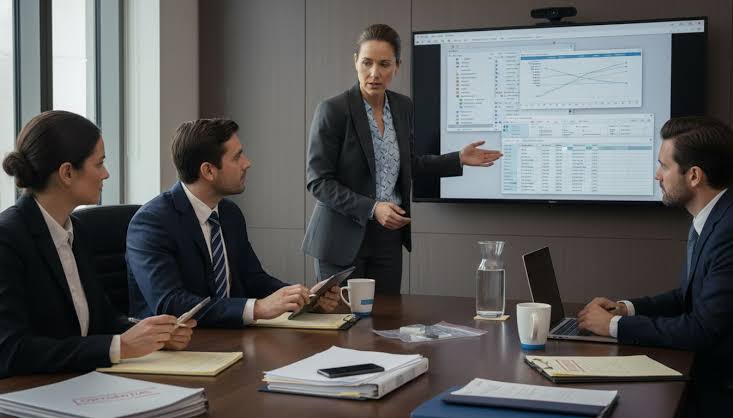
In courtrooms and legal proceedings across the country, one of the most persistent challenges attorneys face is the gap between what the evidence shows and what a jury or judge can actually comprehend. Depositions, accident reports, medical records, and engineering schematics are all critical, but they exist in formats that demand a level of technical fluency most jurors do not have. When that gap goes unaddressed, even well-constructed cases struggle to land with the clarity they deserve.
Over the past two decades, visual reconstruction technology has matured significantly. Legal teams are now working with animation specialists earlier in case development, not as a last-minute courtroom flourish, but as a core component of how they build and present their arguments. The results, across many practice areas, speak for themselves.
This article outlines the ten categories of legal cases where this approach consistently produces the most meaningful results, and explains why the nature of each case type makes visual reconstruction especially effective.
1. Motor Vehicle Accident Litigation
Forensic Animations have become one of the most reliable tools available to legal teams handling motor vehicle accident cases. When a collision involves disputed timing, speed, visibility conditions, or right-of-way, a written or verbal description of the event rarely captures enough detail to resolve the dispute. A jury sitting in a courtroom has no frame of reference for what a vehicle traveling at a certain speed looks like when it enters an intersection, or how much stopping distance is realistically available on a wet road at night.
Animation specialists work from police reports, traffic camera data, vehicle telemetry, and physical measurements of the scene to reconstruct the sequence of events with precision. The result is a visual timeline that jurors can follow without needing any engineering background. You can explore how Forencic Animations are applied across different types of legal proceedings to understand the range of cases where this technology is now standard practice.
Why This Case Type Benefits Most
Motor vehicle cases often hinge on moments that lasted less than a second. Reconstructing those moments in a way that communicates cause and effect, without distortion or overstatement, requires a level of spatial and temporal precision that still images or diagrams cannot provide. Animation allows both parties to present their version of events in a format that holds up to cross-examination, since the underlying data points are verifiable and the reconstruction methodology can be challenged in court.
2. Wrongful Death Claims
Wrongful death litigation places extraordinary pressure on legal teams to communicate both the facts of an incident and its full consequences. These cases often involve multiple contributing factors, extended timelines, and complex chains of causation. When a family is seeking accountability for a preventable death, the ability to present a coherent, visually supported account of what happened is not just a strategic advantage — it is often the difference between a verdict and a settlement.
The Emotional and Factual Balance
Animation in wrongful death cases must walk a careful line. It needs to be factually grounded and defensible under scrutiny, while also communicating the human reality of the event to a jury. Skilled animation teams work closely with medical examiners, biomechanical experts, and accident reconstructionists to ensure the visual narrative stays anchored to the evidence, avoiding anything that could be challenged as speculative or inflammatory.
3. Premises Liability Cases
When someone is injured on a property due to a hazardous condition, the central question is often whether the property owner knew or should have known about the danger. Establishing that requires showing the physical environment in a way that makes the hazard visible and contextually meaningful. A photograph of a wet floor or an uneven step may be technically accurate but fail to convey why that condition was dangerous given the lighting, traffic patterns, or the victim’s line of sight.
Reconstructing Environment and Circumstance Together
Premises liability animations can model entire environments, including the time of day, lighting conditions, surrounding foot traffic, and sight lines available to both the injured party and the property owner or manager. This contextual reconstruction is often what turns a marginal case into a compelling one, because it shows not just that something happened but why it was foreseeable.
4. Medical Malpractice Litigation
Medical malpractice cases present some of the most technically complex content in all of litigation. Explaining a surgical error, a delayed diagnosis, or a medication interaction to a jury requires communicating information that medical professionals spend years learning. Even when expert witnesses are articulate and credible, jurors often leave their testimony without a clear picture of what actually went wrong and why it mattered.
Translating Clinical Detail Into Accessible Narrative
Forensic animation in medical malpractice cases can illustrate internal anatomy, model surgical procedures, and demonstrate how a deviation from standard care produced a specific outcome. The animation does not replace the expert witness — it gives that testimony a visual foundation that jurors can retain and reference during deliberation. According to the American Bar Association, jurors retain significantly more information when it is presented through both verbal and visual channels simultaneously.
5. Product Liability Cases
When a product fails and causes injury, the litigation often involves competing accounts of how the product was used, what design or manufacturing defect was present, and how that defect contributed to the harm. Engineering testimony is essential but rarely sufficient on its own. Jurors cannot be expected to understand material stress tolerances or failure point analysis without visual support.
Showing the Mechanism of Failure
Animation allows legal teams to model a product’s internal components, show how stress accumulated over normal use, and isolate the specific point of failure. This is particularly valuable when the defense argues that user error caused the incident rather than a product defect. A side-by-side animation of proper versus actual conditions can make that distinction unmistakably clear.
6. Construction Accident Litigation
Construction sites are environments where many variables interact simultaneously. Equipment, worker positioning, site conditions, scheduling pressure, and safety protocol compliance all intersect in ways that can be difficult to separate when something goes wrong. Reconstructing a construction accident requires integrating all of those elements into a coherent visual account.
Multi-Factor Causation and Responsibility
Forensic animations in construction cases are particularly effective when multiple parties share some degree of responsibility. They allow legal teams to map out the contributions of each party, such as the equipment operator, site supervisor, contractor, and equipment manufacturer, in a way that is clear and sequentially organized. This matters greatly in cases where apportioning liability requires the jury to understand a chain of events rather than a single moment.
7. Workplace Injury and OSHA Violation Cases
Cases involving workplace injuries often depend on demonstrating that a specific safety standard was violated and that the violation directly caused the harm. OSHA regulations, as documented by the Occupational Safety and Health Administration, are detailed and technical, and simply citing a regulation in a courtroom rarely communicates what compliance would have looked like in practice.
Showing What Should Have Happened
Animation can show both the circumstances that led to an injury and a parallel reconstruction of what would have occurred had proper safety measures been in place. This comparative approach is especially useful because it shifts the discussion from abstract compliance language to a concrete visual comparison that jurors can evaluate on their own terms.
8. Intellectual Property and Patent Disputes
Patent litigation frequently requires explaining how a technology or device works at a mechanical or electronic level. The core question is often whether one product or process infringes on a protected design, and answering that question requires the jury to understand the technical architecture of both products well enough to make a meaningful comparison.
Making Technical Overlap Visible
Forensic animations in patent cases can model internal mechanisms, show the steps of a process in sequence, and highlight the specific elements where overlap or distinction exists. This removes the burden from expert witnesses to carry the entire explanatory load and allows the comparison to be made in a format that is both accessible and visually precise.
9. Criminal Defense and Prosecution Proceedings
In criminal proceedings, the stakes of miscommunication are exceptionally high. Both defense and prosecution teams use animation to reconstruct crime scenes, model the physical dynamics of an assault or shooting, and challenge or support forensic evidence. Jurors in criminal cases are expected to apply a high evidentiary standard, and visual reconstruction can play a critical role in either meeting or undermining that standard.
The Role of Timeline Clarity
Many criminal cases turn on questions of timing and physical possibility. Could the defendant have been in the location at the time in question? Is the prosecution’s reconstruction of events physically consistent with the evidence? Forensic animation can model those scenarios with spatial and temporal accuracy, giving the jury a grounded basis for evaluating competing accounts.
10. Aviation and Maritime Accident Cases
Accidents involving aircraft or watercraft are among the most technically demanding cases in litigation. They involve specialized terminology, regulatory frameworks, and physical dynamics that are entirely outside most jurors’ experience. Reconstruction in these cases requires integrating weather data, navigation records, communication logs, and mechanical analysis into a unified visual account.
Complexity That Demands Visual Support
Aviation and maritime cases also tend to involve catastrophic outcomes and multiple parties, including manufacturers, operators, maintenance providers, and regulatory bodies. Forensic animations allow legal teams to trace the contributing factors across those parties in a format that maintains clarity even as the underlying complexity increases. Without visual reconstruction, these cases risk collapsing under the weight of their own technical detail.
Closing Observations
Across all ten of these case types, the common thread is the same: the evidence exists, the expert knowledge is available, but the path between that knowledge and a jury’s genuine understanding is not automatic. Forensic animation bridges that path without simplifying or distorting the underlying facts. It translates complexity into comprehension without sacrificing accuracy.
Legal teams that engage with animation specialists early in case development consistently report that it changes how they prepare expert witnesses, how they structure their arguments, and how jurors engage during trial. The technology is not a shortcut or a novelty. It is a communication tool that reflects the reality that modern litigation involves content that was never designed to be communicated through oral testimony alone.
As court systems continue to handle increasingly complex technical cases, the legal professionals who invest in clear visual communication are the ones best positioned to serve their clients effectively — regardless of which side of the case they represent.

