


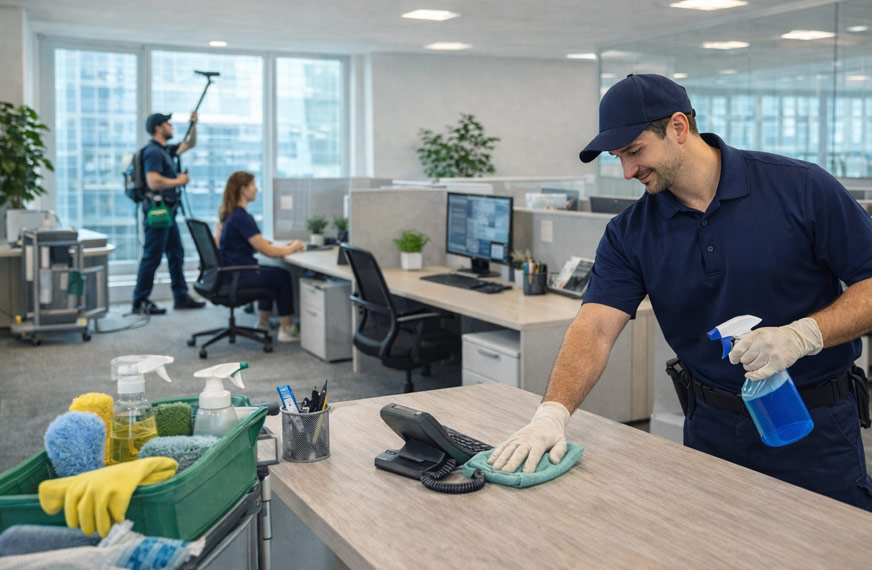
Maintaining a clean business environment is an important responsibility for organizations of every size. Employees spend a significant portion of their day inside workplaces, while customers, clients, suppliers, and visitors may regularly enter the same facilities. Dust, dirt, food residue, fingerprints, waste, and other forms of buildup can appear quickly when a property experiences continuous activity. Commercial cleaning provides a structured way to manage these challenges through planned cleaning routines, detailed maintenance, and attention to frequently used areas. A well-maintained workplace can feel more comfortable and organized while presenting a professional image to everyone who enters the building. Establishing appropriate cleaning practices can also help businesses protect their furniture, flooring, fixtures, and other valuable property from unnecessary wear.
The Importance of a Clean Business Environment
A clean workplace creates an environment where employees can perform their responsibilities without being surrounded by unnecessary dirt, clutter, or unpleasant odors. Reception areas, workstations, meeting rooms, kitchens, restrooms, hallways, and shared facilities all contribute to the overall impression of a business. Commercial cleaning focuses on maintaining these spaces consistently rather than allowing dirt to accumulate until occasional deep cleaning becomes necessary. Regular attention can make daily maintenance easier because spills, dust, and waste are addressed before they become more difficult to remove. A clean environment can also help employees feel that their workplace is being properly cared for. For customers and visitors, visible cleanliness can contribute to a more positive perception of the organization.
Developing a Customized Cleaning Routine
Every business facility has different cleaning requirements, which means a standard routine may not always be sufficient. An office with limited public access may have different needs from a busy retail facility, restaurant, educational building, or large shared workspace. Commercial cleaning schedules should consider the number of people using the property, operating hours, floor surfaces, restroom usage, food preparation areas, and other factors that affect cleanliness. Daily tasks can include waste removal, restroom maintenance, floor care, and cleaning high-touch surfaces, while less frequent tasks may involve carpets, windows, upholstery, and detailed dusting. Creating a written schedule makes responsibilities easier to track. Regular reviews can also help businesses adjust the routine when usage patterns or operational requirements change.
Keeping Reception and Entry Areas Presentable
The entrance is often the first part of a business that visitors see, making it an important area for maintaining a professional appearance. Dirt and debris can accumulate near entrances because people bring particles indoors on their shoes. Doors, handles, mats, floors, reception desks, seating areas, and glass surfaces can all require regular attention. Commercial cleaning can help keep these areas presentable by addressing visible dirt and frequently touched surfaces throughout the day or according to an appropriate schedule. Floor mats should be cleaned or replaced when necessary so they can continue trapping dirt effectively. Maintaining an attractive entrance can create a more organized first impression while also helping prevent dirt from spreading into other areas of the building.
Maintaining Office Workstations
Desks and workstations can collect dust, fingerprints, crumbs, paper debris, and other materials during normal business activities. Shared equipment such as keyboards, phones, printers, tables, and chairs may also require regular attention. Commercial cleaning teams should use appropriate methods when cleaning electronic equipment because excessive moisture or unsuitable products can cause damage. Employees can contribute by keeping their work areas organized and removing personal waste regularly. Cleaning schedules should be designed around business operations so that important work is not unnecessarily interrupted. Consistent workstation maintenance can make offices feel more orderly and can help employees return to clean, organized spaces each day.
Giving Special Attention to Restrooms
Restrooms require frequent and thorough maintenance because they are shared spaces that can experience heavy daily use. Toilets, sinks, faucets, mirrors, dispensers, floors, partitions, handles, and other surfaces should be cleaned according to an appropriate schedule. Commercial cleaning should also include replenishing essential supplies such as soap, paper products, and other restroom necessities. Odor control is another important consideration because unpleasant smells can quickly affect perceptions of the entire facility. High-use restrooms may need multiple inspections throughout the day rather than a single cleaning session. Maintaining a consistent restroom routine can support a more comfortable environment for employees, customers, and visitors.
Caring for Different Types of Flooring
Commercial properties can contain several flooring materials, including carpet, tile, hardwood, vinyl, laminate, stone, and other surfaces. Each material has different maintenance requirements, so cleaning procedures should be selected carefully. Commercial cleaning can include vacuuming, sweeping, mopping, stain removal, polishing, or periodic deep cleaning depending on the flooring type. High-traffic areas may need more frequent attention because dirt and abrasive particles can cause visible wear over time. Carpets may benefit from scheduled deep cleaning to remove embedded debris and stains. Proper floor maintenance not only improves appearance but can also help preserve flooring materials and reduce the need for premature replacement.
Cleaning Shared Break Rooms
Break rooms and employee kitchens can quickly become messy because food preparation and eating produce crumbs, spills, grease, packaging, and other waste. Countertops, tables, sinks, appliance handles, cabinet fronts, floors, and waste containers should be included in regular cleaning routines. Commercial cleaning can help keep shared food areas hygienic and pleasant for employees. Refrigerators, microwaves, coffee stations, and other appliances may also require periodic attention depending on workplace policies. Waste should be removed before bins become overloaded or develop unpleasant odors. Employees should also be encouraged to clean up after themselves so that professional cleaning efforts are supported throughout the day.
Managing High-Touch Surfaces
Many areas of a workplace are touched repeatedly by multiple people. Door handles, light switches, elevator controls, handrails, shared tables, counters, phones, and other frequently handled surfaces can accumulate dirt through continuous use. Commercial cleaning programs should identify these high-touch areas and determine how frequently they should be cleaned based on the type of facility and level of activity. Appropriate products should be selected for each surface to avoid damage while achieving the desired cleaning result. Cleaning and disinfection should also be treated as distinct processes, with procedures selected according to the specific purpose. Consistent attention to frequently touched areas can contribute to a cleaner and more comfortable workplace.
Keeping Windows and Glass Clean
Windows, mirrors, glass doors, and interior partitions can become marked with fingerprints, dust, smudges, and streaks. These surfaces are particularly noticeable in reception areas, conference rooms, retail spaces, and other areas where appearance matters. Commercial cleaning may include routine interior glass maintenance along with periodic cleaning of accessible exterior surfaces. Proper tools and products can help prevent streaking and protect delicate finishes. Clean windows can also allow more natural light to enter a facility, which may make rooms appear brighter and more inviting. Glass cleaning should be included in the overall maintenance schedule rather than being treated as an occasional task only when surfaces become visibly dirty.
Controlling Dust and Airborne Debris
Dust can settle on desks, shelves, cabinets, vents, ledges, equipment, and decorative features throughout a building. If dust is not removed regularly, it can make surfaces look neglected and may contribute to an uncomfortable indoor environment. Commercial cleaning routines can include systematic dusting of accessible surfaces and appropriate cleaning around ventilation areas. High-level surfaces may require specialized equipment and additional safety precautions. Businesses should also ensure that their heating and cooling systems receive appropriate technical maintenance because cleaning visible surfaces alone cannot address all ventilation-related issues. Reducing unnecessary dust buildup can help maintain a cleaner-looking facility and make routine cleaning more effective.
Handling Workplace Waste
Waste management is a basic but essential part of facility cleanliness. Office paper, food packaging, disposable supplies, and other waste can accumulate quickly in busy workplaces. Commercial cleaning programs should include regular emptying of bins, replacement of liners, cleaning of containers, and appropriate separation of recyclable materials when required. Waste should be removed before containers overflow or begin producing unpleasant odors. Special waste streams may require separate procedures depending on the type of business and applicable requirements. Clearly labeled waste stations can also encourage employees and visitors to dispose of materials correctly. An organized waste-management system contributes to a cleaner appearance and reduces unnecessary mess throughout the facility.
Periodic Deep Cleaning
Routine cleaning handles everyday maintenance, but some areas require deeper attention at scheduled intervals. Carpets, upholstery, baseboards, walls, high-level surfaces, window frames, corners, and other less frequently cleaned areas can accumulate significant buildup over time. Commercial cleaning programs can incorporate periodic deep-cleaning sessions to address these areas thoroughly. The frequency of deep cleaning depends on building size, usage, industry, foot traffic, and specific environmental conditions. Seasonal cleaning can also be useful for refreshing the workplace after periods of particularly heavy use. Combining everyday maintenance with deeper periodic work can help maintain a consistently high standard throughout the facility.
Selecting Safe Cleaning Products
Cleaning products should be selected according to the materials being cleaned and the specific purpose of the task. Glass, wood, stone, metal, carpet, painted walls, and plastic surfaces may each require different products or techniques. Commercial cleaning teams should follow manufacturer instructions and use products in the correct concentrations. Cleaning chemicals should never be mixed unless the instructions specifically allow it because certain combinations can create dangerous reactions. Proper storage and labeling are also important, especially in facilities where cleaning supplies are kept near employees or customers. When suitable products are used correctly, businesses can achieve effective results while reducing the risk of surface damage and unnecessary exposure.
Supporting Employee Comfort
A clean workplace can contribute to a more comfortable daily experience for employees. Clean desks, fresh common areas, well-maintained restrooms, and tidy break rooms can help create an environment where people feel more comfortable carrying out their responsibilities. Commercial cleaning supports these conditions by maintaining shared areas and reducing the buildup of dirt, waste, and unpleasant odors. Employees can also play a role by keeping personal spaces organized and following workplace cleanliness policies. Cleaning schedules should be communicated clearly so employees understand when areas may be unavailable temporarily. A cooperative approach can make it easier to maintain consistent standards without unnecessarily disrupting business activities.
Protecting Business Assets
Regular cleaning can help protect floors, furniture, fixtures, equipment, and other physical assets from avoidable deterioration. Dirt and abrasive particles can contribute to wear when they remain on floors or surfaces for extended periods. Spills can also cause staining or damage if they are not addressed promptly. Commercial cleaning can help reduce these risks by establishing regular maintenance procedures and responding to specific cleaning needs. Proper cleaning methods are particularly important for expensive materials and specialized equipment. Protecting physical assets through routine care may help businesses reduce unnecessary repair and replacement costs over time.
Working With a Professional Cleaning Provider
Businesses that lack the staff, equipment, or time required for detailed cleaning may consider working with a professional provider. When evaluating a service, companies should consider experience, available cleaning methods, scheduling options, communication practices, insurance, and the ability to meet the specific requirements of the facility. Commercial cleaning providers may offer customized schedules based on business hours and building usage. A clear agreement should explain which areas will be cleaned, how often tasks will occur, what supplies are included, and how concerns will be handled. Regular communication between the business and cleaning provider can help maintain expectations and address changing requirements.
Reviewing Cleaning Standards Regularly
A cleaning program should not remain unchanged if the needs of a business evolve. Changes in staffing, operating hours, building layout, customer traffic, or seasonal conditions can affect how frequently certain areas require attention. Commercial cleaning schedules should therefore be reviewed periodically to determine whether the existing routine remains effective. Facility managers can inspect common areas, restrooms, floors, workspaces, and other important locations to identify recurring problems. Feedback from employees and visitors can also highlight areas that may need additional attention. Adjusting the cleaning program when necessary can improve efficiency while ensuring that important spaces receive appropriate care.
Conclusion
A clean commercial environment requires consistent planning, appropriate methods, and regular attention to the areas that experience the greatest amount of use. Offices, reception areas, restrooms, break rooms, floors, windows, shared equipment, and high-touch surfaces all contribute to the overall condition of a facility. Commercial cleaning provides a structured approach to maintaining these spaces while supporting a professional, comfortable, and organized workplace. Combining daily maintenance with periodic deep cleaning can help protect surfaces, reduce buildup, and preserve the appearance of business facilities. By creating clear schedules, selecting suitable cleaning products, monitoring results, and adjusting routines as needs change, businesses can maintain cleaner environments that serve employees, customers, and visitors effectively.

