


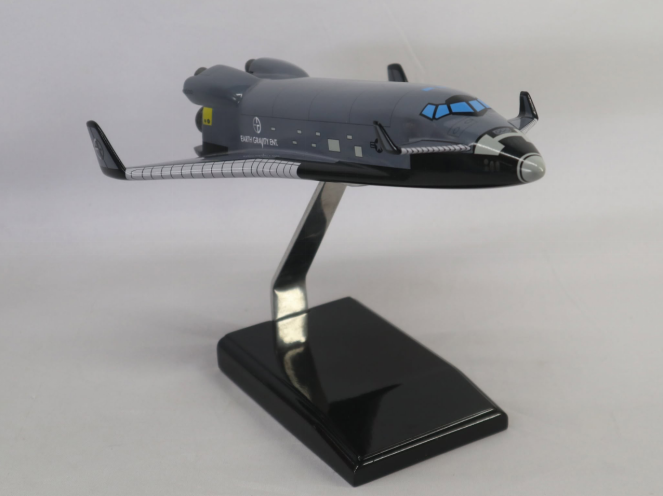
Companies commission replicas for many reasons. A scaled-down headquarters building is a conversation piece in the lobby. A model of the product line goes on a trade show stand. A model of the company’s first aircraft, vessel or delivery truck marks a milestone in its history. In each case the object is doing a business job, and it should be bought like any other business purchase: with a clear brief, a realistic timeline and a budget that matches the ambition.
Most disappointing commissions come from skipping that groundwork. The notes below should save you the usual mistakes.
Start With the Job the Model Has to Do
A model for a reception desk, a model for an exhibition and a model given as a gift to a long-standing client are three different briefs. Where it will sit decides the size. How many people will see it, and from how far away, decides the level of detail. Whether it will travel decides how robust it has to be.
Decide this before talking to any maker. It is the single most useful thing you can do, because everything else follows from it. Companies that already own custom model airplanes for client lounges and aviation-related events tend to say the same thing: the best results came from knowing the purpose first and the design second.
Choose the Scale to Match the Space
Scale is the decision people underestimate most. A model that looks right in a photograph can look lost on a boardroom table or overwhelm a small display case.
Measure the actual space, including the clearance around it, and work backwards. A longer subject such as an airliner or a ship eats space quickly, while a vehicle or building can afford a more generous scale. If the model has to ship, add the dimensions of the packaging too. A good maker will help you convert real-world dimensions into model size before work starts, and online scale calculators make the sums easy to check yourself.
Write a Brief the Maker Can Actually Use
A good brief is short but specific. Include:
- The subject: the exact vehicle, aircraft, vessel or building, with the year, variant and any modifications.
- Reference material: photographs from several angles, drawings, and livery or paint specifications.
- Identifying details: registration numbers, logos, plaques and any text that must appear exactly as it does on the original.
- The deadline: the date you need it, and the event or occasion it is tied to.
Details like registration numbers and logo placement are where replicas succeed or fail. If the real thing carries a particular badge, stripe or number, the model should carry it too, and the maker can only do that if you supply the evidence.
Understand Handcrafted Versus Mass-Produced
Mass-produced models are priced low because the tooling cost is spread over thousands of units. That works for generic subjects but not for yours. If the subject is unusual, such as a specific company vehicle, a discontinued model or a one-off modification, there will not be an off-the-shelf version, and the only way to get it right is to commission it.
Handcrafted work is slower and costs more per piece, but it can match your specification instead of forcing you to accept someone else’s. For vehicles in particular, personalized model cars can reproduce a specific colour, trim level, wheel choice and set of markings, so a fleet owner or dealership can have the exact vehicle rather than a close relative of it.
Plan the Timeline and Budget Honestly
Careful hand work takes time, and rushing it shows in the finish. Ask the maker for a schedule up front, build in time for review and revisions, and allow extra if the model is destined for a fixed date such as a launch or an anniversary.
On budget, expect cost to follow three things: size, level of detail and how much original research the build needs. A larger model with working or fine-scale features costs more than a compact display piece. Agree the budget at the outset so the maker can recommend the right approach, rather than finding out halfway through that expectations and funds do not match.
Ask for Progress Updates and Approve in Stages
For any significant commission, ask to see work in progress. Photographs at the key stages let you catch a wrong shade, a missing detail or a misread reference while the fix is still easy. Agreeing sign-off points in advance protects both sides and avoids surprises at delivery.
Also confirm what happens at the end: how the model will be packed, who is responsible in transit, and what care the finished piece needs. A well-made replica should last for years, and a few simple handling instructions help it stay that way.
The Bottom Line
A custom replica rewards the same discipline as any other business investment. Know what it is for, size it to fit, brief the maker properly, and agree the schedule and cost in writing. Do that, and you end up with an object that represents your company well for a long time rather than a rushed purchase you wish you had planned better.

