


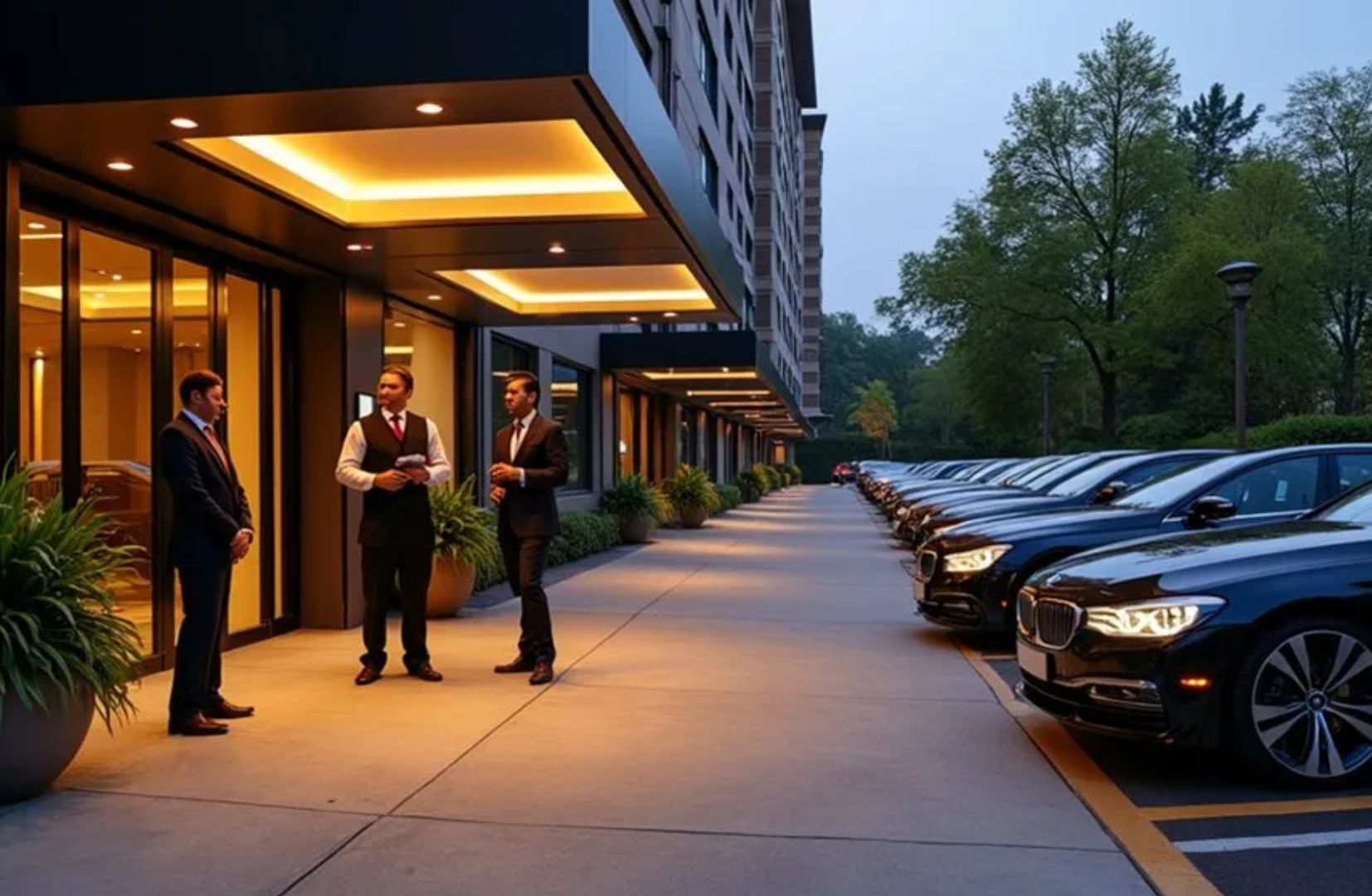
A well-planned parking area is an important part of the overall guest experience at any hotel. Although travelers may spend most of their time inside guest rooms, restaurants, meeting spaces, and recreational facilities, their first interaction with a property often begins when they arrive by car. A clean, accessible, organized, and properly maintained parking area can create a positive first impression, while confusing layouts, damaged pavement, poor lighting, or inadequate spaces can quickly become sources of frustration.
A hotel parking lot must serve several purposes at the same time. It needs to accommodate guests, employees, service vehicles, deliveries, and sometimes event attendees without creating unnecessary congestion. It should provide safe pedestrian routes, clear traffic movement, appropriate drainage, effective lighting, and convenient access to entrances. Successful planning therefore requires more than simply determining how many vehicles can fit within a given area. The design must consider how people and vehicles interact throughout the property.
Understanding the Role of Parking
Parking is an essential component of hotel infrastructure because it connects transportation directly with the guest experience. Visitors need to know where they can leave their vehicles, how they can reach the main entrance, and where they should go when checking in or checking out.
A poorly organized parking area can create confusion before guests even enter the building. Vehicles may compete for limited spaces, pedestrians may have difficulty finding safe walking routes, and drivers may struggle to identify entrances and exits.
A carefully designed parking environment can make arrival much more straightforward. Clearly marked spaces, logical circulation routes, visible signs, and convenient pedestrian connections help create an environment that feels organized and easy to navigate.
Planning the Layout
The layout should be designed around the expected traffic patterns of the property. Designers need to consider where vehicles enter, where they park, how they circulate, and how they leave.
Parking spaces should be arranged to provide sufficient room for vehicles to maneuver. The exact dimensions and layout should follow applicable standards and regulations, including requirements related to accessibility and emergency access.
The relationship between parking spaces and building entrances is also important. Guests should not have to cross unnecessarily long or confusing routes to reach the lobby. At the same time, pedestrian movement should be separated from areas where vehicle traffic is moving quickly.A logical layout reduces congestion and makes the property easier for first-time visitors to understand.
Creating Convenient Guest Access
Convenience is particularly important for hotels because guests may arrive with luggage, children, mobility equipment, or other belongings. Parking should provide reasonable access to entrances without forcing guests to navigate difficult or unsafe routes.
Drop-off zones can help manage short-term arrivals near the main entrance. These areas should be clearly identified so that vehicles stopping briefly do not block normal traffic.Longer-term parking can then be positioned in a way that supports smooth circulation. Separating different parking functions can reduce confusion and prevent vehicles from stopping in areas intended for through traffic.
Accessible parking is an essential consideration for any hotel. Appropriate accessible spaces should be positioned according to applicable accessibility requirements and connected to accessible routes leading toward building entrances.
These spaces should be clearly marked and maintained so that their purpose remains obvious. Access aisles and surrounding areas should remain free of obstructions.
Accessibility should extend beyond the parking space itself. Guests need a continuous, usable path from their vehicle to the building, and that route should be considered during the overall design process.Following applicable accessibility standards is important not only for compliance but also for providing a more inclusive experience for guests.
Improving Traffic Flow
Traffic circulation can have a major influence on how efficiently a parking area operates. Vehicles should be able to enter, locate available spaces, maneuver, and exit without unnecessary conflicts.One-way circulation may be useful in certain layouts, while two-way movement may be appropriate in others. The best arrangement depends on the size and shape of the property, the number of spaces, and expected traffic volume.
Special attention should be given to intersections within the parking area. Tight turns, blind corners, and poorly positioned obstacles can create safety concerns.
Clear directional signs and pavement markings can help drivers understand where they should travel and reduce hesitation in busy areas.Visitors unfamiliar with a property should be able to understand the parking layout quickly. Signs can identify entrances, exits, guest parking, employee areas, accessible spaces, loading zones, and other designated areas.
Signs should be positioned where drivers have enough time to respond. A sign placed too close to a turn may be technically visible but still difficult to use effectively.Consistent visual design can also improve navigation. Drivers should not have to interpret completely different signs throughout the same parking environment.Directional markings painted on the pavement can supplement larger signs and help guide traffic through complicated areas.
The Importance of Lighting
Lighting plays an important role in both usability and perceived safety. Guests may arrive or leave after dark, making visibility essential.Lighting should provide appropriate illumination across parking spaces, driving lanes, pedestrian routes, entrances, and other important areas. Dark corners or poorly illuminated walkways can make navigation more difficult.
Fixtures should be positioned to minimize excessive glare while providing useful coverage. Energy-efficient lighting systems may also help reduce operating costs.Lighting should be maintained over time. Burned-out fixtures, damaged poles, or blocked lights can reduce the effectiveness of an otherwise well-designed system.
The condition of the pavement has a direct impact on appearance, safety, and vehicle access. Cracks, potholes, uneven surfaces, and deteriorated areas can create hazards and make a property appear poorly maintained.Regular inspections can help identify developing pavement problems before they become more extensive. Small cracks may be addressed through appropriate maintenance methods, while larger failures may require more significant repairs.
The appropriate solution depends on the pavement material, age, drainage conditions, traffic volume, and extent of deterioration.Maintaining pavement also helps create a more comfortable environment for guests walking with luggage and can reduce unnecessary stress on vehicles.
Managing Drainage
Water management is an important part of parking design. Rainwater needs to move away from driving surfaces and pedestrian areas without creating standing water.
Poor drainage can accelerate pavement deterioration and create slippery or inconvenient conditions. Water that remains on the surface may also contribute to potholes, cracks, and other forms of damage.Drainage systems should therefore be integrated into the overall site design. Appropriate grading, drainage structures, and regular maintenance can help control water movement.
Storm drains and other drainage features should remain free of leaves, sediment, trash, and other materials that could restrict water flow.Landscaping can make a parking area more attractive and can help integrate large paved surfaces into the surrounding property. Trees, shrubs, planting beds, and other features can provide visual interest and help define different areas.
However, landscaping should be selected and positioned carefully. Trees with large roots can potentially affect pavement, while low branches may interfere with vehicles or lighting.Plants should also be maintained so that they do not block signs, reduce visibility, or obstruct pedestrian paths.A balanced design can combine functional parking with attractive landscaping without allowing plant growth to interfere with operations.
Managing Pedestrian Movement
Hotels often have significant pedestrian activity because guests move between vehicles, entrances, restaurants, event areas, and other facilities.
Pedestrian routes should be easy to identify and should provide reasonable separation from moving vehicles. Crosswalks, sidewalks, curb ramps, signs, and pavement markings can help guide people through the area.
Special attention should be given to locations where pedestrians are likely to cross vehicle lanes. These areas should be visible to drivers and positioned where guests are naturally expected to walk.A pedestrian-friendly design can improve both convenience and safety.
Some hotels provide valet services, which creates additional parking and traffic considerations. Valet operations typically require a designated staging or drop-off area where guests can hand over vehicles without obstructing regular traffic.
The valet area should be clearly identified and positioned close enough to the entrance to provide convenience. At the same time, vehicles waiting for valet service should not create unnecessary congestion.Adequate space for attendants to move vehicles can improve efficiency. Clear procedures and organized staging can help prevent conflicts between valet operations and ordinary guest parking.
Accommodating Employees and Service Vehicles
Not every parking space needs to serve overnight guests. Employees, contractors, delivery drivers, maintenance personnel, and other service providers may require designated areas.
Separating these uses can make the parking environment easier to manage. Employee parking can be located away from high-priority guest areas, while loading zones can provide appropriate space for deliveries without interfering with guest traffic.Service vehicles may also require larger turning areas or special access. These requirements should be considered during planning rather than accommodated informally after construction.
Hotels may experience significant changes in parking demand depending on occupancy, conferences, weddings, restaurants, holidays, and other events. A parking area that operates comfortably during ordinary periods may become crowded during peak activity.
Management can address this through designated event parking, employee parking arrangements, valet services, temporary traffic controls, or other operational strategies.Understanding peak demand helps determine whether the existing number of spaces and circulation routes are sufficient.Parking management should therefore consider not only average usage but also periods when demand is unusually high.
Security and Visibility
Guests generally want to feel comfortable when walking between their vehicles and the building. Good visibility, adequate lighting, clear pedestrian routes, and organized landscaping can contribute to a more comfortable environment.
Shrubs and other landscaping should not create unnecessary hiding places or obstruct important sightlines. Parking structures and enclosed areas may require additional considerations.Security cameras, emergency communication systems, and other measures may also be incorporated according to the property’s needs and applicable requirements.
No single feature guarantees security, but thoughtful design can reduce avoidable visibility and access problems.
Choosing Durable Materials
The materials used in a parking area should be selected according to expected traffic and environmental conditions. Pavement, curbs, drainage components, signs, lighting fixtures, and other infrastructure all need to withstand regular use.
Durability can reduce long-term maintenance requirements, although even high-quality materials require periodic inspection and repair.
Pavement markings should also be refreshed when they become difficult to see. Clearly visible lines help drivers understand where spaces begin and end and can make the entire property appear better maintained.
Routine Cleaning and Maintenance
Cleanliness is a major part of the appearance of a parking area. Litter, leaves, dirt, oil stains, and other debris can accumulate over time.
Regular sweeping and cleaning can improve appearance while also helping staff identify pavement damage, drainage problems, and other maintenance issues.Trash containers should be placed strategically where appropriate. They should be emptied regularly so they do not become overflowing or unattractive.Maintenance schedules should include both routine cleaning and periodic inspections of physical infrastructure.
When damage occurs, repairs should be addressed according to their severity and likely cause. Filling a pothole may correct the immediate problem, but recurring deterioration may indicate deeper pavement or drainage issues.Cracks can allow water to enter pavement structures, potentially contributing to further deterioration. Addressing them appropriately can help slow the progression of damage.
For larger problems, professional assessment may be useful. A qualified pavement contractor can determine whether localized repair, resurfacing, or reconstruction is appropriate.Prompt maintenance can help protect the investment in the parking area and minimize disruption to hotel operations.
Considering Sustainability
Parking areas can incorporate sustainability principles without sacrificing functionality. Efficient lighting, appropriate landscaping, water-management features, and durable materials can all contribute to more responsible property management.
Permeable surfaces may be appropriate in some applications, depending on soil conditions, drainage requirements, traffic expectations, and applicable regulations.Trees and vegetation can also provide shade and visual benefits when positioned appropriately. However, their long-term growth should be considered so roots, branches, and falling debris do not create maintenance problems.
Sustainability should therefore be integrated into the design from the beginning rather than added as an afterthought.
Using Technology to Improve Parking
Modern parking systems can provide additional tools for managing vehicle movement and availability. Depending on the property, technology may include digital signs, automated payment systems, reservation tools, cameras, vehicle-counting systems, or other management solutions.
Technology can be particularly useful during busy periods when guests need quick information about available spaces or designated parking areas.However, technology should complement rather than replace good physical design. Clear markings, logical circulation, adequate lighting, and accessible pedestrian routes remain essential.
Professional Planning and Installation
Creating or significantly renovating a hotel parking lot requires coordination between design, construction, drainage, lighting, landscaping, accessibility, and property operations. Professional planning can help ensure that these elements work together rather than being addressed independently.
A qualified contractor or design team can evaluate existing conditions, identify potential constraints, and develop a plan appropriate for the property’s needs.
Professional installation can also help ensure that pavement, grading, drainage, markings, and other components are constructed according to the applicable specifications.The right team should understand both the physical requirements of parking infrastructure and the operational needs of a hospitality environment.
Planning for Future Needs
Parking requirements can change renovation, it can be useful to consider potential future changes. Flexible circulation patterns as a property evolves. A hotel may add rooms, restaurants, event spaces, or other amenities that increase vehicle demand.
When planning a new parking area or major renovation, it can be useful to consider potential future changes. Flexible circulation patterns, expandable areas, and adaptable management strategies can make future modifications easier.
However, future planning should be balanced against current needs and available resources. Building significantly more infrastructure than necessary may create unnecessary maintenance obligations.The objective is to create a system that serves current users effectively while allowing reasonable opportunities for future adaptation.
Evaluating the Guest Experience
Parking should be considered part of the complete guest journey. From the moment a vehicle enters the property to the moment a guest reaches the lobby, every stage should be understandable and convenient.
Guests should be able to identify where to enter, where to park, where to walk, and how to return to their vehicles. Clear information and consistent design reduce uncertainty.
After installation or renovation, hotel management can observe actual usage patterns to identify areas that may require adjustment. A sign may need repositioning, a pedestrian crossing may need clearer markings, or a particular area may require additional lighting.Continuous observation allows the parking environment to improve over time.
Making an Informed Maintenance Decision
When managing a hotel parking lot, property owners and managers should look beyond visible appearance and consider pavement condition, drainage, traffic flow, accessibility, lighting, landscaping, signage, and long-term maintenance requirements.
A professional assessment can help identify which improvements should receive immediate attention and which can be incorporated into a longer maintenance schedule.
The goal should be to maintain a parking environment that remains functional, attractive, accessible, and safe for its intended users. Regular maintenance is generally easier to manage when small issues are addressed before they become major infrastructure problems.
Conclusion
A parking area is much more than a collection of spaces for vehicles. It is an important part of a hotel’s infrastructure and contributes directly to how guests experience the property. Effective design combines convenient access, logical traffic flow, accessible parking, pedestrian routes, clear signage, reliable lighting, quality pavement, and appropriate drainage.
Ongoing maintenance is equally important. Cleaning, pavement repairs, drainage inspections, landscaping, lighting checks, and refreshed pavement markings can help preserve the appearance and functionality of the property.
A successful hotel parking lot should be designed around the people who use it as well as the vehicles that occupy it. Guests need simple navigation, convenient access, and a comfortable route between their cars and the building. Employees and service providers need clearly defined operational areas, while hotel management needs a system that can be maintained efficiently.
By combining thoughtful planning with durable construction and regular maintenance, hotels can create parking environments that support smooth operations and contribute to a positive overall experience. Parking may be one of the first and last parts of a property that guests encounter, making its design and condition an important consideration in the broader management of the hotel.

