


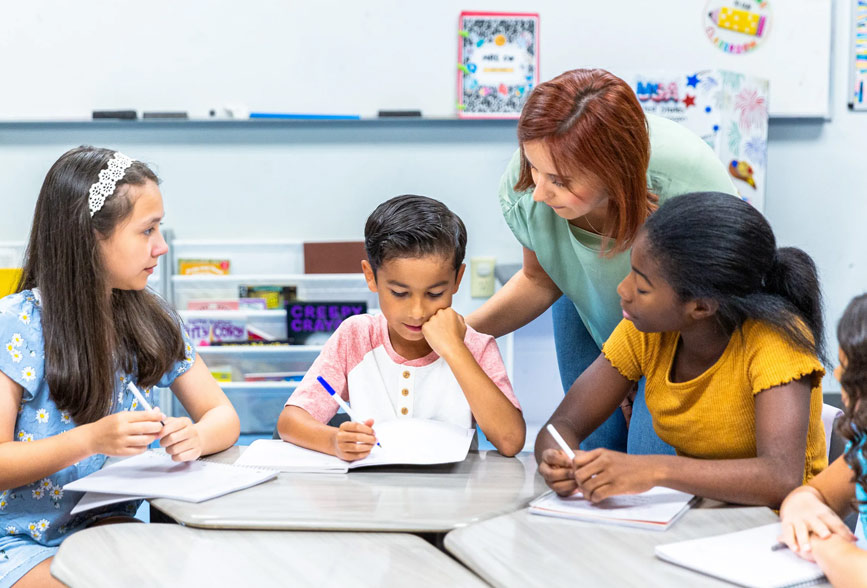
Starting a classroom can be an exciting but challenging transition for children who need additional support with communication, social interaction, attention, behavior, and daily routines. A successful classroom experience involves much more than knowing academic concepts. Children also need to follow directions, participate in group activities, communicate their needs, manage transitions, remain engaged with tasks, interact appropriately with peers, and become increasingly independent. ABA therapy for classroom readiness can help children develop these foundational skills through individualized instruction and structured practice. By identifying specific areas that may create difficulties and teaching practical replacement skills, ABA-based support can prepare children to participate more confidently in classroom routines and learning activities.
Understanding Classroom Readiness
Classroom readiness refers to the collection of skills that help a child participate successfully in an educational environment. These skills can include listening, following instructions, communicating, sitting for an appropriate period, transitioning between activities, waiting for a turn, using classroom materials, and interacting with teachers and peers. Every child develops these abilities at a different pace, so readiness should not be viewed as a single checklist that every child must master in exactly the same way. ABA therapy for classroom readiness focuses on identifying an individual’s strengths and areas requiring additional support, then creating practical goals that encourage gradual progress.Being ready for a classroom does not mean a child must already be completely independent. Many children enter educational settings while still learning important developmental and behavioral skills. The purpose of preparation is to provide children with tools that allow them to participate and learn. A therapist may break complex expectations into smaller steps, teach each step systematically, and gradually reduce support as the child’s abilities improve. This approach can make classroom expectations easier to understand while helping children develop confidence in their ability to complete new tasks.
Developing Attention and Task Engagement
Attention is an important foundation for learning because children need to notice instructions, activities, materials, and people around them. Some children may find it difficult to remain engaged with a task for an extended period, particularly when the activity is unfamiliar or less preferred. ABA therapy for classroom readiness can help develop attention gradually by beginning with activities that match the child’s current abilities and then increasing expectations over time. Therapists can use reinforcement, prompting, visual support, and structured activities to encourage children to remain engaged.Task engagement does not necessarily require a child to sit perfectly still or focus continuously for a long period. The goal is to develop an age-appropriate ability to participate in learning activities and return attention to a task when necessary. A therapist might begin with a short activity and provide positive reinforcement when the child completes it. As the child becomes more successful, the duration or complexity of the task can be increased. This gradual process can help establish a stronger foundation for classroom learning without creating unnecessary frustration.
Teaching Children to Follow Instructions
Following instructions is a fundamental classroom skill because teachers regularly provide directions related to learning activities, transitions, safety, materials, and group participation. Children may need to follow simple one-step instructions before they can successfully manage more complex directions. ABA therapy for classroom readiness can help children learn to listen to instructions, process what is being requested, and respond appropriately. Therapists can begin with clear and simple directions before gradually introducing longer or multi-step instructions.Instruction-following can be taught through modeling, prompting, repetition, and positive reinforcement. For example, a therapist might ask a child to pick up an item, place it in a particular location, and then return to an activity. As the child’s skills improve, additional steps can be introduced. The objective is to help children understand that instructions are meaningful signals for what they should do next. With consistent practice, children can become more comfortable responding to different types of directions and completing classroom routines with less assistance.
Strengthening Communication Skills
Effective communication is essential for classroom participation. Children need ways to ask for help, make choices, express preferences, answer questions, communicate discomfort, and interact with teachers and classmates. Communication difficulties can sometimes lead to frustration when children are unable to express what they need. ABA therapy for classroom readiness can support functional communication by teaching children appropriate ways to communicate across different situations.Communication goals should be individualized according to the child’s abilities. Some children may use spoken language, while others may benefit from gestures, visual communication systems, picture-based tools, or speech-generating devices. The objective is to give the child an effective method of expressing needs and participating in interactions. Therapists can create opportunities for communication during everyday activities and reinforce successful attempts. As communication becomes more reliable, children may be better equipped to seek assistance and participate in classroom routines.
Learning to Participate in Group Activities
Classrooms often involve group activities such as story time, discussions, music, games, demonstrations, and collaborative projects. Participating in a group requires children to attend to a shared activity, remain in an appropriate area, respond to instructions, wait for turns, and tolerate other children participating nearby. These expectations can be challenging for some children, particularly if they are accustomed to one-on-one activities. ABA therapy for classroom readiness can introduce group participation gradually so that children have opportunities to practice these skills in manageable steps.A therapist may begin with short group activities involving only a few participants and gradually increase the duration or complexity. Visual schedules and clear expectations can help children understand what will happen during the activity. Positive reinforcement can encourage behaviors such as remaining with the group, attending to the activity, raising a hand, or waiting appropriately. The goal is not to expect perfect group behavior immediately but to build the skills necessary for meaningful participation over time.
Improving Transition Skills
Transitions are a major part of classroom life. Children may move from one activity to another several times during a day, such as transitioning from play to instruction, from one classroom area to another, or from an academic activity to lunch or recess. Some children may become upset when preferred activities end or when they are asked to begin something unexpected. ABA therapy for classroom readiness can help children learn strategies for transitioning more smoothly between activities.Visual schedules, timers, countdowns, first-then statements, and verbal reminders can help children anticipate upcoming changes. Therapists can practice transitions in a predictable way before introducing more complex situations. For example, a child may learn that completing one activity is followed by another preferred or familiar activity. Over time, supports can be adjusted as the child becomes more comfortable. Teaching transition skills early can help reduce frustration and make daily classroom routines easier to manage.
Building Independence With Classroom Routines
Independence is an important component of classroom readiness because teachers cannot provide one-on-one assistance for every task throughout the day. Children may need to learn how to organize materials, put belongings away, follow a visual schedule, complete simple classroom routines, and ask for assistance when needed. ABA therapy for classroom readiness can break these routines into smaller steps and teach children how to complete them with progressively less support.For example, a routine such as preparing for an activity may involve several individual actions, including locating materials, bringing them to the workspace, sitting down, and beginning the task. A therapist can teach each step systematically and use prompts when necessary. As the child becomes more capable, prompts can be reduced to encourage independent completion. These small gains can make a meaningful difference when children begin participating in larger classroom environments.
Developing Social Interaction Skills
Classroom learning frequently involves social interaction. Children may need to share materials, take turns, respond to peers, listen to others, ask questions, and participate in cooperative activities. Some children may understand these expectations intuitively, while others benefit from explicit instruction and practice. ABA therapy for classroom readiness can help teach social behaviors in ways that are practical and connected to everyday classroom situations.Social skills can be introduced through modeling, role-play, structured games, and natural interactions. A child might practice requesting a turn, responding when another child speaks, or appropriately joining an activity. Reinforcement can encourage successful interactions while prompts can provide additional support when needed. Over time, children can practice these behaviors in increasingly natural situations. The goal is to help them participate in social experiences while respecting individual communication styles and preferences.
Supporting Emotional Regulation
Children may encounter frustration, disappointment, sensory challenges, or unexpected changes during the school day. Developing emotional regulation skills can help them respond to these experiences in appropriate ways. ABA therapy for classroom readiness can incorporate strategies that help children recognize when they are becoming overwhelmed and communicate what they need. These strategies may include requesting a break, asking for help, using visual supports, or engaging in an appropriate calming activity.Teaching replacement behaviors is especially useful when a child has difficulty communicating during moments of frustration. Instead of simply focusing on reducing unwanted behavior, therapists can identify what the child is trying to communicate and teach a more effective response. For example, a child who becomes upset when a task is difficult may learn to request assistance. Another child may learn to communicate that they need a short break. These skills can make classroom challenges easier to manage while increasing the child’s ability to participate successfully.
Increasing Tolerance for Non-Preferred Activities
Classrooms include both preferred and non-preferred activities, and children are often expected to participate in tasks they may not initially enjoy. Developing tolerance for less-preferred activities can therefore be an important readiness skill. ABA therapy for classroom readiness can help children gradually increase their ability to participate in tasks that are not immediately motivating while maintaining appropriate behavior and engagement.Therapists may begin with short periods of participation and use reinforcement to encourage completion. A preferred activity can sometimes follow a less-preferred task, helping the child understand the sequence of expectations. As tolerance increases, the length or difficulty of the task can gradually change. This approach allows children to develop persistence while reducing the likelihood that difficult tasks will automatically result in avoidance.
Using Visual Supports Effectively
Visual support can be useful for children who have difficulty processing spoken instructions or remembering multi-step routines. A visual schedule can show what activities will occur throughout the day, while individual visual cues can remind children what to do next. Visual support can make classroom expectations more predictable and may reduce uncertainty during transitions.A therapist can determine which type of visual support is most appropriate for the individual child. Some children may benefit from photographs, while others may respond better to symbols, written words, checklists, or simple visual sequences. The goal is to provide information in a format the child can understand and use independently. As children become familiar with routines, visual support may require fewer prompts, allowing them to take greater responsibility for following classroom expectations.
Teaching Appropriate Help-Seeking
Knowing how to ask for help is an important but sometimes overlooked classroom skill. Children are expected to communicate when they do not understand an instruction, cannot complete a task, need materials, or experience discomfort. Without an effective help-seeking strategy, a child may become frustrated or stop participating. ABA therapy for classroom readiness can teach children appropriate ways to request assistance from teachers or other adults.Help-seeking can be practiced during structured activities and everyday routines. A therapist might create situations in which the child needs assistance and then prompt an appropriate request. Once the child learns the communication response, prompts can be gradually reduced. The child can then practice using the skill across different activities and with different people. This can promote independence because the child learns that asking for assistance is an effective way to solve a problem.
Preparing for Classroom Expectations
Preparation is most effective when it reflects the actual skills a child will need during daily classroom activities. Rather than focusing exclusively on academic tasks, readiness programs can address the broader behavioral, social, communication, and adaptive skills required for participation. ABA therapy for classroom readiness can help identify these areas and establish measurable goals based on the child’s current abilities.Preparation may involve practicing sitting for appropriate periods, responding to instructions, participating in group activities, using classroom materials, transitioning between tasks, communicating needs, and interacting with others. These skills can be taught through structured practice and then incorporated into increasingly natural routines. The goal is to create a bridge between therapy-based learning and the expectations children encounter during educational activities.
Collaborating With Families and Educators
Successful classroom preparation often requires collaboration among caregivers, therapists, and educators. Each person may observe different aspects of the child’s behavior and development, so sharing information can provide a more complete understanding of the child’s needs. Consistent expectations and strategies can also make learning easier because the child receives similar messages across environments.Families can share information about routines, communication preferences, sensory considerations, and successful strategies. Therapists can explain the goals being targeted and demonstrate useful teaching techniques. Educators can provide insight into classroom expectations and identify areas where additional support may be helpful. When these professionals work together, the child can receive more consistent opportunities to practice and generalize important skills.
Measuring Progress Toward Readiness
Progress should be monitored using clear and measurable goals rather than relying only on general impressions. A child’s readiness may improve when they require fewer prompts, complete more steps independently, communicate more effectively, remain engaged longer, or transition more successfully. ABA therapy for classroom readiness can use data to track these changes and determine whether teaching strategies need to be adjusted.Measuring progress also allows caregivers and professionals to recognize achievements that might otherwise be overlooked. A child who previously needed repeated reminders may eventually follow a routine with only one prompt. Another child may begin requesting help instead of becoming frustrated when a task is difficult. These changes represent meaningful development because they can directly improve classroom participation. Regular review ensures that goals remain appropriate as the child’s abilities grow.
Creating a Strong Foundation for Learning
Classroom readiness is ultimately about giving children the skills and confidence they need to participate in learning. Academic development is important, but children also need communication, social, behavioral, adaptive, and self-management skills to make the most of educational opportunities. ABA therapy for classroom readiness can provide structured instruction that addresses these foundational abilities while allowing goals to be tailored to each child’s unique needs.Every child progresses differently, and readiness does not require perfection. Some children may need more time to develop independence with transitions, while others may need additional support with communication or social interaction. By breaking complex skills into manageable steps, providing appropriate reinforcement, practicing across different situations, and gradually reducing assistance, children can build stronger foundations for classroom participation. These skills can support not only the transition into a classroom but also continued growth throughout their educational journey.
Conclusion
Preparing a child for classroom participation involves much more than teaching academic concepts. Children need opportunities to develop communication, attention, instruction-following, social interaction, emotional regulation, independence, transition, and help-seeking skills. ABA therapy for classroom readiness can provide individualized strategies for developing these abilities while allowing children to practice skills in structured and meaningful situations.A strong readiness program recognizes the individual needs of each child and focuses on practical goals that can improve everyday participation. Through consistent practice, positive reinforcement, visual supports, caregiver collaboration, and gradual increases in expectations, children can become better prepared to engage in classroom routines. The result is not simply improved readiness for a new environment but a stronger foundation for communication, independence, learning, and long-term development.

