


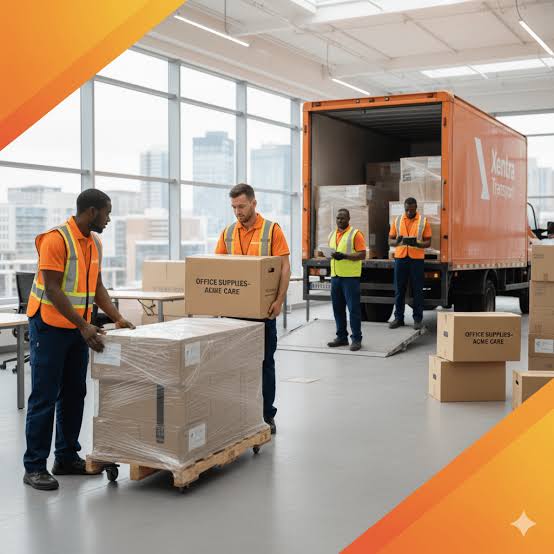
On a Tuesday morning in Midtown, a busy office building’s lobby desk can look more like a fulfillment center than a reception area. Boxes of sneakers, meal kits, skincare orders, and a surprising number of oversized pet food bags stack against the wall, waiting for employees who may not arrive until Thursday.
As more New Yorkers head back to the office, many are bringing their online shopping with them, and front desk and mailroom staff are feeling it first. To keep up, a growing number of companies and building managers are turning to office mailroom management systems, replacing clipboards and sticky notes with systems built for far higher volume.
It’s a quiet shift, but it’s changing how offices across the city think about something that used to be an afterthought.
Why New Yorkers Ship to the Office
For many people in the city, getting a package delivered at home is a gamble. Walk-up buildings often have no doorman, shared vestibules aren’t secure, and a box left on a stoop may not be there by evening. Even in buildings with a front desk, packages can pile up quickly in a small lobby.
The office offers something home often can’t: a staffed desk, controlled access, and a predictable place to pick things up. For employees commuting in on the subway, it’s also convenient to collect a parcel on the way out rather than racing home to beat a delivery window.
For many New Yorkers, the office has become their most reliable delivery address.
Lobby Desks Weren’t Built for This
Before the pandemic, most office mailrooms handled business mail, a few supply orders, and the occasional personal package. Processes reflected that: a paper log, a shelf behind the desk, and maybe an email to let someone know a box had arrived.
Those methods struggle when personal deliveries start outnumbering business mail. Logging every parcel by hand takes time staff doesn’t have, especially during morning rushes when they’re also checking in visitors. Shelves fill up, and packages end up on the floor or in spare rooms, where they’re easier to misplace.
Hybrid Schedules Mean Parcels Wait Longer
The return to office in New York has largely been a hybrid one. Many employees come in two or three days a week, which creates a new problem: packages that arrive on a Monday may not be collected until Wednesday or later.
That waiting time adds up. Storage that once cleared every evening now holds several days’ worth of deliveries. Perishables, like meal kits or flowers, create additional headaches when recipients can’t collect them promptly.
The Policy Question: Allow, Limit, or Ban?
Faced with the surge, offices have taken different approaches to personal deliveries. Each comes with trade-offs.
| Approach | How It Works | Benefits | Drawbacks |
| Open policy | Any personal package accepted | Popular with staff, encourages office days | Highest volume and storage pressure |
| Limited policy | Size limits, no perishables, pickup deadlines | Keeps volume manageable | Requires clear rules and enforcement |
| No personal deliveries | Business mail only | Minimal workload | Can feel unfriendly to employees |
Many New York offices have landed on the middle option. A limited policy acknowledges that employees value convenience while setting reasonable boundaries on size, type, and how long the mailroom can hold a parcel.
A clear delivery policy protects the mailroom staff as much as it protects the packages.
Logging, Notifying, and Proving Pickup
Whatever the policy, the offices handling the surge best tend to follow the same basic routine. Staff scan every parcel on arrival, capturing the carrier, tracking number, and recipient in a few seconds. The package gets a recorded storage spot, such as a shelf or locker number.
The recipient then receives an automatic email or text letting them know their delivery is waiting. When they pick it up, a quick signature or scan confirms the handover. That record matters in a city where package disputes are common, because it shows exactly when an item arrived and who picked it up.
Smart lockers have also become more common in larger buildings. Employees receive a code and collect parcels on their own schedule, which supports hybrid attendance and reduces front-desk lines.
Shared Buildings, Shared Headaches
Many New York companies don’t have their own mailroom at all. They occupy a few floors in a multi-tenant tower, where building management or security handles deliveries for dozens of businesses through one lobby desk.
In those settings, the challenge multiplies. A single desk may be routing parcels to hundreds of people across many companies, often with limited information about who works where. Up-to-date tenant directories, along with consistent employee labeling (full name, company, and floor), make a significant difference. Coworking spaces face a similar issue, with members coming and going frequently.
Making Personal Deliveries Work for Everyone
The goal isn’t to stop employees from shipping to the office. For many companies, it’s a small perk that makes office days easier. The goal is to keep it from overwhelming the people responsible.
A few practical steps help. Communicate the delivery policy clearly, including size limits and pickup deadlines. Ask employees to use complete, consistent shipping details. Send reminders for uncollected packages, and follow up with a set process for anything left too long. Staff who handle deliveries should also have a say in the rules, since they see where the process breaks down.
A Small Perk With Big Logistics
Return-to-office has changed more than commutes and desk bookings in New York. It has turned many lobby desks and mailrooms into busy package hubs, often without much planning.
The offices adapting best are treating personal deliveries as a real operational task rather than an informal favor. With clear policies, quick logging, prompt notifications, and confirmed pickups, the surge becomes manageable, and employees get a convenience that actually works for the way they live and commute in the city.

